




























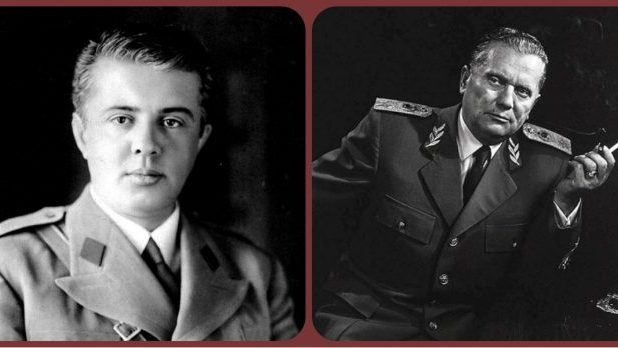
By Zlatko Kramarić*|ARGUMENTUM
Introduction: A Diplomat’s Perspective and the Myth of “Soft Titoism”
During more than six years in Albania, I frequently heard, from serious and highly educated interlocutors, extremely positive evaluations of Tito’s Yugoslavia. On several occasions, I sensed a kind of wistful admiration, as if they considered that I had lived in a “more democratic” country than Albania under Hoxha. This perception is understandable: compared with the extreme model of totalitarian isolation Albanians endured for decades, Yugoslavia appeared more open, culturally diverse, and economically dynamic.
Yet I considered it my responsibility to point out that such a perception is based on selective memory and mythology rather than a full historical analysis. Yugoslav reality was not idyllic; Tito was not a democrat. He was a more sophisticated and skilful manipulator than Hoxha, capable of sustaining an international image of openness while maintaining full internal control. His break with Stalin in 1948 served primarily the consolidation of personal power rather than democratization. The resulting system can be described as anti-Stalinist Stalinism: the rituals and institutional mechanisms of Stalinism persisted, albeit under the ideological framework of “self-management,” “non-alignment,” and “Yugoslav exceptionalism.”
The following analysis integrates all these aspects — postwar repression, secret police, political prisons, assassination of émigrés, censorship, economic policies, and migration — and situates them in a comparative framework with Hoxha’s Albania.
I. Postwar Violence and Consolidation of Power
1. Mass killings and the Yugoslav “Red Terror” (1944–1946)
Immediately after the war, the Yugoslav communist leadership conducted extensive purges. Although the exact number of victims is still debated, there is broad consensus that tens of thousands were executed in extrajudicial procedures, mass executions, and staged trials[^1]. This initial phase of the “Red Terror” laid the foundation for the later regime: eliminating real and potential opponents, punishing class enemies, and creating a climate of fear.
II. Secret Police and the Machinery of Control
1. OZNA – UDBA – SDB: Evolution of Repressive Structures
Founded in 1944, OZNA became the core of a powerful security apparatus that later institutionalized as UDBA and the State Security Service (SDB). Its functions included monitoring political opposition, intellectual and cultural circles, émigré communities, infiltrating organizations, and preventive repression[^2]. Unlike Hoxha’s Sigurimi, which relied on blunt, omnipresent terror, Yugoslav security services employed sophisticated, flexible, and internationally oriented methods.
2. Assassinations of Political Émigrés
From the 1960s to the 1980s, Yugoslav security services carried out numerous assassinations and covert operations against Croatian, Albanian, Serbian, and other émigrés in Western Europe. The case of Stjepan Đureković in Germany is the most well-known[^3], but it is only one of many. Similar practices existed in Bulgaria and other communist states[^4].
III. Prison Camps and Political Incarceration
1. Goli Otok as a Paradigm
After the 1948 conflict with Stalin, Goli Otok became the central institution of political punishment. It combined physical punishment, psychological pressure, and ideological “re-education”[^5]. This institution illustrates how the Yugoslav regime could apply repression internally, even while projecting a softer international image.
2. Later Political Prisons and Controlled Dissent
Though formal labor camps ceased after the 1950s, the system continued to punish dissent. Intellectuals and student activists in 1971 and 1981, as well as figures like Mihajlo Mihajlov, were subject to prosecution and surveillance[^6].
IV. Verbal Criminalization, Censorship, and the “Boundaries of Permissible”
- criminalization of criticism of socialism and “the person and work of Tito” (Article 133)
- oversight of publishing houses and editorial boards
- filtering cultural production through political control and self-censorship
Although certain zones of relative freedom existed (film, literature, theater), all had invisible boundaries[^7].
V. The Economic Model: Growth on Credit and Later Collapse
1. The Boom Years (1950–1970)
Opening to the West brought investment and loans. Many Albanians remember Yugoslav standards during this period, reinforcing the myth of long-term prosperity[^8].
2. Debt, Inflation, and Crisis (1970–1980)
By the mid-1970s, the system relied increasingly on foreign debt. This led to inflation, shortages, unemployment, and rising internal tensions[^9].
3. Gastarbeiter Policy as a Political and Economic Safety Valve
Issuing passports and encouraging temporary labor migration abroad reduced social pressures, generated foreign exchange, and partially released domestic political tension[^10].
VI. Tito vs. Hoxha: Differences in Style, Similarities in Structure
1. Hoxha’s Albania: Isolationist Totalitarianism
- total autarky
- elimination of intellectual elite
- ideological rigidity
- repression without economic relief mechanisms
- Stalinist monolithism[^11]
2. Tito’s Yugoslavia: Sophisticated Authoritarian Modernization
- the appearance of pluralism within a one-party system
- non-alignment as geopolitical legitimation
- controlled cultural freedoms
- secret police with international reach
- modernization financed through debt
- a “soft” but pervasive cult of personality[^12]
3. Core Argument
Both regimes were authoritarian; Tito’s model was a soft-power version of Stalinism, while Hoxha’s was rigidly orthodox. The difference was stylistic, not essential.
VII. Conclusion: Why the Myth of Tito Persists
Albanian nostalgia for Tito stems from contrast with their own harsher historical experience. A full analysis must include:
- postwar mass killings
- political prisons and forced labor camps
- censorship
- verbal criminalization
- assassinations of émigrés
- economic instability
Only in this holistic context can we understand that Titoism was an authoritarian system with a European façade — more sophisticated than Hoxha’s, but undemocratic.
[^1]: Jozo Tomasevich, War and Revolution in Yugoslavia (Stanford: Stanford University Press, 2001), 202–215. – Detailed account of postwar killings, statistical estimates, and regional differences.
[^2]: Rory Yeomans, ed., The UDBA Papers (London: Routledge, 2016), 45–67. – Organizational structure and methods of secret services, including domestic and foreign operations.
[^3]: Marko Attila Hoare, “The Assassination of Stjepan Đureković,” Journal of Contemporary History 37, no. 3 (2002): 443–472. – Case study of émigré assassination in Germany.
[^4]: Tzvetan Todorov, Totalitarianism in Eastern Europe (Princeton: Princeton University Press, 2003), 88–102. – Comparative example of Bulgaria.
[^5]: Martin Previšić, History of Goli Otok (Zagreb: Naklada Ljevak, 2010), 34–56. – Conditions in the camp, psychological and labor regimes.
[^6]: Sabrina Ramet, The Three Yugoslavias (Bloomington: Indiana University Press, 2006), 215–230. – Intellectual repression and student protests.
[^7]: Ibid., 233–240. – Boundaries of permissible discourse in culture; self-censorship.
[^8]: Susan Woodward, Balkan Tragedy: Chaos and Dissolution after the Cold War (Washington: Brookings Institution Press, 1995), 52–60. – Economy of Yugoslavia in 1950s–1960s.
[^9]: Ibid., 61–70. – Inflation, debt, and the onset of crisis in 1970s.
[^10]: Jasna Dragović-Soso, State and Society in Yugoslavia (Cambridge: Cambridge University Press, 2002), 111–125. – Gastarbeiter policy and passport issuance as political mechanism.
[^11]: Bernd J. Fischer, Albania at War, 1939–1945 (New York: Columbia University Press
*Zlatko Kramarić is a Croatian publicist, author, and diplomat, currently serving as Ambassador to Albania. Formerly a university professor and politician, he is known for his work in literature, cultural studies, and regional history.
© 2025 Argumentum