







• SHQIPËRI
  • KOSOVË
  • MAQEDONIA E VERIUT
  • MALI I ZI
  • Revista në PDF
24 July, 2026
  • Home
  • OP/ED

    The Self-Inflicted Decoupling: How U.S. Immigration Policy Is Ceding the Tech Edge to China

    The Blueprint Does Not Stop at the Drina

    The Underlying Logic behind China’s Economic Success

    Do Not Misuse the U.S. Declaration of Independence to Justify the Narrative of Insurrection in Albania

    The visit that changed Albania’s strategic future

    Pierre Nora and the institution of memory we lack in Eastern Europe

    The Blueprint of a Diplomatic Debacle: Analyzing Germany’s Historic UNSC Loss

    Between Russia, Iran and Europe: Azerbaijan as a balancing power in the South Caucasus

    The Zero-Tariff Gate: Sovereignty as a Service in the Sino-African Corridor

  • Interview

    Exclusive Interview with Oleksandr Tyshchenko: A 40-Year Legacy of Chernobyl, Nuclear Risks, and Global Responsibility

    INTERVIEW: ZLATKO KRAMARIĆ – THOUGHTS ON THE OLD CONTINENT

    EXCLUSIVE / Ukrainian Ambassador to Albania, Volodymyr Shkurov: “Ukraine wants peace, but not at the expense of its freedom and independence”

    EXCLUSIVE| Ambassador Tayyar Kagan Atay: Türkiye and Albania, a Strategic Partnership Rooted in Shared Heritage and a Common Vision for the Future

    “Diplomacy, Not War”: Palestinian Ambassador to Albania Calls for Justice, Peace, and Global Action for Gaza

    Exclusive: “Even After Tito – Tito”/ Ambassador Zlatko Kramarić on Authoritarian Legacies and Democracy’s Future in the Balkans

    The Conclusion of the Diplomatic Mission / Ambassador Dancho Markovski: Strengthening Albania-North Macedonia Relations for a Shared European Future

    A Century of Diplomatic Relations Between Albania and Russia: Exclusive Interview with the Russian Ambassador to Albania, H.E. Alexey Zaytsev

    Exclusive/ The chairman of the Freedom Party, Ilir Meta: “The will of the citizens will triumph in Albania, as it did in North Macedonia”

  • Realpolitik

    The Summit of Unity! Think of peace and prepare for war! It’s only the start to the end! Just a pause between two wars!

    Peace with war diplomacy! The protest,  image and tourism! Why this silence from the EU Commission and Council? A deal or a pause?

    Just kind words  in Tivat! Where is the peace!? A deal yes, peace No!What is happening with USA and  EU?  5 elections but no solution!

    IBAR? ”Sufficiently! Much ado about nothing! Shart contrasts in Beijing! Where is the exit?!

    Neither peace nor war! Peace with bombs?! IBAR in autumn?! Not another Hormuz in Taivan! 

    IBAR – a springing board or an obstacle? Can we catch the EU Negotiation train 2027? When the dress makes the news!  EU electoral April  ends in a draw 1:1!  

    The European Parliament building in Strasbourg, France with flags waving calmly celebrating peace of the Europe. July 12, 2020.

    EU 2027 or 2037! Even half membership failed! No exit strategy!     

    What next?

    “With diplomatic velvet“! Major question marks! In Washington yes, but  in the White House NO! A strange dinner in Brussels!

  • Current Events

    Who Is Interested in War in the Balkans?

    From Calculating Executions to Justifying Ethnic Cleansing

    When Algorithm Becomes the Most Powerful Manipulator: The Case of the Protests in Tirana

    NATO Summit in Ankara: Allies Adopt Declaration Reaffirming Collective Defence and Long-Term Security Commitments

    The Diplomacy of Gas and Algorithms: The Nuances of Official Tirana—Is It Breaking the European Taboo with Azerbaijan?

    Protection for Serbs, or Protection for Radoicic?

    The Architecture of Selective Sovereignty:Corporate Immunity, Technological Protectionism, and the Erosion of Credibility

    Montenegro’s Unfinished Transition

    The Paradox of Selective Capitalism: How Western Rule-Breaking Accelerates Its Own Systemic Demise

  • Top News

    The Council of Albanian Ambassadors condemns chauvinistic rhetoric by Serbian officials and calls for diplomatic action

    NATO at Ankara 2026: Strategic Rebalancing Between Russia Deterrence, Turkey’s Rise, and National Interests

    Daniel Serwer: A Bad War Ending Badly May Still Be Good News

    Friedrich Merz, Keir Starmer, António Costa, Donald Trump, Emmanuel Macron, Mark Carney, Ursula von der Leyen, Giorgia Meloni and Sanae Takaichi

    G7 Leaders Gather in Évian Amid Global Uncertainty, Focus on Security, Economy and International Cooperation

    Russian Ambassador in Tirana: “Without a Strong and Sovereign Russia, the Creation of a Just World Order Is Impossible”

    “The Flamingo Revolution”: Day 10 of Protests in Albania Draws International Attention

    Rama alleges ‘hybrid war’ behind protests against Kushner-linked coastal development

    No End in Sight: Trump, Netanyahu and the Expanding Middle East War

    Tirana – €20 Million EU–Banking Agreement Boosts Albanian SMEs

  • YOUR VOICE
  • Shqip
No Result
View All Result
Argumentum
  • Home
  • OP/ED

    The Self-Inflicted Decoupling: How U.S. Immigration Policy Is Ceding the Tech Edge to China

    The Blueprint Does Not Stop at the Drina

    The Underlying Logic behind China’s Economic Success

    Do Not Misuse the U.S. Declaration of Independence to Justify the Narrative of Insurrection in Albania

    The visit that changed Albania’s strategic future

    Pierre Nora and the institution of memory we lack in Eastern Europe

    The Blueprint of a Diplomatic Debacle: Analyzing Germany’s Historic UNSC Loss

    Between Russia, Iran and Europe: Azerbaijan as a balancing power in the South Caucasus

    The Zero-Tariff Gate: Sovereignty as a Service in the Sino-African Corridor

  • Interview

    Exclusive Interview with Oleksandr Tyshchenko: A 40-Year Legacy of Chernobyl, Nuclear Risks, and Global Responsibility

    INTERVIEW: ZLATKO KRAMARIĆ – THOUGHTS ON THE OLD CONTINENT

    EXCLUSIVE / Ukrainian Ambassador to Albania, Volodymyr Shkurov: “Ukraine wants peace, but not at the expense of its freedom and independence”

    EXCLUSIVE| Ambassador Tayyar Kagan Atay: Türkiye and Albania, a Strategic Partnership Rooted in Shared Heritage and a Common Vision for the Future

    “Diplomacy, Not War”: Palestinian Ambassador to Albania Calls for Justice, Peace, and Global Action for Gaza

    Exclusive: “Even After Tito – Tito”/ Ambassador Zlatko Kramarić on Authoritarian Legacies and Democracy’s Future in the Balkans

    The Conclusion of the Diplomatic Mission / Ambassador Dancho Markovski: Strengthening Albania-North Macedonia Relations for a Shared European Future

    A Century of Diplomatic Relations Between Albania and Russia: Exclusive Interview with the Russian Ambassador to Albania, H.E. Alexey Zaytsev

    Exclusive/ The chairman of the Freedom Party, Ilir Meta: “The will of the citizens will triumph in Albania, as it did in North Macedonia”

  • Realpolitik

    The Summit of Unity! Think of peace and prepare for war! It’s only the start to the end! Just a pause between two wars!

    Peace with war diplomacy! The protest,  image and tourism! Why this silence from the EU Commission and Council? A deal or a pause?

    Just kind words  in Tivat! Where is the peace!? A deal yes, peace No!What is happening with USA and  EU?  5 elections but no solution!

    IBAR? ”Sufficiently! Much ado about nothing! Shart contrasts in Beijing! Where is the exit?!

    Neither peace nor war! Peace with bombs?! IBAR in autumn?! Not another Hormuz in Taivan! 

    IBAR – a springing board or an obstacle? Can we catch the EU Negotiation train 2027? When the dress makes the news!  EU electoral April  ends in a draw 1:1!  

    The European Parliament building in Strasbourg, France with flags waving calmly celebrating peace of the Europe. July 12, 2020.

    EU 2027 or 2037! Even half membership failed! No exit strategy!     

    What next?

    “With diplomatic velvet“! Major question marks! In Washington yes, but  in the White House NO! A strange dinner in Brussels!

  • Current Events

    Who Is Interested in War in the Balkans?

    From Calculating Executions to Justifying Ethnic Cleansing

    When Algorithm Becomes the Most Powerful Manipulator: The Case of the Protests in Tirana

    NATO Summit in Ankara: Allies Adopt Declaration Reaffirming Collective Defence and Long-Term Security Commitments

    The Diplomacy of Gas and Algorithms: The Nuances of Official Tirana—Is It Breaking the European Taboo with Azerbaijan?

    Protection for Serbs, or Protection for Radoicic?

    The Architecture of Selective Sovereignty:Corporate Immunity, Technological Protectionism, and the Erosion of Credibility

    Montenegro’s Unfinished Transition

    The Paradox of Selective Capitalism: How Western Rule-Breaking Accelerates Its Own Systemic Demise

  • Top News

    The Council of Albanian Ambassadors condemns chauvinistic rhetoric by Serbian officials and calls for diplomatic action

    NATO at Ankara 2026: Strategic Rebalancing Between Russia Deterrence, Turkey’s Rise, and National Interests

    Daniel Serwer: A Bad War Ending Badly May Still Be Good News

    Friedrich Merz, Keir Starmer, António Costa, Donald Trump, Emmanuel Macron, Mark Carney, Ursula von der Leyen, Giorgia Meloni and Sanae Takaichi

    G7 Leaders Gather in Évian Amid Global Uncertainty, Focus on Security, Economy and International Cooperation

    Russian Ambassador in Tirana: “Without a Strong and Sovereign Russia, the Creation of a Just World Order Is Impossible”

    “The Flamingo Revolution”: Day 10 of Protests in Albania Draws International Attention

    Rama alleges ‘hybrid war’ behind protests against Kushner-linked coastal development

    No End in Sight: Trump, Netanyahu and the Expanding Middle East War

    Tirana – €20 Million EU–Banking Agreement Boosts Albanian SMEs

  • YOUR VOICE
  • Shqip
No Result
View All Result
Argumentum
No Result
View All Result
Home ENGLISH

Alessandro Politi: Belgrade-Pristina dialogue one of the pillars for a sustainable Western Balkans

12 December, 2019
in ENGLISH, Interview
A A
Share on FacebookShare on Twitter

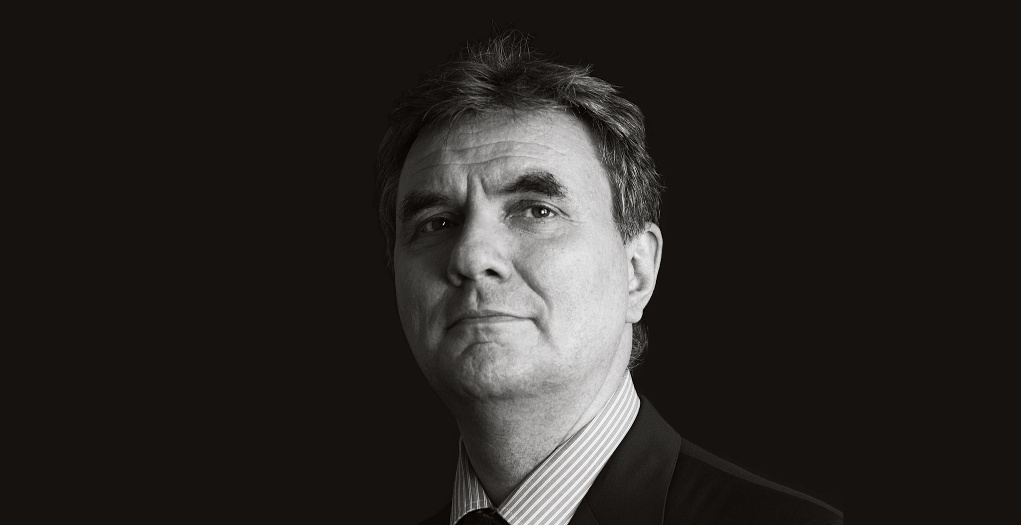
What’s the role of Russia in the Western Balkans? Is Serbia’s neutrality sustainable? What does the newly-formed Kosovo Army mean for the security of the region, and what does North Macedonia’s membership mean to the Alliance? We interviewed Alessandro Politi, NATO Defense College Foundation Director, to find out more about these questions.

European Western Balkans: Recently, the U.S. Department of Defense released a report assessing the Western Balkans as the environment most vulnerable to Russian influence. Just some weeks ago, the Serbian public has been shocked by a spy affair involving a former Russian diplomat. How do you see Russia’s role in the Balkans?

Alessandro Politi: I have not seen the report (it does not seem to be published online), but Russian influence is unfortunately much more insidious and effective in some Western countries than in the Balkans. As analogous vast intelligence collection operations have proven in other countries, spying against one’s own ally does not seem a taboo. No further politically relevant development has followed the publication of the meeting between a Russian officer and an anonymous Serbian one.

Evidently Russia is carrying out a rearguard action in the region, but for the moment with modest strategic results, since Montenegro entered NATO and North Macedonia might soon. Spies, diplomats, propaganda are largely Cold War instruments, while I believe and warn since 2017 that the new frontier of Russian influence is the grey area between business and politics. Unfortunately, this is shown very clearly through different political, business, influence peddling and money laundering scandals.

Some niets to further integration of the region might do more damage than Moscow could dream about.

EWB: Taking into account all of these circumstances, is Serbia’s military neutrality possible? Are Serbia and the region less secure?

AP: Since the Nineteenth century, Serbia has had remarkable relations with Russia, but always at arm’s length, as Ilija Garašanin’s secret memorandum (Načertanije) and the subsequent political orientation of Tito showed very clearly.

Serbia is opportunistically trying to get the best possible deal from both sides but knows that only Europe can rescue its very shaky economy. Unless European leaders do not make serious mistakes, Serbia will enter the European Union with the other regional partners.

As for the neutrality issue, NATO has several neutral partners and sometimes even countries in a rather Russian orbit, without any problem also at the operational level. In fact, NATO’s official position is that it is up to Belgrade to choose its own status.

EWB: During your career, you were quite involved in Kosovo. Can you tell us the importance of the Belgrade-Pristina dialogue for the regional security and how do you see the outcome?

AP: The importance of the Belgrade-Pristina Dialogue goes well beyond security: it is one of the pillars for a sustainable Western Balkan region. One should be very clear that this is not a fad of the international community, but it is a vital interest of the people and the governments of the area: no integration, no viable economies, more depopulation and emigration from already demographically fragile countries.

There are elite sectors in both capitals that exploit nationalist slogans to continue their own business as usual at the expense of impoverished populations. This will and is backfiring, provided that European leaders lead the integration process seriously.

I am confident in the outcome, but I would like to be reassured on timings.

EWB: The Chief of General Staff of the Serbian Armed Forces, General Milan Mojsilović, said at the Seventh NATO Week that Serbia is concerned about the initiative to transform Kosovo Security Force (KSF) into armed forces, and that NATO’s position on the issue was not clear to him. What’s your opinion about this initiative and how does NATO perceive it?

AP: NATO is very clear on this issue: enhanced dialogue is possible only with the Kosovo Security Force because some countries have no political appetite (and for solid reasons) in stirring divisive debates also in their own turf. Some countries do not care, but risk to be drawn into local quagmires instead of reducing their external commitments.

The political reasons why some politicians in Pristina want a Kosovo Armed Force are obvious, but they seem tenuously connected to a credible national security guarantee. KFOR is the guarantee until both sides close the dossier. It would be much more productive to continue minority recruitment in the KSF and to answer to the political demands of the Serb Kosovar citizens in a way that increases Pristina’s soft influence in these municipalities, instead of polarising public opinions.

EWB: When Montenegro joined the Alliance, there was considerable doubt as to how much such “small” country could contribute to the Alliance. We now have a situation where somewhat “larger” North Macedonia is close to joining. So, how does the accession of North Macedonia improve the security of NATO and the Western Balkans region?

AP: Frankly, in an Alliance that is based on a serious political covenant and on shared fundamental values, the “size” of a country was not and is not an object. NATO has countries from different “sizes”, but each capital can and wants to give a unique contribution that turns out to be very important in specific situations.

I have seen small countries giving invaluable support with their special forces or with new sanitary structures, both badly needed.  I have also seen allies shouldering very heavy political and operational burdens in serious crises, despite their low defence/GDP contribution. When money is an object, trust fades away and everybody is more alone and vulnerable.

Montenegro and North Macedonia are already capable to contribute with their distinct experience and knowledge to KFOR in a very concrete way.

EWB: What are your expectations NATO Leaders Meeting and what can the Western Balkan countries expect?

AP: Democracies are facing serious internal political weaknesses that are undermining the cohesion of the Alliance much more than any foreign power conspiracy. This translates in the risk of lower collective credibility and to this challenge all leaders should rise with deeds and responsible behaviour. There are reasonable chances that a communique will facilitate the evolution of a functional Alliance./EWB
Related Posts

ENGLISH

A constant in an era of radical change

22 July, 2026
ENGLISH

Azerbaijan’s Policy in the Middle East: ties, overlaps, and divergences

22 July, 2026
ENGLISH

The Summit of Unity! Think of peace and prepare for war! It’s only the start to the end! Just a pause between two wars!

20 July, 2026

Follow US

Subscribe

Receive Argumentum Magazine by Email

Last Posts

A constant in an era of radical change

22 July, 2026

Who Is Interested in War in the Balkans?

22 July, 2026

Azerbaijan’s Policy in the Middle East: ties, overlaps, and divergences

22 July, 2026

The Summit of Unity! Think of peace and prepare for war! It’s only the start to the end! Just a pause between two wars!

20 July, 2026

The Self-Inflicted Decoupling: How U.S. Immigration Policy Is Ceding the Tech Edge to China

20 July, 2026
Argumentum

“Argumentum”, një proces intelektual …

Contact Us

[email protected]
[email protected]
[email protected]

Follow Us

Media Partner

Register

Receive Argumentum Magazine by Email
  • Home
  • Privacy Policy
  • About Us
  • Contact

© 2022 Argumentum. All Rights Reserved. | NUIS: L91415033Q

Welcome Back!

Login to your account below

Forgotten Password? Sign Up

Create New Account!

Fill the forms bellow to register

*By registering into our website, you agree to the Terms & Conditions and Privacy Policy.
All fields are required. Log In

Retrieve your password

Please enter your username or email address to reset your password.

Log In

Add New Playlist

No Result
View All Result
  • Home
  • OP/ED
  • Interview
  • Realpolitik
  • Current Events
  • Top News
  • YOUR VOICE
  • Shqip

© 2022 Argumentum. All Rights Reserved. | NUIS: L91415033Q

This website uses cookies. By continuing to use this website you are giving consent to cookies being used. Visit our Privacy and Cookie Policy.