
















• SHQIPËRI
  • KOSOVË
  • MAQEDONIA E VERIUT
  • MALI I ZI
  • Revista në PDF
5 June, 2026
  • Home
  • OP/ED

    The Blueprint of a Diplomatic Debacle: Analyzing Germany’s Historic UNSC Loss

    Cyber Attribution, Corruption, and the False-Flag Question in Albania’s 2022 Alleged Iranian Cyberattack

    Between Russia, Iran and Europe: Azerbaijan as a balancing power in the South Caucasus

    The Zero-Tariff Gate: Sovereignty as a Service in the Sino-African Corridor

    Albania vs. the Sea/ Marginal Notes on A. Leka’s Novel The Hidden Side of the Albanian Socialist Garden

    May 9 and the long shadow of a Letter: Is Europe still Schuman’s Project?

    The Arbnesh of Zadar: A living memory of Albanian identity on the Adriatic coast

    Science Diplomacy and Academic Freedom: A strategic nexus for contemporary diplomacy

    Serbia and Kosovo between new regional alliances and old geopolitical patterns

  • Interview

    Exclusive Interview with Oleksandr Tyshchenko: A 40-Year Legacy of Chernobyl, Nuclear Risks, and Global Responsibility

    INTERVIEW: ZLATKO KRAMARIĆ – THOUGHTS ON THE OLD CONTINENT

    EXCLUSIVE / Ukrainian Ambassador to Albania, Volodymyr Shkurov: “Ukraine wants peace, but not at the expense of its freedom and independence”

    EXCLUSIVE| Ambassador Tayyar Kagan Atay: Türkiye and Albania, a Strategic Partnership Rooted in Shared Heritage and a Common Vision for the Future

    “Diplomacy, Not War”: Palestinian Ambassador to Albania Calls for Justice, Peace, and Global Action for Gaza

    Exclusive: “Even After Tito – Tito”/ Ambassador Zlatko Kramarić on Authoritarian Legacies and Democracy’s Future in the Balkans

    The Conclusion of the Diplomatic Mission / Ambassador Dancho Markovski: Strengthening Albania-North Macedonia Relations for a Shared European Future

    A Century of Diplomatic Relations Between Albania and Russia: Exclusive Interview with the Russian Ambassador to Albania, H.E. Alexey Zaytsev

    Exclusive/ The chairman of the Freedom Party, Ilir Meta: “The will of the citizens will triumph in Albania, as it did in North Macedonia”

  • Realpolitik

    IBAR? ”Sufficiently! Much ado about nothing! Shart contrasts in Beijing! Where is the exit?!

    Neither peace nor war! Peace with bombs?! IBAR in autumn?! Not another Hormuz in Taivan! 

    IBAR – a springing board or an obstacle? Can we catch the EU Negotiation train 2027? When the dress makes the news!  EU electoral April  ends in a draw 1:1!  

    The European Parliament building in Strasbourg, France with flags waving calmly celebrating peace of the Europe. July 12, 2020.

    EU 2027 or 2037! Even half membership failed! No exit strategy!     

    What next?

    “With diplomatic velvet“! Major question marks! In Washington yes, but  in the White House NO! A strange dinner in Brussels!

    From a great ‘apple of disaccord’ to a  point of  cooperation! A bad start! The strange absence in Davos!

    5 lessons from the American 3 January! Don’t count the chicken before they are hatched! Will NATO freeze in Greenland? Wrong diplomatic messages!

    German Chancellor Friedrich Merz, European Commission President Ursula von der Leyen, Ukraine's President Volodymyr Zelenskiy, U.S. Special Envoy Steve Witkoff and Jared Kushner, son-in-law of U.S. President Donald Trump line up for a family photo opportunity at the Chancellery in Berlin, Germany, December 15, 2025.    REUTERS/Lisi Niesner/Pool

    A Strategy that could change the world! Europe in Berlin! Why an historic compromise? Only charm diplomacy in Athens!

  • Current Events

    Serbia – China 2026: Technological partnership, geopolitical positioning and a new phase of the Chinese presence in the Western Balkans

    The Digital Protectorate: How the EU AI Act Codified Silicon Valley’s Monopoly

    The 28th MFC Annual Conference in Durrës / Sulaj: Microfinance remains a key instrument for financial inclusion

    Serbia at the Crossroads of EU Integration and Geopolitical Balancing: IFIMES Analysis

    Tirana – €20 Million EU–Banking Agreement Boosts Albanian SMEs

    The Myth of Independence: How Chinese Efficiency is Rewriting the Constitution of Modern Geopolitics!

    Europe Yesterday and Today: Why 9 May Still Matters

    “EU4Municipalities II” Project, a Strategic Investment for Strengthening Municipalities and Accelerating Albania’s Path towards the EU

    Eight Years in the Service of Identity: The Journey of the Montenegrin Community in Albania

  • Top News

    No End in Sight: Trump, Netanyahu and the Expanding Middle East War

    Tirana – €20 Million EU–Banking Agreement Boosts Albanian SMEs

    “EU4Municipalities II” Project, a Strategic Investment for Strengthening Municipalities and Accelerating Albania’s Path towards the EU

    Albania, Italy deepen defence ties with naval shipbuilding deal

    U.S. Embassy: Iran-Linked Groups May Target Americans and Iranian Opposition in Albania

    The Council of Albanian Ambassadors disappointed with the voting of the draft law on the foreign service in the parliamentary committees.

    Prime Minister Edi Rama Addresses Israel’s Knesset in Historic Special Session

    Kazakhstan’s Strategic Reform Agenda: Stability, Modern Governance, and Responsible Diplomacy

    Trump Invites Rama to Peace Board, Prime Minister: Proud of Albania

  • YOUR VOICE
  • Shqip
No Result
View All Result
Argumentum
  • Home
  • OP/ED

    The Blueprint of a Diplomatic Debacle: Analyzing Germany’s Historic UNSC Loss

    Cyber Attribution, Corruption, and the False-Flag Question in Albania’s 2022 Alleged Iranian Cyberattack

    Between Russia, Iran and Europe: Azerbaijan as a balancing power in the South Caucasus

    The Zero-Tariff Gate: Sovereignty as a Service in the Sino-African Corridor

    Albania vs. the Sea/ Marginal Notes on A. Leka’s Novel The Hidden Side of the Albanian Socialist Garden

    May 9 and the long shadow of a Letter: Is Europe still Schuman’s Project?

    The Arbnesh of Zadar: A living memory of Albanian identity on the Adriatic coast

    Science Diplomacy and Academic Freedom: A strategic nexus for contemporary diplomacy

    Serbia and Kosovo between new regional alliances and old geopolitical patterns

  • Interview

    Exclusive Interview with Oleksandr Tyshchenko: A 40-Year Legacy of Chernobyl, Nuclear Risks, and Global Responsibility

    INTERVIEW: ZLATKO KRAMARIĆ – THOUGHTS ON THE OLD CONTINENT

    EXCLUSIVE / Ukrainian Ambassador to Albania, Volodymyr Shkurov: “Ukraine wants peace, but not at the expense of its freedom and independence”

    EXCLUSIVE| Ambassador Tayyar Kagan Atay: Türkiye and Albania, a Strategic Partnership Rooted in Shared Heritage and a Common Vision for the Future

    “Diplomacy, Not War”: Palestinian Ambassador to Albania Calls for Justice, Peace, and Global Action for Gaza

    Exclusive: “Even After Tito – Tito”/ Ambassador Zlatko Kramarić on Authoritarian Legacies and Democracy’s Future in the Balkans

    The Conclusion of the Diplomatic Mission / Ambassador Dancho Markovski: Strengthening Albania-North Macedonia Relations for a Shared European Future

    A Century of Diplomatic Relations Between Albania and Russia: Exclusive Interview with the Russian Ambassador to Albania, H.E. Alexey Zaytsev

    Exclusive/ The chairman of the Freedom Party, Ilir Meta: “The will of the citizens will triumph in Albania, as it did in North Macedonia”

  • Realpolitik

    IBAR? ”Sufficiently! Much ado about nothing! Shart contrasts in Beijing! Where is the exit?!

    Neither peace nor war! Peace with bombs?! IBAR in autumn?! Not another Hormuz in Taivan! 

    IBAR – a springing board or an obstacle? Can we catch the EU Negotiation train 2027? When the dress makes the news!  EU electoral April  ends in a draw 1:1!  

    The European Parliament building in Strasbourg, France with flags waving calmly celebrating peace of the Europe. July 12, 2020.

    EU 2027 or 2037! Even half membership failed! No exit strategy!     

    What next?

    “With diplomatic velvet“! Major question marks! In Washington yes, but  in the White House NO! A strange dinner in Brussels!

    From a great ‘apple of disaccord’ to a  point of  cooperation! A bad start! The strange absence in Davos!

    5 lessons from the American 3 January! Don’t count the chicken before they are hatched! Will NATO freeze in Greenland? Wrong diplomatic messages!

    German Chancellor Friedrich Merz, European Commission President Ursula von der Leyen, Ukraine's President Volodymyr Zelenskiy, U.S. Special Envoy Steve Witkoff and Jared Kushner, son-in-law of U.S. President Donald Trump line up for a family photo opportunity at the Chancellery in Berlin, Germany, December 15, 2025.    REUTERS/Lisi Niesner/Pool

    A Strategy that could change the world! Europe in Berlin! Why an historic compromise? Only charm diplomacy in Athens!

  • Current Events

    Serbia – China 2026: Technological partnership, geopolitical positioning and a new phase of the Chinese presence in the Western Balkans

    The Digital Protectorate: How the EU AI Act Codified Silicon Valley’s Monopoly

    The 28th MFC Annual Conference in Durrës / Sulaj: Microfinance remains a key instrument for financial inclusion

    Serbia at the Crossroads of EU Integration and Geopolitical Balancing: IFIMES Analysis

    Tirana – €20 Million EU–Banking Agreement Boosts Albanian SMEs

    The Myth of Independence: How Chinese Efficiency is Rewriting the Constitution of Modern Geopolitics!

    Europe Yesterday and Today: Why 9 May Still Matters

    “EU4Municipalities II” Project, a Strategic Investment for Strengthening Municipalities and Accelerating Albania’s Path towards the EU

    Eight Years in the Service of Identity: The Journey of the Montenegrin Community in Albania

  • Top News

    No End in Sight: Trump, Netanyahu and the Expanding Middle East War

    Tirana – €20 Million EU–Banking Agreement Boosts Albanian SMEs

    “EU4Municipalities II” Project, a Strategic Investment for Strengthening Municipalities and Accelerating Albania’s Path towards the EU

    Albania, Italy deepen defence ties with naval shipbuilding deal

    U.S. Embassy: Iran-Linked Groups May Target Americans and Iranian Opposition in Albania

    The Council of Albanian Ambassadors disappointed with the voting of the draft law on the foreign service in the parliamentary committees.

    Prime Minister Edi Rama Addresses Israel’s Knesset in Historic Special Session

    Kazakhstan’s Strategic Reform Agenda: Stability, Modern Governance, and Responsible Diplomacy

    Trump Invites Rama to Peace Board, Prime Minister: Proud of Albania

  • YOUR VOICE
  • Shqip
No Result
View All Result
Argumentum
No Result
View All Result
Home ENGLISH

Azerbaijan and the conflict with Armenia over the Nagorno-Karabakh region!

26 September, 2025
in ENGLISH, In Focus
A A
Share on FacebookShare on Twitter

Prof. Dr. Enver Bytyçi| ARGUMENTUM

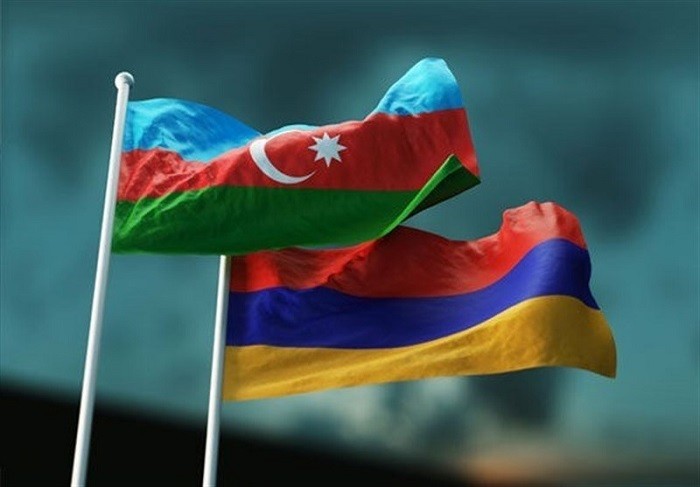
Azerbaijan is a country with a very important geopolitical and geo-economic position in the Caucasus region and beyond. For the first time, this country declared its independence in 1918, right after the First World War, but two years later it was annexed by the former Soviet Union. From 1920 until 1991, when it again declared its independence, it was part of Moscow’s communist empire.

The former Soviet Republic of Azerbaijan was among the first of the 15 republics that the USSR had, to declare its independence in 1991, as the empire was collapsing. After independence, Azerbaijan did not have major conflicts with Armenia. However, during the Soviet era and up until last year, Azerbaijan had a prolonged, decades-long conflict with the former Soviet Republic of Armenia, which also became independent with the dissolution of the former USSR. The cause of this conflict was the Nagorno-Karabakh region, which is inhabited by a majority Armenian population. This region had autonomy within the Azerbaijan Soviet Socialist Republic.

But after independence, the Republic of Armenia announced its claims to Nagorno-Karabakh, demanding that this region join the Republic of Armenia. Initially, it was the head of the Nagorno-Karabakh government, Gurkassjan, who in 1991 accused Azerbaijan of having violated the autonomy of this republic. He said that the Armenians of this region, as well as the Armenians of Armenia, see themselves as a one nation, preaching the unification of Nagorno-Karabakh with Armenia.

The independent Republic of Azerbaijan denied the accusations, not because it feared the union of Nagorno-Karabakh with Armenia. This unification was completely impossible because the borders of the region with an Armenian majority and those of the Armenian state itself do not coincide.  A union of a region, recognized as part of the state of Azerbaijan, with another state, in this case Armenia, was absurd to even contemplate, let alone to implement.

Nevertheless, the Armenian authorities, both in the region and in Armenia, nurtured the illusion of the unification of Nagorno-Karabakh with Armenia for decades. In this venture of belief, they had the support of some European countries, but also of Russia. Russia supported the ambitions of the Nagorno-Karabakh Armenians in order to keep a hotbed of conflict burning in the Caucasus. Keeping conflict hotbeds active has always been a strategy of the Russian Federation, with its hope that in a favorable situation it could use that conflict zone for its expansionist interests. The same thing happens, for example, in the Balkans with the two conflict hotbeds, that of Kosovo with Serbia and of Republika Srpska with the Bosnian Federation.

On the other hand, the demands of the Armenian citizens of Azerbaijan were extremely unrealizable. With their extreme demands, the Armenians in this case, instead of gaining substantial autonomy in exchange for accepting and respecting the Republic of Azerbaijan, focused on rejecting the state and its territorial integrity. However, after declaring independence in 1991, Azerbaijan was recognized by the UN Security Council as an independent state, with full respect for its territorial integrity.

However, the President of Armenia, Robert Kocharyan, declared in 2003 that “Azerbaijanis and Armenians cannot live together, as they do not accept each other’s ethnicity.” This statement was harshly criticized at the time by the Secretary General of the Council of Europe, of which Armenia is a member.

The disagreements continued for many years and decades. They were also related to the so-called return of Armenian refugees to their settlements in Nagorno-Karabakh, which was met with refusals from Baku, mostly due to the increase in the number of these refugees by Armenia. This is reminiscent of the number of Serb refugees who fled Kosovo, which Belgrade authorities consider to be 235,000, while in Kosovo in 1991, according to the Serbian government’s census, only 209,000 Serbs lived. And if we add to the figure of 235,000 the 105,000 Serbs who have not left Kosovo, then it turns out that the number of Serbs in Kosovo during the last war was 340,000, or 130,000 more than the actual number.

In 2010, the international community intervened seriously to resolve the conflict through negotiations between the two states. The Council of Europe, through resolution 2216, welcomed the decision for direct talks between the president of Azerbaijan and that of Armenia at the time and called for the return of Armenian refugees to Nagorno-Karabakh. It also called for peacekeeping troops to be deployed in this region after an agreement. Meanwhile, the UN Security Council stated in three of its resolutions that Nagorno-Karabakh belongs to Azerbaijan.

Since this time, talks have continued between the two presidents and delegations of both countries, until early 2024 when the agreement to resolve the conflict in favor of Azerbaijan was reached. During the 13-year period, there were numerous episodes of violence and even loss of human life in this conflict. On March 13, 2025, the parties informed the public that they had agreed on the terms of peace and that the Republic of Armenia recognizes Nagorno-Karabakh as a sovereign part of the state of Azerbaijan. Meanwhile in August of this year, the American president, Donald Trump, invited the two presidents of both countries to the White House, where an additional peace agreement was signed, in which Azerbaijan is also recognized the right to the Sangesur corridor, which passes through Armenia, to use for trade with Turkey and other countries. The USA will be the guarantor power of this agreement which includes the use of the Armenian corridor by Azerbaijan for trade.

But the achievement of the agreement is also a contribution of the Republic of Turkey and its president, Recep Tayyip Erdoğan, who with his diplomatic methods managed to paralyze Russian aid to Armenia. This even caused Armenia to express a kind of revolt against Moscow and to consider its withdrawn stance as a “betrayal”. However, it should be considered that Armenia itself at this time had become very close with France and some other European countries, which ran in contradiction with the tense relations between the Russian and French presidents.

The fundamental lesson that comes from this conflict is that minorities must fight for their rights, but always in accordance with the constitution of the country in which they live. If it happens that a certain minority does not accept coexistence, then the solutions can be painful. The Armenians of Azerbaijan refused for more than three decades to integrate into their state, as a result, they ultimately lost their territorial autonomy as well. Having become extremely hostile to the majority population, a large number of them left their settlements to Armenia after the agreement. The departure was also a refusal of coexistence with the Azerbaijanis.

/Argumentum.al

© 2025 Argumentum

Related Posts

ENGLISH

The Blueprint of a Diplomatic Debacle: Analyzing Germany’s Historic UNSC Loss

4 June, 2026
Current Events

Serbia – China 2026: Technological partnership, geopolitical positioning and a new phase of the Chinese presence in the Western Balkans

1 June, 2026
ENGLISH

IBAR? ”Sufficiently! Much ado about nothing! Shart contrasts in Beijing! Where is the exit?!

1 June, 2026

Follow US

Subscribe

Receive Argumentum Magazine by Email

Last Posts

The Blueprint of a Diplomatic Debacle: Analyzing Germany’s Historic UNSC Loss

4 June, 2026

Serbia – China 2026: Technological partnership, geopolitical positioning and a new phase of the Chinese presence in the Western Balkans

1 June, 2026

IBAR? ”Sufficiently! Much ado about nothing! Shart contrasts in Beijing! Where is the exit?!

1 June, 2026

How Alkida Lushaj is redefining democratic inclusion globally

31 May, 2026

Cyber Attribution, Corruption, and the False-Flag Question in Albania’s 2022 Alleged Iranian Cyberattack

30 May, 2026
Argumentum

“Argumentum”, një proces intelektual …

Contact Us

[email protected]
[email protected]
[email protected]

Follow Us

Media Partner

Register

Receive Argumentum Magazine by Email
  • Home
  • Privacy Policy
  • About Us
  • Contact

© 2022 Argumentum. All Rights Reserved. | NUIS: L91415033Q

Welcome Back!

Login to your account below

Forgotten Password? Sign Up

Create New Account!

Fill the forms bellow to register

*By registering into our website, you agree to the Terms & Conditions and Privacy Policy.
All fields are required. Log In

Retrieve your password

Please enter your username or email address to reset your password.

Log In

Add New Playlist

No Result
View All Result
  • Home
  • OP/ED
  • Interview
  • Realpolitik
  • Current Events
  • Top News
  • YOUR VOICE
  • Shqip

© 2022 Argumentum. All Rights Reserved. | NUIS: L91415033Q

This website uses cookies. By continuing to use this website you are giving consent to cookies being used. Visit our Privacy and Cookie Policy.