











• SHQIPËRI
  • KOSOVË
  • MAQEDONIA E VERIUT
  • MALI I ZI
  • Revista në PDF
6 June, 2026
  • Home
  • OP/ED

    Pierre Nora and the institution of memory we lack in Eastern Europe

    The Blueprint of a Diplomatic Debacle: Analyzing Germany’s Historic UNSC Loss

    Cyber Attribution, Corruption, and the False-Flag Question in Albania’s 2022 Alleged Iranian Cyberattack

    Between Russia, Iran and Europe: Azerbaijan as a balancing power in the South Caucasus

    The Zero-Tariff Gate: Sovereignty as a Service in the Sino-African Corridor

    Albania vs. the Sea/ Marginal Notes on A. Leka’s Novel The Hidden Side of the Albanian Socialist Garden

    May 9 and the long shadow of a Letter: Is Europe still Schuman’s Project?

    The Arbnesh of Zadar: A living memory of Albanian identity on the Adriatic coast

    Science Diplomacy and Academic Freedom: A strategic nexus for contemporary diplomacy

  • Interview

    Exclusive Interview with Oleksandr Tyshchenko: A 40-Year Legacy of Chernobyl, Nuclear Risks, and Global Responsibility

    INTERVIEW: ZLATKO KRAMARIĆ – THOUGHTS ON THE OLD CONTINENT

    EXCLUSIVE / Ukrainian Ambassador to Albania, Volodymyr Shkurov: “Ukraine wants peace, but not at the expense of its freedom and independence”

    EXCLUSIVE| Ambassador Tayyar Kagan Atay: Türkiye and Albania, a Strategic Partnership Rooted in Shared Heritage and a Common Vision for the Future

    “Diplomacy, Not War”: Palestinian Ambassador to Albania Calls for Justice, Peace, and Global Action for Gaza

    Exclusive: “Even After Tito – Tito”/ Ambassador Zlatko Kramarić on Authoritarian Legacies and Democracy’s Future in the Balkans

    The Conclusion of the Diplomatic Mission / Ambassador Dancho Markovski: Strengthening Albania-North Macedonia Relations for a Shared European Future

    A Century of Diplomatic Relations Between Albania and Russia: Exclusive Interview with the Russian Ambassador to Albania, H.E. Alexey Zaytsev

    Exclusive/ The chairman of the Freedom Party, Ilir Meta: “The will of the citizens will triumph in Albania, as it did in North Macedonia”

  • Realpolitik

    IBAR? ”Sufficiently! Much ado about nothing! Shart contrasts in Beijing! Where is the exit?!

    Neither peace nor war! Peace with bombs?! IBAR in autumn?! Not another Hormuz in Taivan! 

    IBAR – a springing board or an obstacle? Can we catch the EU Negotiation train 2027? When the dress makes the news!  EU electoral April  ends in a draw 1:1!  

    The European Parliament building in Strasbourg, France with flags waving calmly celebrating peace of the Europe. July 12, 2020.

    EU 2027 or 2037! Even half membership failed! No exit strategy!     

    What next?

    “With diplomatic velvet“! Major question marks! In Washington yes, but  in the White House NO! A strange dinner in Brussels!

    From a great ‘apple of disaccord’ to a  point of  cooperation! A bad start! The strange absence in Davos!

    5 lessons from the American 3 January! Don’t count the chicken before they are hatched! Will NATO freeze in Greenland? Wrong diplomatic messages!

    German Chancellor Friedrich Merz, European Commission President Ursula von der Leyen, Ukraine's President Volodymyr Zelenskiy, U.S. Special Envoy Steve Witkoff and Jared Kushner, son-in-law of U.S. President Donald Trump line up for a family photo opportunity at the Chancellery in Berlin, Germany, December 15, 2025.    REUTERS/Lisi Niesner/Pool

    A Strategy that could change the world! Europe in Berlin! Why an historic compromise? Only charm diplomacy in Athens!

  • Current Events

    Rama alleges ‘hybrid war’ behind protests against Kushner-linked coastal development

    BELGRADE, SERBIA - JUNE 18. 2020: Russian and Serbian flags on display during Russian Foreign Minister Sergei Lavrov's visit to the Liberators of Belgrade Memorial. Valery Sharifulin/TASS,Image: 533095429, License: Rights-managed, Restrictions: UWAGA! Zdjęcia zawierają oryginalny opis dostawcy (ITAR-TASS). Szczególnie w związku z agresją Rosji na Ukrainę mogą zawierać przekaz niezgodny z faktami. Zweryfikuj go przed publikacją, Model Release: no, Credit line: Valery Sharifulin / TASS / Forum

    Balkan Maskirovka: Why Moscow’s “Distancing” Is Only an Operation for the Survival of Vučić’s Regime

    Serbia – China 2026: Technological partnership, geopolitical positioning and a new phase of the Chinese presence in the Western Balkans

    The Digital Protectorate: How the EU AI Act Codified Silicon Valley’s Monopoly

    The 28th MFC Annual Conference in Durrës / Sulaj: Microfinance remains a key instrument for financial inclusion

    Serbia at the Crossroads of EU Integration and Geopolitical Balancing: IFIMES Analysis

    Tirana – €20 Million EU–Banking Agreement Boosts Albanian SMEs

    The Myth of Independence: How Chinese Efficiency is Rewriting the Constitution of Modern Geopolitics!

    Europe Yesterday and Today: Why 9 May Still Matters

  • Top News

    Rama alleges ‘hybrid war’ behind protests against Kushner-linked coastal development

    No End in Sight: Trump, Netanyahu and the Expanding Middle East War

    Tirana – €20 Million EU–Banking Agreement Boosts Albanian SMEs

    “EU4Municipalities II” Project, a Strategic Investment for Strengthening Municipalities and Accelerating Albania’s Path towards the EU

    Albania, Italy deepen defence ties with naval shipbuilding deal

    U.S. Embassy: Iran-Linked Groups May Target Americans and Iranian Opposition in Albania

    The Council of Albanian Ambassadors disappointed with the voting of the draft law on the foreign service in the parliamentary committees.

    Prime Minister Edi Rama Addresses Israel’s Knesset in Historic Special Session

    Kazakhstan’s Strategic Reform Agenda: Stability, Modern Governance, and Responsible Diplomacy

  • YOUR VOICE
  • Shqip
No Result
View All Result
Argumentum
  • Home
  • OP/ED

    Pierre Nora and the institution of memory we lack in Eastern Europe

    The Blueprint of a Diplomatic Debacle: Analyzing Germany’s Historic UNSC Loss

    Cyber Attribution, Corruption, and the False-Flag Question in Albania’s 2022 Alleged Iranian Cyberattack

    Between Russia, Iran and Europe: Azerbaijan as a balancing power in the South Caucasus

    The Zero-Tariff Gate: Sovereignty as a Service in the Sino-African Corridor

    Albania vs. the Sea/ Marginal Notes on A. Leka’s Novel The Hidden Side of the Albanian Socialist Garden

    May 9 and the long shadow of a Letter: Is Europe still Schuman’s Project?

    The Arbnesh of Zadar: A living memory of Albanian identity on the Adriatic coast

    Science Diplomacy and Academic Freedom: A strategic nexus for contemporary diplomacy

  • Interview

    Exclusive Interview with Oleksandr Tyshchenko: A 40-Year Legacy of Chernobyl, Nuclear Risks, and Global Responsibility

    INTERVIEW: ZLATKO KRAMARIĆ – THOUGHTS ON THE OLD CONTINENT

    EXCLUSIVE / Ukrainian Ambassador to Albania, Volodymyr Shkurov: “Ukraine wants peace, but not at the expense of its freedom and independence”

    EXCLUSIVE| Ambassador Tayyar Kagan Atay: Türkiye and Albania, a Strategic Partnership Rooted in Shared Heritage and a Common Vision for the Future

    “Diplomacy, Not War”: Palestinian Ambassador to Albania Calls for Justice, Peace, and Global Action for Gaza

    Exclusive: “Even After Tito – Tito”/ Ambassador Zlatko Kramarić on Authoritarian Legacies and Democracy’s Future in the Balkans

    The Conclusion of the Diplomatic Mission / Ambassador Dancho Markovski: Strengthening Albania-North Macedonia Relations for a Shared European Future

    A Century of Diplomatic Relations Between Albania and Russia: Exclusive Interview with the Russian Ambassador to Albania, H.E. Alexey Zaytsev

    Exclusive/ The chairman of the Freedom Party, Ilir Meta: “The will of the citizens will triumph in Albania, as it did in North Macedonia”

  • Realpolitik

    IBAR? ”Sufficiently! Much ado about nothing! Shart contrasts in Beijing! Where is the exit?!

    Neither peace nor war! Peace with bombs?! IBAR in autumn?! Not another Hormuz in Taivan! 

    IBAR – a springing board or an obstacle? Can we catch the EU Negotiation train 2027? When the dress makes the news!  EU electoral April  ends in a draw 1:1!  

    The European Parliament building in Strasbourg, France with flags waving calmly celebrating peace of the Europe. July 12, 2020.

    EU 2027 or 2037! Even half membership failed! No exit strategy!     

    What next?

    “With diplomatic velvet“! Major question marks! In Washington yes, but  in the White House NO! A strange dinner in Brussels!

    From a great ‘apple of disaccord’ to a  point of  cooperation! A bad start! The strange absence in Davos!

    5 lessons from the American 3 January! Don’t count the chicken before they are hatched! Will NATO freeze in Greenland? Wrong diplomatic messages!

    German Chancellor Friedrich Merz, European Commission President Ursula von der Leyen, Ukraine's President Volodymyr Zelenskiy, U.S. Special Envoy Steve Witkoff and Jared Kushner, son-in-law of U.S. President Donald Trump line up for a family photo opportunity at the Chancellery in Berlin, Germany, December 15, 2025.    REUTERS/Lisi Niesner/Pool

    A Strategy that could change the world! Europe in Berlin! Why an historic compromise? Only charm diplomacy in Athens!

  • Current Events

    Rama alleges ‘hybrid war’ behind protests against Kushner-linked coastal development

    BELGRADE, SERBIA - JUNE 18. 2020: Russian and Serbian flags on display during Russian Foreign Minister Sergei Lavrov's visit to the Liberators of Belgrade Memorial. Valery Sharifulin/TASS,Image: 533095429, License: Rights-managed, Restrictions: UWAGA! Zdjęcia zawierają oryginalny opis dostawcy (ITAR-TASS). Szczególnie w związku z agresją Rosji na Ukrainę mogą zawierać przekaz niezgodny z faktami. Zweryfikuj go przed publikacją, Model Release: no, Credit line: Valery Sharifulin / TASS / Forum

    Balkan Maskirovka: Why Moscow’s “Distancing” Is Only an Operation for the Survival of Vučić’s Regime

    Serbia – China 2026: Technological partnership, geopolitical positioning and a new phase of the Chinese presence in the Western Balkans

    The Digital Protectorate: How the EU AI Act Codified Silicon Valley’s Monopoly

    The 28th MFC Annual Conference in Durrës / Sulaj: Microfinance remains a key instrument for financial inclusion

    Serbia at the Crossroads of EU Integration and Geopolitical Balancing: IFIMES Analysis

    Tirana – €20 Million EU–Banking Agreement Boosts Albanian SMEs

    The Myth of Independence: How Chinese Efficiency is Rewriting the Constitution of Modern Geopolitics!

    Europe Yesterday and Today: Why 9 May Still Matters

  • Top News

    Rama alleges ‘hybrid war’ behind protests against Kushner-linked coastal development

    No End in Sight: Trump, Netanyahu and the Expanding Middle East War

    Tirana – €20 Million EU–Banking Agreement Boosts Albanian SMEs

    “EU4Municipalities II” Project, a Strategic Investment for Strengthening Municipalities and Accelerating Albania’s Path towards the EU

    Albania, Italy deepen defence ties with naval shipbuilding deal

    U.S. Embassy: Iran-Linked Groups May Target Americans and Iranian Opposition in Albania

    The Council of Albanian Ambassadors disappointed with the voting of the draft law on the foreign service in the parliamentary committees.

    Prime Minister Edi Rama Addresses Israel’s Knesset in Historic Special Session

    Kazakhstan’s Strategic Reform Agenda: Stability, Modern Governance, and Responsible Diplomacy

  • YOUR VOICE
  • Shqip
No Result
View All Result
Argumentum
No Result
View All Result
Home ENGLISH

Clear messages from Dayton: The territorial integrity and sovereignty of Bosnia and Herzegovina is beyond question

3 June, 2025
in ENGLISH, In Focus
A A
Share on FacebookShare on Twitter

IFIMES*

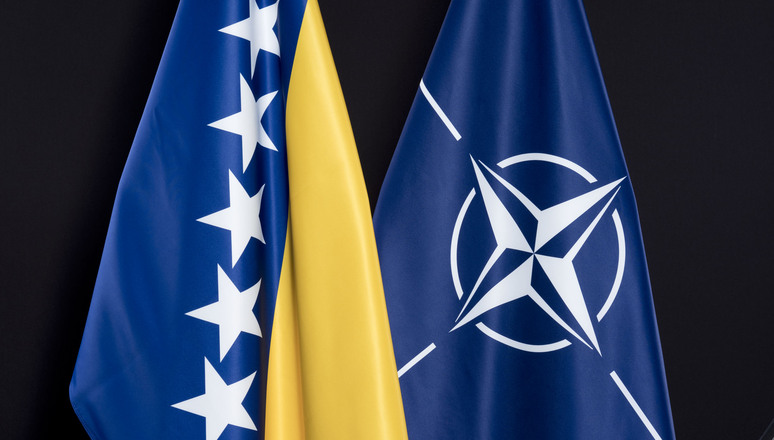
The NATO Parliamentary Assembly, a transatlantic forum bringing together 269 parliamentarians from the Alliance’s 32 member states, held a NATO Conference in Dayton from 23 to 26 May 2025 to commemorate the 30th anniversary of the signing of the Dayton Peace Agreement, which brought an end to the 1992–1995 war in Bosnia and Herzegovina.

Landau – the star of the Dayton gathering

The thirtieth anniversary of the Dayton Peace Agreement[2] was marked by a series of thematic panels and other events. For the first time since 2003, the NATO Parliamentary Assembly took place in the United States. Key topics included Russia’s aggression against Ukraine, the situation in the Middle East, the future of the NATO Alliance, and the political situation in Bosnia and Herzegovina. The Dayton Dialogue, focusing on peace and security in the Balkans, was the central panel of the event. 

The address delivered by US Deputy Secretary of State Christopher Landau drew the most attention. Speaking on the occasion of the 30th anniversary of the Dayton Peace Agreement, he stated: “We in the Trump Administration are willing to provide our good offices to improve conditions, but only if our involvement is wanted and warranted. I know that this hasn’t always been the spirit in which American officials have approached foreign policy. But in this regard, as in many others, the Trump Administration is willing to try a different approach, and I’m proud to represent this new thinking.”[3]

“What does this mean for Bosnia-Herzegovina? It means that we’re willing to listen to, and to work with, all affected parties. Agreements must be firm to hold; but you must be flexible to adjust to changing times.”

Landau was clear: “The United States is not offering unlimited means for undefined, uncertain, or unrealistic ends. This basic point is lost on too many advocates for remaking foreign societies along utopian lines. We’re not interested in imposing a vision of a society that reflects the preferences of distant bureaucrats and narrow activists. The United States can be a willing partner with considerable political capital. We can work hard; but we will work only with those committed to a practical realism for their own countries.”[4]

Representatives from the region interpreted Deputy US Secretary of State Landau’s speech in different ways. The most accurate interpretation came from NATO Secretary General Mark Rutte, who, speaking at the NATO Parliamentary Assembly in Dayton, said: “I will be tough on Bosnia and Herzegovina. I have no friends or enemies among the three members of the Presidency of Bosnia and Herzegovina. But we must take a tough stance with them. You cannot export your problems to the rest of the Balkans, to Europe, or the NATO Alliance. They must take responsibility for their own country. And when some of them object to the fact that the High Representative is still there, or that the Dayton Agreement is still in place, it is not because you or I like it that way, but because they are not governing their own country. Of course, we will help them, you will help, we will all help. EUFOR is there, KFOR is in Kosovo. We are all guarantors of peace. We cannot accept any disintegration of the country. That is unacceptable to NATO and to anyone else.”[5]

The messages of Christopher Landau and Mark Rutte exposed the political spin in what Balkan delegations relayed to their home countries, affirming that the territorial integrity and sovereignty of Bosnia and Herzegovina are beyond question.

Why did the “pro-Bosnian” delegation fail to present a unified strategy?

There had been an expectation that Bosnia and Herzegovina – or at least the pro-Bosnian members of its delegation – would present a coordinated strategy based on the achievements of the international community, rooted in the Dayton Peace Agreement. Certain international actors had encouraged them to put forward two key agenda points: urgent NATO accession and the legacy of international courts as a foundation for resolving the crisis. This would have included a request for conditional NATO membership, based on a range of positive indicators, as well as the implementation of judgments from UN and European courts in addressing the crisis in BiH. North Macedonia and Montenegro joined NATO in the wake of so-called coups d’état, and the attempted coup in BiH, led by Milorad Dodik (SNSD) and pro-Russian politicians, presented an ideal opportunity to publicly call for urgent and conditional NATO membership for BiH. Regrettably, that opportunity was missed – and it may come at a very high cost for BiH. Failing to call for BiH’s urgent NATO accession at such a high-level gathering and such an occasion, with the eyes of the world on Dayton and the United States, reveals a lack of organisation, responsibility, and state-building awareness. Implementing the legacy of the International Criminal Tribunal for the former Yugoslavia (ICTY), the International Court of Justice (ICJ), and the European Court of Human Rights (ECHR) as a foundation for addressing the crisis in BiH would have sent a clear signal to the international community about the relevance of international judicial findings and rulings issued since the signing of the Dayton Peace Agreement. Two joint criminal enterprises and two international armed conflicts involving Serbia and Croatia, along with the rulings of the ECHR, could have served as a foundation for building a civic state. However, none of this was pursued. On top of that, High Representative Christian Schmidt (CSU/EPP) once again “stabbed civic BiH in the back”, declaring during a panel discussion: “It is very difficult to explain how Bosnia and Herzegovina functions to people outside the Western Balkans. If we do not take into account its multi-ethnic structure and do not expect it to become a civic state, we will not be successful in the long run. We have to respect the special situation Bosnia and Herzegovina is in,” said the High Representative in BiH. With this statement in Dayton, Schmidt echoed the arguments of the unauthorised agents of Bosnia and Herzegovina before the ECHR, who represented the interests of Republika Srpska and HDZ, as well as the views expressed by ECHR judges in their dissenting opinions in the “Sejdić-Finci” case and other similar proceedings. Both the agents and the dissenting judges attempted to relativise human rights—an effort that ultimately failed to convince the majority in any chamber not to support the applicants from BiH. On the contrary, the majority pointed to the discriminatory provisions in the Constitution of Bosnia and Herzegovina. This German right-winger is now promoting those same discriminatory views and is once again attempting to influence the ECHR judges to overturn the first-instance decision in the case of “Slaven Kovačević v. Bosnia and Herzegovina.” This was Schmidt’s Islamophobic outburst, in which he presumed to question the jurisprudence of the ECHR on the very anniversary of the Dayton Agreement—where the Court holds a special status under Annex IV of the Agreement. It is hard to say who deserves the title of ‘scandal monger’ more: Schmidt, or the faceless EU Special Representative in BiH, Luigi Soreca.

NATO Parliamentary Assembly adopts declaration stressing the need to strengthen defence capabilities

In the newly adopted declaration, the NATO Parliamentary Assembly underscored the importance of stability and peace in the Western Balkans and voiced serious concern over recent legislative initiatives in the Republika Srpska entity of BiH, which threaten to undermine the country’s constitutional order, sovereignty, and territorial and functional integrity, as well as the Dayton Peace Agreement.

Serbia proposed an amendment seeking to remove references to Republika Srpska, but the motion was rejected. Dodik and pro-Russian politicians, led by Željka Cvijanović (SNSD), went to great lengths to portray Milorad Dodik as a defender of the Dayton Peace Agreement — a claim that was met with derision by the diplomatic corps.

US Congressman and Head of the US Delegation to the NATO Parliamentary Assembly Michael R. Turner and NATO Parliamentary Assembly President Marcos Perestrello issued a joint statement addressing the current situation in Bosnia and Herzegovina, warning of destabilising factors and emphasising: “Complex challenges remain. Bosnia and Herzegovina is at a critical juncture. We are deeply concerned about the separatist rhetoric and actions coming from the Republika Srpska that threaten the sovereignty, territorial integrity and constitutional order of the country. We welcome the strong and united position of the leaders of the United States of America and Europe in unequivocally condemning this dangerous and destabilising behaviour. Their clear determination to resist such actions and to prevent the emergence of a security vacuum in the region is urgent and commendable.”[6]

Dayton conclusions aligned with the Franco-German “non-paper”

Titled “Responding to attacks by Republika Srpska on the constitutional order of Bosnia and Herzegovina,” the Franco-German non-paper has been presented to the other EU member states.

A sustainable resolution to the crisis will require, above all, the full reintegration of Republika Srpska into the constitutional framework of Bosnia and Herzegovina, a renewed commitment by Bosnian Serbs to the proper functioning of state institutions, and their renewed willingness to undertake all relevant steps outlined in the European Commission’s recommendation[7] of 12 October 2022 for advancing the country’s EU accession process.

The immediate goal of the “non-paper” is the repeal of unconstitutional laws and the withdrawal of the new draft constitution. All avenues to achieve this goal should be considered, with priority given to: 1. financial support; 2. sanctions; 3. enlargement; 4. contacts with RS officials.

Analysts believe that the international community should focus its attention on Bosnia and Herzegovina’s neighbours and their policies towards the country, treating their conduct as a litmus test for the credibility and acceptability of their broader policies in international forums.

General Wesley Clark draws parallels between Putin and Milošević

Speaking in Dayton, General Wesley Clark, former NATO Supreme Allied Commander Europe, likened Russian President Vladimir Putin to Slobodan Milošević. Meanwhile, Croatian delegates aggressively and insidiously promoted the idea of a third entity, the dismantling of Bosnia and Herzegovina, and the role of NGOs in the process.

General Clark drew a comparison between Russian President Vladimir Putin and former Serbian President Slobodan Milošević, asking: “How could [Putin] think he could prevail?” He continued: “The same way Slobodan Milošević thought he could pull the wool over Europe’s eyes in 1992, with his small army overwhelming Bosnia. He didn’t get away with it. With your leadership and commitment, Mr. Putin won’t get away with it either.”[8]

Croatian Prime Minister Andrej Plenković (HDZ) and other Croatian representatives made scandalous and aggressive efforts to win over American officials in a bid to secure support for the dismantling of Bosnia and Herzegovina, often resorting to false claims. 

Several NGO representatives successfully pushed back against both pro-Russian politicians and Croatian pressure, further underscoring the lack of coordination and strategic focus within the Bosnian delegation in Dayton.

Slovenia’s important role in resolving the political and security crisis in BiH

Since Prime Minister Robert Golob (GS) came to power, the Republic of Slovenia has launched a series of initiatives aimed at bringing Bosnia and Herzegovina closer to EU membership. One of the key outcomes of these efforts was the granting of EU candidate status to BiH. In April, Slovenia, as a non-permanent member of the UN Security Council, called for an emergency session focused specifically on the situation in Bosnia and Herzegovina.

It is estimated that a significant portion of the assets belonging to Milorad Dodik, his close party associates, and affiliated oligarchs has been stashed in Slovenia. Should Slovenia impose sanctions and seize those assets, it could accelerate the resolution of the crisis in BiH by undermining trust within this political-criminal cartel. There are growing expectations that Slovenia will follow the example of other EU countries and impose sanctions on Dodik, whose rhetoric and actions now pose a serious threat to regional stability and BiH’s EU integration. Meanwhile, Dodik has already leveraged his influence and capital to position himself as a political actor within Slovenia as well.

Dragan Čović has no right to obstruct Bosnia and Herzegovina’s EU path 

The Council of Ministers is close to forming a new parliamentary majority, which in practice already exists. Nevertheless, HDZ BiH, led by Dragan Čović, is intent on keeping SNSD and Milorad Dodik in power at all costs. SNSD is blocking the establishment of the new majority by denying quorum—simply by not showing up at the session of the House of Peoples.

In the House of Peoples of the BiH Parliamentary Assembly, nine out of fifteen delegates support the dismissal of Speaker Nikola Špirić (SNSD). Yet even five or six months after the new majority was formed, the delegates have not had the chance to vote on the motion to remove him.

The quorum rules need to be amended so that a quorum is constituted by the participation of at least two delegates from each national caucus. This would put an end to obstruction tactics.

Analysts maintain that Dragan Čović and HDZ have no legitimate grounds to block Bosnia and Herzegovina’s path to the EU by disregarding the new parliamentary majority and shielding Milorad Dodik and the SNSD. The new majority would allow BiH’s EU integration process to be unblocked and pave the way for a range of reforms. A final ruling by the Court of BiH on Dodik’s appeal is expected soon. If the first-instance verdict is upheld, he will be barred from political activity, and the Central Election Commission is expected to revoke his mandate as President of Republika Srpska. This would inevitably lead to the formation of a new parliamentary majority and government in the National Assembly of Republika Srpska. Dodik would then find himself in a position similar to that of former North Macedonian Prime Minister Nikola Gruevski (VMRO-DPMNE), and Bosnia and Herzegovina—alongside Serbia—would move forward decisively on its path to EU and NATO integration.

*https://www.ifimes.org/en/researches/nato-parliamentary-assembly-2025-clear-messages-from-dayton-to-the-political-leadership-of-the-western-balkans-the-territorial-integrity-and-sovereignty-of-bosnia-and-herzegovina-is-beyond-question/5524

/Argumentum.al

Related Posts

Current Events

Rama alleges ‘hybrid war’ behind protests against Kushner-linked coastal development

5 June, 2026
ENGLISH

Pierre Nora and the institution of memory we lack in Eastern Europe

5 June, 2026
BELGRADE, SERBIA - JUNE 18. 2020: Russian and Serbian flags on display during Russian Foreign Minister Sergei Lavrov's visit to the Liberators of Belgrade Memorial. Valery Sharifulin/TASS,Image: 533095429, License: Rights-managed, Restrictions: UWAGA! Zdjęcia zawierają oryginalny opis dostawcy (ITAR-TASS). Szczególnie w związku z agresją Rosji na Ukrainę mogą zawierać przekaz niezgodny z faktami. Zweryfikuj go przed publikacją, Model Release: no, Credit line: Valery Sharifulin / TASS / Forum
Current Events

Balkan Maskirovka: Why Moscow’s “Distancing” Is Only an Operation for the Survival of Vučić’s Regime

5 June, 2026

Follow US

Subscribe

Receive Argumentum Magazine by Email

Last Posts

Rama alleges ‘hybrid war’ behind protests against Kushner-linked coastal development

5 June, 2026

Pierre Nora and the institution of memory we lack in Eastern Europe

5 June, 2026
BELGRADE, SERBIA - JUNE 18. 2020: Russian and Serbian flags on display during Russian Foreign Minister Sergei Lavrov's visit to the Liberators of Belgrade Memorial. Valery Sharifulin/TASS,Image: 533095429, License: Rights-managed, Restrictions: UWAGA! Zdjęcia zawierają oryginalny opis dostawcy (ITAR-TASS). Szczególnie w związku z agresją Rosji na Ukrainę mogą zawierać przekaz niezgodny z faktami. Zweryfikuj go przed publikacją, Model Release: no, Credit line: Valery Sharifulin / TASS / Forum

Balkan Maskirovka: Why Moscow’s “Distancing” Is Only an Operation for the Survival of Vučić’s Regime

5 June, 2026

The Blueprint of a Diplomatic Debacle: Analyzing Germany’s Historic UNSC Loss

4 June, 2026

Serbia – China 2026: Technological partnership, geopolitical positioning and a new phase of the Chinese presence in the Western Balkans

1 June, 2026
Argumentum

“Argumentum”, një proces intelektual …

Contact Us

[email protected]
[email protected]
[email protected]

Follow Us

Media Partner

Register

Receive Argumentum Magazine by Email
  • Home
  • Privacy Policy
  • About Us
  • Contact

© 2022 Argumentum. All Rights Reserved. | NUIS: L91415033Q

Welcome Back!

Login to your account below

Forgotten Password? Sign Up

Create New Account!

Fill the forms bellow to register

*By registering into our website, you agree to the Terms & Conditions and Privacy Policy.
All fields are required. Log In

Retrieve your password

Please enter your username or email address to reset your password.

Log In

Add New Playlist

No Result
View All Result
  • Home
  • OP/ED
  • Interview
  • Realpolitik
  • Current Events
  • Top News
  • YOUR VOICE
  • Shqip

© 2022 Argumentum. All Rights Reserved. | NUIS: L91415033Q

This website uses cookies. By continuing to use this website you are giving consent to cookies being used. Visit our Privacy and Cookie Policy.