














































By Zlatko Kramarić*|ARGUMENTUM
1. Introduction: Two Crises, Two Europes
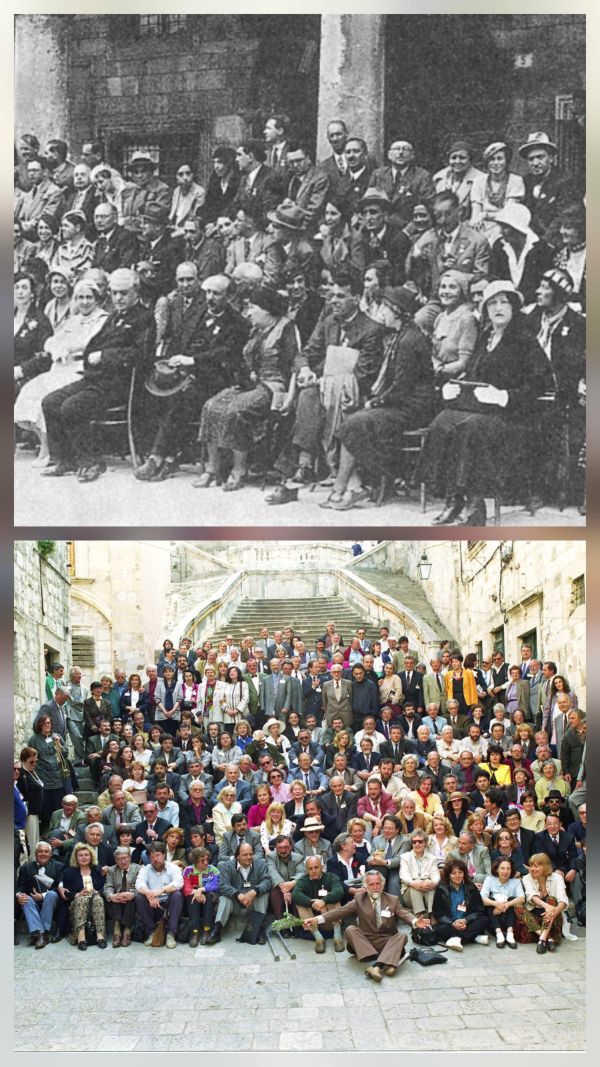
The Dubrovnik congress of 1933 took place during the rise of fascism; the 1993 congress during the violent breakup of Yugoslavia. Both moments confronted European intellectuals with the limits of moral clarity, institutional courage, and ideological comfort.
In 1933, writers hesitated to condemn fascism explicitly.
In 1993, many again hesitated to clearly name aggression.
The continuity of hesitation is one of the most striking parallels.
2. The Setting: Europe’s Architectural Stage of Anxiety
1933 Dubrovnik appears in memoirs as a city of Mediterranean calm, masking approaching catastrophe.
1993 Dubrovnik was visibly wounded: the congress took place under the psychological shadow of siege.
Yet in both cases, Dubrovnik served as a mirror:
In 1933: a warning of an emerging totalitarian world.
In 1993: a warning that Europe had not learned how to respond to barbarism.
3. Key Structural Similarities
3.1. Crisis of Moral Vocabulary
In 1933, PEN avoided direct mention of fascism.
In 1993, parts of PEN resisted naming Serbian aggression.
3.2. Tension Between Neutrality and Responsibility
Both congresses reveal the same structural problem:
Neutrality used as a refuge from political risk.
Responsibility perceived as “dangerous politicization.”
3.3. Inability to Recognize the Scale of Threat
1933: many delegates underestimated fascism.
1993: many underestimated the ideological radicalization fueling the Yugoslav conflict.
4. Key Differences
4.1. Visibility of Violence
1933: violence still largely anticipatory.
1993: violence fully visible — yet moral hesitation persisted.
4.2. Croatian Position
In 1933, Croatian intellectuals were part of a Yugoslav framework.
In 1993, they spoke from the standpoint of a sovereign state under attack.
4.3. International Dynamics
1933: ideological camps still forming.
1993: post–Cold War disorientation; European institutions lacking coherence.
5. Deep Analogy: The Failure of “Civilizational Self-Perception”
Both congresses expose a recurring European problem:
Europe imagines itself the guardian of culture, yet often fails to defend culture when it is attacked.
Dubrovnik — city of libraries, monasteries, Renaissance palaces — becomes the symbolic test in both eras.
1933: failure to name fascism.
1993: failure to name aggression.
6. Conclusion: Dubrovnik as Europe’s Conscience
The symbolic arc between 1933 and 1993 forms a single historical narrative:
Europe’s struggle to recognize political evil while it is still reversible.
Both congresses force a single question upon European intellectual history:
Can literature remain morally neutral when cities are burning?
PEN’s answer in 1933 was inadequate.
PEN’s answer in 1993 was better — but still compromised.
The two Dubrovnik congresses thus stand as Europe’s recurring examination, one whose results reveal not only the fate of writers, but the fate of Europe itself.
*Zlatko Kramarić is a Croatian publicist, author, and diplomat, currently serving as Ambassador to Albania. Formerly a university professor and politician, he is known for his work in literature, cultural studies, and regional history.
© 2025 Argumentum