
















• SHQIPËRI
  • KOSOVË
  • MAQEDONIA E VERIUT
  • MALI I ZI
  • Revista në PDF
23 July, 2026
  • Home
  • OP/ED

    The Self-Inflicted Decoupling: How U.S. Immigration Policy Is Ceding the Tech Edge to China

    The Blueprint Does Not Stop at the Drina

    The Underlying Logic behind China’s Economic Success

    Do Not Misuse the U.S. Declaration of Independence to Justify the Narrative of Insurrection in Albania

    The visit that changed Albania’s strategic future

    Pierre Nora and the institution of memory we lack in Eastern Europe

    The Blueprint of a Diplomatic Debacle: Analyzing Germany’s Historic UNSC Loss

    Between Russia, Iran and Europe: Azerbaijan as a balancing power in the South Caucasus

    The Zero-Tariff Gate: Sovereignty as a Service in the Sino-African Corridor

  • Interview

    Exclusive Interview with Oleksandr Tyshchenko: A 40-Year Legacy of Chernobyl, Nuclear Risks, and Global Responsibility

    INTERVIEW: ZLATKO KRAMARIĆ – THOUGHTS ON THE OLD CONTINENT

    EXCLUSIVE / Ukrainian Ambassador to Albania, Volodymyr Shkurov: “Ukraine wants peace, but not at the expense of its freedom and independence”

    EXCLUSIVE| Ambassador Tayyar Kagan Atay: Türkiye and Albania, a Strategic Partnership Rooted in Shared Heritage and a Common Vision for the Future

    “Diplomacy, Not War”: Palestinian Ambassador to Albania Calls for Justice, Peace, and Global Action for Gaza

    Exclusive: “Even After Tito – Tito”/ Ambassador Zlatko Kramarić on Authoritarian Legacies and Democracy’s Future in the Balkans

    The Conclusion of the Diplomatic Mission / Ambassador Dancho Markovski: Strengthening Albania-North Macedonia Relations for a Shared European Future

    A Century of Diplomatic Relations Between Albania and Russia: Exclusive Interview with the Russian Ambassador to Albania, H.E. Alexey Zaytsev

    Exclusive/ The chairman of the Freedom Party, Ilir Meta: “The will of the citizens will triumph in Albania, as it did in North Macedonia”

  • Realpolitik

    The Summit of Unity! Think of peace and prepare for war! It’s only the start to the end! Just a pause between two wars!

    Peace with war diplomacy! The protest,  image and tourism! Why this silence from the EU Commission and Council? A deal or a pause?

    Just kind words  in Tivat! Where is the peace!? A deal yes, peace No!What is happening with USA and  EU?  5 elections but no solution!

    IBAR? ”Sufficiently! Much ado about nothing! Shart contrasts in Beijing! Where is the exit?!

    Neither peace nor war! Peace with bombs?! IBAR in autumn?! Not another Hormuz in Taivan! 

    IBAR – a springing board or an obstacle? Can we catch the EU Negotiation train 2027? When the dress makes the news!  EU electoral April  ends in a draw 1:1!  

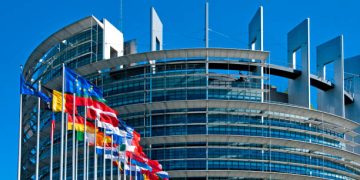
    The European Parliament building in Strasbourg, France with flags waving calmly celebrating peace of the Europe. July 12, 2020.

    EU 2027 or 2037! Even half membership failed! No exit strategy!     

    What next?

    “With diplomatic velvet“! Major question marks! In Washington yes, but  in the White House NO! A strange dinner in Brussels!

  • Current Events

    Who Is Interested in War in the Balkans?

    From Calculating Executions to Justifying Ethnic Cleansing

    When Algorithm Becomes the Most Powerful Manipulator: The Case of the Protests in Tirana

    NATO Summit in Ankara: Allies Adopt Declaration Reaffirming Collective Defence and Long-Term Security Commitments

    The Diplomacy of Gas and Algorithms: The Nuances of Official Tirana—Is It Breaking the European Taboo with Azerbaijan?

    Protection for Serbs, or Protection for Radoicic?

    The Architecture of Selective Sovereignty:Corporate Immunity, Technological Protectionism, and the Erosion of Credibility

    Montenegro’s Unfinished Transition

    The Paradox of Selective Capitalism: How Western Rule-Breaking Accelerates Its Own Systemic Demise

  • Top News

    The Council of Albanian Ambassadors condemns chauvinistic rhetoric by Serbian officials and calls for diplomatic action

    NATO at Ankara 2026: Strategic Rebalancing Between Russia Deterrence, Turkey’s Rise, and National Interests

    Daniel Serwer: A Bad War Ending Badly May Still Be Good News

    Friedrich Merz, Keir Starmer, António Costa, Donald Trump, Emmanuel Macron, Mark Carney, Ursula von der Leyen, Giorgia Meloni and Sanae Takaichi

    G7 Leaders Gather in Évian Amid Global Uncertainty, Focus on Security, Economy and International Cooperation

    Russian Ambassador in Tirana: “Without a Strong and Sovereign Russia, the Creation of a Just World Order Is Impossible”

    “The Flamingo Revolution”: Day 10 of Protests in Albania Draws International Attention

    Rama alleges ‘hybrid war’ behind protests against Kushner-linked coastal development

    No End in Sight: Trump, Netanyahu and the Expanding Middle East War

    Tirana – €20 Million EU–Banking Agreement Boosts Albanian SMEs

  • YOUR VOICE
  • Shqip
No Result
View All Result
Argumentum
  • Home
  • OP/ED

    The Self-Inflicted Decoupling: How U.S. Immigration Policy Is Ceding the Tech Edge to China

    The Blueprint Does Not Stop at the Drina

    The Underlying Logic behind China’s Economic Success

    Do Not Misuse the U.S. Declaration of Independence to Justify the Narrative of Insurrection in Albania

    The visit that changed Albania’s strategic future

    Pierre Nora and the institution of memory we lack in Eastern Europe

    The Blueprint of a Diplomatic Debacle: Analyzing Germany’s Historic UNSC Loss

    Between Russia, Iran and Europe: Azerbaijan as a balancing power in the South Caucasus

    The Zero-Tariff Gate: Sovereignty as a Service in the Sino-African Corridor

  • Interview

    Exclusive Interview with Oleksandr Tyshchenko: A 40-Year Legacy of Chernobyl, Nuclear Risks, and Global Responsibility

    INTERVIEW: ZLATKO KRAMARIĆ – THOUGHTS ON THE OLD CONTINENT

    EXCLUSIVE / Ukrainian Ambassador to Albania, Volodymyr Shkurov: “Ukraine wants peace, but not at the expense of its freedom and independence”

    EXCLUSIVE| Ambassador Tayyar Kagan Atay: Türkiye and Albania, a Strategic Partnership Rooted in Shared Heritage and a Common Vision for the Future

    “Diplomacy, Not War”: Palestinian Ambassador to Albania Calls for Justice, Peace, and Global Action for Gaza

    Exclusive: “Even After Tito – Tito”/ Ambassador Zlatko Kramarić on Authoritarian Legacies and Democracy’s Future in the Balkans

    The Conclusion of the Diplomatic Mission / Ambassador Dancho Markovski: Strengthening Albania-North Macedonia Relations for a Shared European Future

    A Century of Diplomatic Relations Between Albania and Russia: Exclusive Interview with the Russian Ambassador to Albania, H.E. Alexey Zaytsev

    Exclusive/ The chairman of the Freedom Party, Ilir Meta: “The will of the citizens will triumph in Albania, as it did in North Macedonia”

  • Realpolitik

    The Summit of Unity! Think of peace and prepare for war! It’s only the start to the end! Just a pause between two wars!

    Peace with war diplomacy! The protest,  image and tourism! Why this silence from the EU Commission and Council? A deal or a pause?

    Just kind words  in Tivat! Where is the peace!? A deal yes, peace No!What is happening with USA and  EU?  5 elections but no solution!

    IBAR? ”Sufficiently! Much ado about nothing! Shart contrasts in Beijing! Where is the exit?!

    Neither peace nor war! Peace with bombs?! IBAR in autumn?! Not another Hormuz in Taivan! 

    IBAR – a springing board or an obstacle? Can we catch the EU Negotiation train 2027? When the dress makes the news!  EU electoral April  ends in a draw 1:1!  

    The European Parliament building in Strasbourg, France with flags waving calmly celebrating peace of the Europe. July 12, 2020.

    EU 2027 or 2037! Even half membership failed! No exit strategy!     

    What next?

    “With diplomatic velvet“! Major question marks! In Washington yes, but  in the White House NO! A strange dinner in Brussels!

  • Current Events

    Who Is Interested in War in the Balkans?

    From Calculating Executions to Justifying Ethnic Cleansing

    When Algorithm Becomes the Most Powerful Manipulator: The Case of the Protests in Tirana

    NATO Summit in Ankara: Allies Adopt Declaration Reaffirming Collective Defence and Long-Term Security Commitments

    The Diplomacy of Gas and Algorithms: The Nuances of Official Tirana—Is It Breaking the European Taboo with Azerbaijan?

    Protection for Serbs, or Protection for Radoicic?

    The Architecture of Selective Sovereignty:Corporate Immunity, Technological Protectionism, and the Erosion of Credibility

    Montenegro’s Unfinished Transition

    The Paradox of Selective Capitalism: How Western Rule-Breaking Accelerates Its Own Systemic Demise

  • Top News

    The Council of Albanian Ambassadors condemns chauvinistic rhetoric by Serbian officials and calls for diplomatic action

    NATO at Ankara 2026: Strategic Rebalancing Between Russia Deterrence, Turkey’s Rise, and National Interests

    Daniel Serwer: A Bad War Ending Badly May Still Be Good News

    Friedrich Merz, Keir Starmer, António Costa, Donald Trump, Emmanuel Macron, Mark Carney, Ursula von der Leyen, Giorgia Meloni and Sanae Takaichi

    G7 Leaders Gather in Évian Amid Global Uncertainty, Focus on Security, Economy and International Cooperation

    Russian Ambassador in Tirana: “Without a Strong and Sovereign Russia, the Creation of a Just World Order Is Impossible”

    “The Flamingo Revolution”: Day 10 of Protests in Albania Draws International Attention

    Rama alleges ‘hybrid war’ behind protests against Kushner-linked coastal development

    No End in Sight: Trump, Netanyahu and the Expanding Middle East War

    Tirana – €20 Million EU–Banking Agreement Boosts Albanian SMEs

  • YOUR VOICE
  • Shqip
No Result
View All Result
Argumentum
No Result
View All Result
Home ENGLISH

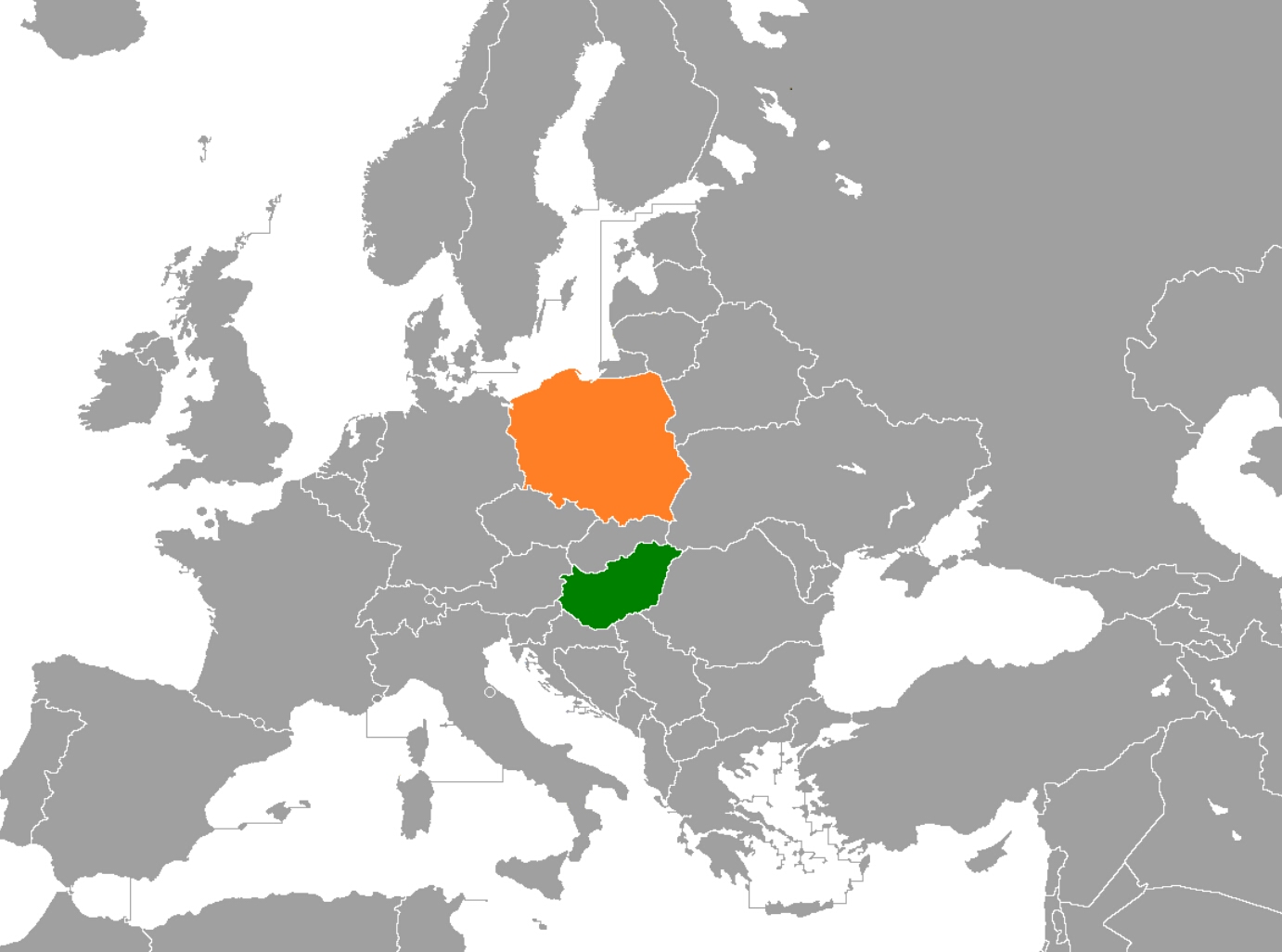
Could We Found a New EU Without Hungary and Poland?

21 September, 2020
in ENGLISH, English OP/ED
A A
harta europiane
Share on FacebookShare on Twitter

By Tom Theuns*

On 9 September, a remarkable exchange took place in the Dutch parliament between prime minister Mark Rutte and Green-Left MP Bram van Ojik.
Discussing attempts to make disbursement of the €750bn coronavirus recovery fund conditional on EU member states’ performance on democratic governance and the rule of law, Rutte asked “Can you make a budget via an intergovernmental agreement, or can you found an EU without Hungary and Poland?”
To someone outside the EU bubble, this may seem like legalese – peripheral to the urgent political issues of the day – the Covid-19 pandemic, climate change, Donald Trump.
Indeed, media reporting of the recovery-fund in July spilled much more ink on Rutte’s attempts to cap the total amount of grant money, than on the attempt to link the disbursement of cash to democratic performance.
But Europe’s rule of law crisis will remain once this public health crisis abates. The future of the EU as a union of democracies is at stake.
Tensions over member states reneging on democratic fundamentals have been around now for almost a decade, and increasingly focus on Hungary and Poland.
In Hungary, Viktor Orban has presided over the dismemberment of independent media, the ostracisation and abuse of refugees, fired judges and undermined the courts, and recently took to ruling by decree during the height of the pandemic.
In Poland, Jarosław Kaczyński and the governing hard-right Law and Justice party have entirely restructured Poland’s judicial branch to bring it under executive and legislative control, transformed public television into state propaganda and cracked down on LGBTI+ activists.
A third of Poland is now a self-declared ‘LGBTI-free zone’.

Taboo broken
Rutte’s comment is the first time the leader of an EU country has publicly considered the possibility of the EU integration project continuing without recalcitrant states.
The chosen wording – of “founding an EU without Hungary and Poland” – was also interesting, as it showed a subtle awareness of the legal difficulties that these questions raise.
In 2016, Jean Asselborn, the Luxembourgish minister of foreign affairs and former deputy prime minister, made headlines when he said “We cannot accept that the fundamental values of the European Union are flagrantly violated. Those who, like Hungary, build fences against refugees fleeing war or violate the freedom of the press and the independence of the judiciary, should be temporarily or, if necessary, permanently expelled from the EU”.
While Asselborn’s sentiment was strong and clear, the immediate practical and legal problem was that the EU treaties simply do not allow for the expulsion of an EU member state.
The only mechanism to leave the EU is Article 50, of Brexit fame.
And Article 50, as we know all too well, must be triggered by the member state that is to leave “in accordance with its own constitutional requirements”.
In other words, even if Hungary and Poland were to continue down the path of dismantling their democratic institutions to become frankly autocratic, there is, legally, nothing that other EU member states could do to remove them from the EU.
The legal mechanism that does exist to impose sanctions on such states, Article 7, also suffers from an important handicap.
Theoretically, the Article 7 procedure can lead to member states losing their right to vote in the European Council.
However, a crucial procedural step, determining that a member state is in breach with EU fundamental values (such as democracy and the rule of law) requires EU countries to agree unanimously.
The current situation, where democracy and the rule of law are being dismantled in two states simultaneously, therefore leads to an impasse.
Both states can simply decide to support one another in the European Council – as indeed both Hungary and Poland have committed to doing.

Legal difficulties
Rutte’s offhand suggestion – to re-found a democratic European Union without Hungary and Poland – avoids this dead end.
After all, there is no legal barrier to stop all other members from withdrawing from the EU via the Article 50 procedure and then setting up a new supranational organisation (the ‘New European Union’?) in its place.
The old European Union would cease to exist, or continue only as a husk.
Protecting the democratic accountability and legitimacy of EU institutions and EU law by excluding autocratic member states in this way would be a radical choice.
Such a move also comes with severe costs, including to democracy.
Many Hungarians and Poles have actively and audaciously opposed their governments’ autocratic projects. With them in mind, refounding a democratic EU seems harsh, lamentable, even unjust.
They would lose many important freedoms, like their right to work and travel in other member states. They would no longer be protected by the stringencies of EU labour, employment and competition law, nor could they have their transnational interests represented in the European Parliament.
However, doing nothing is also not an option.
The legitimacy of EU institutions, procedures, and law is fragile. It is in a large part a function of the democratic mandate of the governments of its constituent member states.
If Hungary and Poland continue to slide to autocracy, the EU as a whole loses any democratic claim to authority. Our EU citizenship loses its democratic character.
And so we return to Rutte’s offhand remark.
Perhaps it was largely a rhetorical flourish to play to Dutch nativism and bolster his image of a straight-talker who shoots from the hip.
But his words mark a truth that few so far have been willing to face: the European Union faces an existential question regarding democratic backsliding: will it continue to include – even to subsidise – increasingly autocratic member states?
Or will it do whatever necessary to protect the fundamental values of the European Union? /EUobserver, September 21, 2020

*Tom Theuns is assistant professor of political theory and European politics at Leiden University and associate researcher at the Centre for European Studies and Comparative Politics, Sciences Po Paris.

Tags: EUHungarypoland

Related Posts

ENGLISH

A constant in an era of radical change

22 July, 2026
ENGLISH

Azerbaijan’s Policy in the Middle East: ties, overlaps, and divergences

22 July, 2026
ENGLISH

The Summit of Unity! Think of peace and prepare for war! It’s only the start to the end! Just a pause between two wars!

20 July, 2026

Follow US

Subscribe

Receive Argumentum Magazine by Email

Last Posts

A constant in an era of radical change

22 July, 2026

Who Is Interested in War in the Balkans?

22 July, 2026

Azerbaijan’s Policy in the Middle East: ties, overlaps, and divergences

22 July, 2026

The Summit of Unity! Think of peace and prepare for war! It’s only the start to the end! Just a pause between two wars!

20 July, 2026

The Self-Inflicted Decoupling: How U.S. Immigration Policy Is Ceding the Tech Edge to China

20 July, 2026
Argumentum

“Argumentum”, një proces intelektual …

Contact Us

[email protected]
[email protected]
[email protected]

Follow Us

Media Partner

Register

Receive Argumentum Magazine by Email
  • Home
  • Privacy Policy
  • About Us
  • Contact

© 2022 Argumentum. All Rights Reserved. | NUIS: L91415033Q

Welcome Back!

Login to your account below

Forgotten Password? Sign Up

Create New Account!

Fill the forms bellow to register

*By registering into our website, you agree to the Terms & Conditions and Privacy Policy.
All fields are required. Log In

Retrieve your password

Please enter your username or email address to reset your password.

Log In

Add New Playlist

No Result
View All Result
  • Home
  • OP/ED
  • Interview
  • Realpolitik
  • Current Events
  • Top News
  • YOUR VOICE
  • Shqip

© 2022 Argumentum. All Rights Reserved. | NUIS: L91415033Q

This website uses cookies. By continuing to use this website you are giving consent to cookies being used. Visit our Privacy and Cookie Policy.