












• SHQIPËRI
  • KOSOVË
  • MAQEDONIA E VERIUT
  • MALI I ZI
  • Revista në PDF
4 June, 2026
  • Home
  • OP/ED

    The Blueprint of a Diplomatic Debacle: Analyzing Germany’s Historic UNSC Loss

    Cyber Attribution, Corruption, and the False-Flag Question in Albania’s 2022 Alleged Iranian Cyberattack

    Between Russia, Iran and Europe: Azerbaijan as a balancing power in the South Caucasus

    The Zero-Tariff Gate: Sovereignty as a Service in the Sino-African Corridor

    Albania vs. the Sea/ Marginal Notes on A. Leka’s Novel The Hidden Side of the Albanian Socialist Garden

    May 9 and the long shadow of a Letter: Is Europe still Schuman’s Project?

    The Arbnesh of Zadar: A living memory of Albanian identity on the Adriatic coast

    Science Diplomacy and Academic Freedom: A strategic nexus for contemporary diplomacy

    Serbia and Kosovo between new regional alliances and old geopolitical patterns

  • Interview

    Exclusive Interview with Oleksandr Tyshchenko: A 40-Year Legacy of Chernobyl, Nuclear Risks, and Global Responsibility

    INTERVIEW: ZLATKO KRAMARIĆ – THOUGHTS ON THE OLD CONTINENT

    EXCLUSIVE / Ukrainian Ambassador to Albania, Volodymyr Shkurov: “Ukraine wants peace, but not at the expense of its freedom and independence”

    EXCLUSIVE| Ambassador Tayyar Kagan Atay: Türkiye and Albania, a Strategic Partnership Rooted in Shared Heritage and a Common Vision for the Future

    “Diplomacy, Not War”: Palestinian Ambassador to Albania Calls for Justice, Peace, and Global Action for Gaza

    Exclusive: “Even After Tito – Tito”/ Ambassador Zlatko Kramarić on Authoritarian Legacies and Democracy’s Future in the Balkans

    The Conclusion of the Diplomatic Mission / Ambassador Dancho Markovski: Strengthening Albania-North Macedonia Relations for a Shared European Future

    A Century of Diplomatic Relations Between Albania and Russia: Exclusive Interview with the Russian Ambassador to Albania, H.E. Alexey Zaytsev

    Exclusive/ The chairman of the Freedom Party, Ilir Meta: “The will of the citizens will triumph in Albania, as it did in North Macedonia”

  • Realpolitik

    IBAR? ”Sufficiently! Much ado about nothing! Shart contrasts in Beijing! Where is the exit?!

    Neither peace nor war! Peace with bombs?! IBAR in autumn?! Not another Hormuz in Taivan! 

    IBAR – a springing board or an obstacle? Can we catch the EU Negotiation train 2027? When the dress makes the news!  EU electoral April  ends in a draw 1:1!  

    The European Parliament building in Strasbourg, France with flags waving calmly celebrating peace of the Europe. July 12, 2020.

    EU 2027 or 2037! Even half membership failed! No exit strategy!     

    What next?

    “With diplomatic velvet“! Major question marks! In Washington yes, but  in the White House NO! A strange dinner in Brussels!

    From a great ‘apple of disaccord’ to a  point of  cooperation! A bad start! The strange absence in Davos!

    5 lessons from the American 3 January! Don’t count the chicken before they are hatched! Will NATO freeze in Greenland? Wrong diplomatic messages!

    German Chancellor Friedrich Merz, European Commission President Ursula von der Leyen, Ukraine's President Volodymyr Zelenskiy, U.S. Special Envoy Steve Witkoff and Jared Kushner, son-in-law of U.S. President Donald Trump line up for a family photo opportunity at the Chancellery in Berlin, Germany, December 15, 2025.    REUTERS/Lisi Niesner/Pool

    A Strategy that could change the world! Europe in Berlin! Why an historic compromise? Only charm diplomacy in Athens!

  • Current Events

    Serbia – China 2026: Technological partnership, geopolitical positioning and a new phase of the Chinese presence in the Western Balkans

    The Digital Protectorate: How the EU AI Act Codified Silicon Valley’s Monopoly

    The 28th MFC Annual Conference in Durrës / Sulaj: Microfinance remains a key instrument for financial inclusion

    Serbia at the Crossroads of EU Integration and Geopolitical Balancing: IFIMES Analysis

    Tirana – €20 Million EU–Banking Agreement Boosts Albanian SMEs

    The Myth of Independence: How Chinese Efficiency is Rewriting the Constitution of Modern Geopolitics!

    Europe Yesterday and Today: Why 9 May Still Matters

    “EU4Municipalities II” Project, a Strategic Investment for Strengthening Municipalities and Accelerating Albania’s Path towards the EU

    Eight Years in the Service of Identity: The Journey of the Montenegrin Community in Albania

  • Top News

    No End in Sight: Trump, Netanyahu and the Expanding Middle East War

    Tirana – €20 Million EU–Banking Agreement Boosts Albanian SMEs

    “EU4Municipalities II” Project, a Strategic Investment for Strengthening Municipalities and Accelerating Albania’s Path towards the EU

    Albania, Italy deepen defence ties with naval shipbuilding deal

    U.S. Embassy: Iran-Linked Groups May Target Americans and Iranian Opposition in Albania

    The Council of Albanian Ambassadors disappointed with the voting of the draft law on the foreign service in the parliamentary committees.

    Prime Minister Edi Rama Addresses Israel’s Knesset in Historic Special Session

    Kazakhstan’s Strategic Reform Agenda: Stability, Modern Governance, and Responsible Diplomacy

    Trump Invites Rama to Peace Board, Prime Minister: Proud of Albania

  • YOUR VOICE
  • Shqip
No Result
View All Result
Argumentum
  • Home
  • OP/ED

    The Blueprint of a Diplomatic Debacle: Analyzing Germany’s Historic UNSC Loss

    Cyber Attribution, Corruption, and the False-Flag Question in Albania’s 2022 Alleged Iranian Cyberattack

    Between Russia, Iran and Europe: Azerbaijan as a balancing power in the South Caucasus

    The Zero-Tariff Gate: Sovereignty as a Service in the Sino-African Corridor

    Albania vs. the Sea/ Marginal Notes on A. Leka’s Novel The Hidden Side of the Albanian Socialist Garden

    May 9 and the long shadow of a Letter: Is Europe still Schuman’s Project?

    The Arbnesh of Zadar: A living memory of Albanian identity on the Adriatic coast

    Science Diplomacy and Academic Freedom: A strategic nexus for contemporary diplomacy

    Serbia and Kosovo between new regional alliances and old geopolitical patterns

  • Interview

    Exclusive Interview with Oleksandr Tyshchenko: A 40-Year Legacy of Chernobyl, Nuclear Risks, and Global Responsibility

    INTERVIEW: ZLATKO KRAMARIĆ – THOUGHTS ON THE OLD CONTINENT

    EXCLUSIVE / Ukrainian Ambassador to Albania, Volodymyr Shkurov: “Ukraine wants peace, but not at the expense of its freedom and independence”

    EXCLUSIVE| Ambassador Tayyar Kagan Atay: Türkiye and Albania, a Strategic Partnership Rooted in Shared Heritage and a Common Vision for the Future

    “Diplomacy, Not War”: Palestinian Ambassador to Albania Calls for Justice, Peace, and Global Action for Gaza

    Exclusive: “Even After Tito – Tito”/ Ambassador Zlatko Kramarić on Authoritarian Legacies and Democracy’s Future in the Balkans

    The Conclusion of the Diplomatic Mission / Ambassador Dancho Markovski: Strengthening Albania-North Macedonia Relations for a Shared European Future

    A Century of Diplomatic Relations Between Albania and Russia: Exclusive Interview with the Russian Ambassador to Albania, H.E. Alexey Zaytsev

    Exclusive/ The chairman of the Freedom Party, Ilir Meta: “The will of the citizens will triumph in Albania, as it did in North Macedonia”

  • Realpolitik

    IBAR? ”Sufficiently! Much ado about nothing! Shart contrasts in Beijing! Where is the exit?!

    Neither peace nor war! Peace with bombs?! IBAR in autumn?! Not another Hormuz in Taivan! 

    IBAR – a springing board or an obstacle? Can we catch the EU Negotiation train 2027? When the dress makes the news!  EU electoral April  ends in a draw 1:1!  

    The European Parliament building in Strasbourg, France with flags waving calmly celebrating peace of the Europe. July 12, 2020.

    EU 2027 or 2037! Even half membership failed! No exit strategy!     

    What next?

    “With diplomatic velvet“! Major question marks! In Washington yes, but  in the White House NO! A strange dinner in Brussels!

    From a great ‘apple of disaccord’ to a  point of  cooperation! A bad start! The strange absence in Davos!

    5 lessons from the American 3 January! Don’t count the chicken before they are hatched! Will NATO freeze in Greenland? Wrong diplomatic messages!

    German Chancellor Friedrich Merz, European Commission President Ursula von der Leyen, Ukraine's President Volodymyr Zelenskiy, U.S. Special Envoy Steve Witkoff and Jared Kushner, son-in-law of U.S. President Donald Trump line up for a family photo opportunity at the Chancellery in Berlin, Germany, December 15, 2025.    REUTERS/Lisi Niesner/Pool

    A Strategy that could change the world! Europe in Berlin! Why an historic compromise? Only charm diplomacy in Athens!

  • Current Events

    Serbia – China 2026: Technological partnership, geopolitical positioning and a new phase of the Chinese presence in the Western Balkans

    The Digital Protectorate: How the EU AI Act Codified Silicon Valley’s Monopoly

    The 28th MFC Annual Conference in Durrës / Sulaj: Microfinance remains a key instrument for financial inclusion

    Serbia at the Crossroads of EU Integration and Geopolitical Balancing: IFIMES Analysis

    Tirana – €20 Million EU–Banking Agreement Boosts Albanian SMEs

    The Myth of Independence: How Chinese Efficiency is Rewriting the Constitution of Modern Geopolitics!

    Europe Yesterday and Today: Why 9 May Still Matters

    “EU4Municipalities II” Project, a Strategic Investment for Strengthening Municipalities and Accelerating Albania’s Path towards the EU

    Eight Years in the Service of Identity: The Journey of the Montenegrin Community in Albania

  • Top News

    No End in Sight: Trump, Netanyahu and the Expanding Middle East War

    Tirana – €20 Million EU–Banking Agreement Boosts Albanian SMEs

    “EU4Municipalities II” Project, a Strategic Investment for Strengthening Municipalities and Accelerating Albania’s Path towards the EU

    Albania, Italy deepen defence ties with naval shipbuilding deal

    U.S. Embassy: Iran-Linked Groups May Target Americans and Iranian Opposition in Albania

    The Council of Albanian Ambassadors disappointed with the voting of the draft law on the foreign service in the parliamentary committees.

    Prime Minister Edi Rama Addresses Israel’s Knesset in Historic Special Session

    Kazakhstan’s Strategic Reform Agenda: Stability, Modern Governance, and Responsible Diplomacy

    Trump Invites Rama to Peace Board, Prime Minister: Proud of Albania

  • YOUR VOICE
  • Shqip
No Result
View All Result
Argumentum
No Result
View All Result
Home ENGLISH

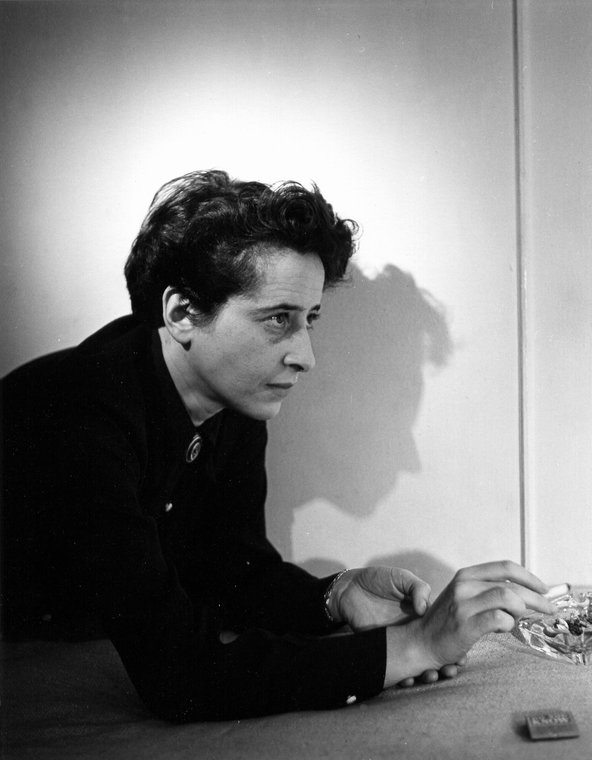
HANNAH ARENDT, THE EUROPEAN SPIRIT, AND THE LEGACY OF TOTALITARIANISM

5 December, 2025
in ENGLISH, English OP/ED
A A
Share on FacebookShare on Twitter

(Expanded version with full scholarly footnotes, sections, and an introductory thread)

By Zlatko Kramarić*|ARGUMENTUM

OPENING THREAD: WHY ARENDT TODAY?

To reflect on the “European spirit” at a time when the continent is once again confronted with the spectres of authoritarianism means, inevitably, to return to Hannah Arendt. Her analyses of totalitarianism, the fragility of political spaces, and the banality of evil have become indispensable tools for understanding Europe’s present moment. For contemporary discussions in Croatia and the broader region, Arendt provides a double framework:

(1) a genealogy of where Europe went wrong, and

(2) a normative horizon of political freedom as Europe’s most important invention.

In this intellectual constellation, Bertolt Brecht is not an accidental companion. His theatrical dissection of fascist psychology, his verses about Hitler, and his relentless exposure of everyday collaborationism resonate deeply with Arendt’s model of “thoughtlessness” as the root of evil.

Finally, any European contextualisation of Arendt must confront the intellectual triangle within which she worked: the polemicized horizon defined by Heidegger and Jaspers. Arendt stands between these two figures, and only through that tension can we fully understand her contribution to European political thought.

I. ARENDT AND THE EUROPEAN SPIRIT: BETWEEN HUMANISM AND THE FAILURE OF POLITICS

Arendt saw the European tradition as profoundly ambivalent: a civilisation that produced both the polis and Auschwitz. In The Origins of Totalitarianism, she argues that European rationalism, bureaucratisation, and imperialism constituted the infrastructure that made totalitarianism possible.¹

At the same time, in The Human Condition, she insists that Europe invented the idea of a public political realm—a space of action, plurality, and speech—that totalitarian regimes seek to annihilate.

Thus arises the central tension of the European spirit:

the conflict between freedom and system, plurality and doctrinal consistency, action and administrative logic.

II. THE BANALITY OF EVIL AND THE LOGIC OF OBEDIENCE: ARENDT AND BRECHT IN DIALOGUE

1. Arendt: Eichmann as a symptom of the continent

Arendt’s controversial depiction of Eichmann as a “banal” bureaucrat profoundly shifted the moral understanding of evil. Evil, she suggested, is not primarily demonic but administrative—rooted in conformity, careerism, and the suspension of judgment.²

Europe’s tragedy, in this reading, is that it produced institutions capable of turning ordinary people into efficient instruments of destruction.

2. Brecht: “Do not ask only about the murderer, but about the circumstances…”

Brecht’s theatrical and poetic treatment of Nazism provides a striking complement to Arendt. In Fear and Misery of the Third Reich, he anatomises fear, opportunism, and tacit complicity—precisely the microstructures of behaviour Arendt uncovers in Eichmann.³

Brecht’s famous suggestion that “the tiger is guilty, but the tiger does not fall from the sky” points to structural factors, ideological conditioning and civic paralysis.

Together, Arendt and Brecht articulate a coherent model:

Totalitarianism depends on ordinary citizens who have ceased to think; and modern Europe created the social and bureaucratic mechanisms enabling that condition.

III. EUROPEAN PHILOSOPHY AROUND ARENDT: THE HEIDEGGER–JASPERS AXIS

1. Heidegger: radical metaphysics and political blindness

Heidegger occupies a paradoxical place in Arendt’s life and work: a youthful intimacy, a deep philosophical influence, and a moral disappointment. She adopted his analysis of situated existence but rejected the political irresponsibility that led him into complicity with Nazism.

In her letters to Jaspers, Arendt would call him “a genius without character”.⁴

Heidegger thus becomes an example of the German intellectual tradition at its most brilliant—yet also at its most politically catastrophic.

2. Jaspers: communication, responsibility, and the ethical foundation of politics

Jaspers offered the opposite pole: rational communication, existential accountability, and political humility. Their post-war correspondence shaped Arendt’s later understanding of politics as a community of responsibility.⁵

Where Heidegger sought the hidden truth of Being, Jaspers insisted on moral clarity in the public world.

3. Arendt between the two: thinking and judging

Arendt’s unique position emerges precisely between these two figures. From Heidegger she learned how to think; from Jaspers how to judge.

This synthesis is one of her main contributions to the European intellectual tradition:

thinking without responsibility leads to barbarism; responsibility without thinking collapses into moralism.

IV. TOTALITARIANISM AS EUROPE’S SELF-FORGETFULNESS

For Arendt, totalitarianism was not an accident but a culmination. Europe’s own intellectual and political dynamics—imperialism, racism, bureaucratic rationalisation, the collapse of the nation-state, and the cult of scientific mastery—formed the matrix within which totalitarian ideologies could emerge.

Her analysis therefore serves as an account of European self-forgetfulness: the forgetting of political plurality, of judgment, and of the fragile human condition that sustains freedom.

V. CONCLUSION: ARENDT AS A BRIDGE BETWEEN EUROPE’S PAST AND FUTURE

Arendt teaches us that Europe is both the continent that invented freedom and the continent that mechanised destruction. Her philosophical and political reflections remain essential for any contemporary discussion of democracy, responsibility and pluralism, particularly in societies still negotiating their post-authoritarian legacies.

In this sense, Arendt becomes a philosopher of Europe’s unfinished project—a thinker who reminds us that the European spirit is not a historical inheritance but a daily political task.

1. Hannah Arendt, The Origins of Totalitarianism (New York: Harcourt, 1951), 3–45. Arendt argues that imperialism and racism were structural products of European modernity rather than deviations from it.

2. Hannah Arendt, Eichmann in Jerusalem: A Report on the Banality of Evil (New York: Viking Press, 1963), 287–289. Arendt describes Eichmann as a bureaucrat driven not by fanaticism but by “thoughtlessness”.

3. Bertolt Brecht, Fear and Misery of the Third Reich, in Collected Works, vol. IV (Frankfurt am Main: Suhrkamp, 1967), 112–135. Brecht exposes the everyday mechanics of complicity and ideological submission.

4. Hannah Arendt – Karl Jaspers, Correspondence 1926–1969 (New York: Harcourt, 1992). Arendt refers to Heidegger as “a genius without character” in her letters from the late 1940s.

5. Karl Jaspers, The Question of German Guilt (Heidelberg: Lambert Schneider, 1946). Jaspers’ differentiation between criminal, political, moral, and metaphysical guilt profoundly shaped Arendt’s theory of political responsibility.

BIBLIOGRAPHY

Arendt, Hannah. The Origins of Totalitarianism. New York: Harcourt, 1951.

Arendt, Hannah. Eichmann in Jerusalem. New York: Viking, 1963.

Arendt, Hannah. The Human Condition. Chicago: University of Chicago Press, 1958.

Arendt, Hannah & Jaspers, Karl. Correspondence 1926–1969. New York: Harcourt, 1992.

Brecht, Bertolt. Fear and Misery of the Third Reich. Frankfurt/Main: Suhrkamp, 1967.

Heidegger, Martin. Being and Time. Tübingen: Niemeyer, 1927.

Jaspers, Karl. The Question of German Guilt. Heidelberg: Schneider, 1946.

*Zlatko Kramarić is a Croatian publicist, author, and diplomat, currently serving as Ambassador to Albania. Formerly a university professor and politician, he is known for his work in literature, cultural studies, and regional history.

/Argumentum.al

© 2025 Argumentum

Related Posts

ENGLISH

The Blueprint of a Diplomatic Debacle: Analyzing Germany’s Historic UNSC Loss

4 June, 2026
Current Events

Serbia – China 2026: Technological partnership, geopolitical positioning and a new phase of the Chinese presence in the Western Balkans

1 June, 2026
ENGLISH

IBAR? ”Sufficiently! Much ado about nothing! Shart contrasts in Beijing! Where is the exit?!

1 June, 2026

Follow US

Subscribe

Receive Argumentum Magazine by Email

Last Posts

The Blueprint of a Diplomatic Debacle: Analyzing Germany’s Historic UNSC Loss

4 June, 2026

Serbia – China 2026: Technological partnership, geopolitical positioning and a new phase of the Chinese presence in the Western Balkans

1 June, 2026

IBAR? ”Sufficiently! Much ado about nothing! Shart contrasts in Beijing! Where is the exit?!

1 June, 2026

How Alkida Lushaj is redefining democratic inclusion globally

31 May, 2026

Cyber Attribution, Corruption, and the False-Flag Question in Albania’s 2022 Alleged Iranian Cyberattack

30 May, 2026
Argumentum

“Argumentum”, një proces intelektual …

Contact Us

[email protected]
[email protected]
[email protected]

Follow Us

Media Partner

Register

Receive Argumentum Magazine by Email
  • Home
  • Privacy Policy
  • About Us
  • Contact

© 2022 Argumentum. All Rights Reserved. | NUIS: L91415033Q

Welcome Back!

Login to your account below

Forgotten Password? Sign Up

Create New Account!

Fill the forms bellow to register

*By registering into our website, you agree to the Terms & Conditions and Privacy Policy.
All fields are required. Log In

Retrieve your password

Please enter your username or email address to reset your password.

Log In

Add New Playlist

No Result
View All Result
  • Home
  • OP/ED
  • Interview
  • Realpolitik
  • Current Events
  • Top News
  • YOUR VOICE
  • Shqip

© 2022 Argumentum. All Rights Reserved. | NUIS: L91415033Q

This website uses cookies. By continuing to use this website you are giving consent to cookies being used. Visit our Privacy and Cookie Policy.