



• SHQIPËRI
  • KOSOVË
  • MAQEDONIA E VERIUT
  • MALI I ZI
  • Revista në PDF
5 June, 2026
  • Home
  • OP/ED

    The Blueprint of a Diplomatic Debacle: Analyzing Germany’s Historic UNSC Loss

    Cyber Attribution, Corruption, and the False-Flag Question in Albania’s 2022 Alleged Iranian Cyberattack

    Between Russia, Iran and Europe: Azerbaijan as a balancing power in the South Caucasus

    The Zero-Tariff Gate: Sovereignty as a Service in the Sino-African Corridor

    Albania vs. the Sea/ Marginal Notes on A. Leka’s Novel The Hidden Side of the Albanian Socialist Garden

    May 9 and the long shadow of a Letter: Is Europe still Schuman’s Project?

    The Arbnesh of Zadar: A living memory of Albanian identity on the Adriatic coast

    Science Diplomacy and Academic Freedom: A strategic nexus for contemporary diplomacy

    Serbia and Kosovo between new regional alliances and old geopolitical patterns

  • Interview

    Exclusive Interview with Oleksandr Tyshchenko: A 40-Year Legacy of Chernobyl, Nuclear Risks, and Global Responsibility

    INTERVIEW: ZLATKO KRAMARIĆ – THOUGHTS ON THE OLD CONTINENT

    EXCLUSIVE / Ukrainian Ambassador to Albania, Volodymyr Shkurov: “Ukraine wants peace, but not at the expense of its freedom and independence”

    EXCLUSIVE| Ambassador Tayyar Kagan Atay: Türkiye and Albania, a Strategic Partnership Rooted in Shared Heritage and a Common Vision for the Future

    “Diplomacy, Not War”: Palestinian Ambassador to Albania Calls for Justice, Peace, and Global Action for Gaza

    Exclusive: “Even After Tito – Tito”/ Ambassador Zlatko Kramarić on Authoritarian Legacies and Democracy’s Future in the Balkans

    The Conclusion of the Diplomatic Mission / Ambassador Dancho Markovski: Strengthening Albania-North Macedonia Relations for a Shared European Future

    A Century of Diplomatic Relations Between Albania and Russia: Exclusive Interview with the Russian Ambassador to Albania, H.E. Alexey Zaytsev

    Exclusive/ The chairman of the Freedom Party, Ilir Meta: “The will of the citizens will triumph in Albania, as it did in North Macedonia”

  • Realpolitik

    IBAR? ”Sufficiently! Much ado about nothing! Shart contrasts in Beijing! Where is the exit?!

    Neither peace nor war! Peace with bombs?! IBAR in autumn?! Not another Hormuz in Taivan! 

    IBAR – a springing board or an obstacle? Can we catch the EU Negotiation train 2027? When the dress makes the news!  EU electoral April  ends in a draw 1:1!  

    The European Parliament building in Strasbourg, France with flags waving calmly celebrating peace of the Europe. July 12, 2020.

    EU 2027 or 2037! Even half membership failed! No exit strategy!     

    What next?

    “With diplomatic velvet“! Major question marks! In Washington yes, but  in the White House NO! A strange dinner in Brussels!

    From a great ‘apple of disaccord’ to a  point of  cooperation! A bad start! The strange absence in Davos!

    5 lessons from the American 3 January! Don’t count the chicken before they are hatched! Will NATO freeze in Greenland? Wrong diplomatic messages!

    German Chancellor Friedrich Merz, European Commission President Ursula von der Leyen, Ukraine's President Volodymyr Zelenskiy, U.S. Special Envoy Steve Witkoff and Jared Kushner, son-in-law of U.S. President Donald Trump line up for a family photo opportunity at the Chancellery in Berlin, Germany, December 15, 2025.    REUTERS/Lisi Niesner/Pool

    A Strategy that could change the world! Europe in Berlin! Why an historic compromise? Only charm diplomacy in Athens!

  • Current Events

    Serbia – China 2026: Technological partnership, geopolitical positioning and a new phase of the Chinese presence in the Western Balkans

    The Digital Protectorate: How the EU AI Act Codified Silicon Valley’s Monopoly

    The 28th MFC Annual Conference in Durrës / Sulaj: Microfinance remains a key instrument for financial inclusion

    Serbia at the Crossroads of EU Integration and Geopolitical Balancing: IFIMES Analysis

    Tirana – €20 Million EU–Banking Agreement Boosts Albanian SMEs

    The Myth of Independence: How Chinese Efficiency is Rewriting the Constitution of Modern Geopolitics!

    Europe Yesterday and Today: Why 9 May Still Matters

    “EU4Municipalities II” Project, a Strategic Investment for Strengthening Municipalities and Accelerating Albania’s Path towards the EU

    Eight Years in the Service of Identity: The Journey of the Montenegrin Community in Albania

  • Top News

    No End in Sight: Trump, Netanyahu and the Expanding Middle East War

    Tirana – €20 Million EU–Banking Agreement Boosts Albanian SMEs

    “EU4Municipalities II” Project, a Strategic Investment for Strengthening Municipalities and Accelerating Albania’s Path towards the EU

    Albania, Italy deepen defence ties with naval shipbuilding deal

    U.S. Embassy: Iran-Linked Groups May Target Americans and Iranian Opposition in Albania

    The Council of Albanian Ambassadors disappointed with the voting of the draft law on the foreign service in the parliamentary committees.

    Prime Minister Edi Rama Addresses Israel’s Knesset in Historic Special Session

    Kazakhstan’s Strategic Reform Agenda: Stability, Modern Governance, and Responsible Diplomacy

    Trump Invites Rama to Peace Board, Prime Minister: Proud of Albania

  • YOUR VOICE
  • Shqip
No Result
View All Result
Argumentum
  • Home
  • OP/ED

    The Blueprint of a Diplomatic Debacle: Analyzing Germany’s Historic UNSC Loss

    Cyber Attribution, Corruption, and the False-Flag Question in Albania’s 2022 Alleged Iranian Cyberattack

    Between Russia, Iran and Europe: Azerbaijan as a balancing power in the South Caucasus

    The Zero-Tariff Gate: Sovereignty as a Service in the Sino-African Corridor

    Albania vs. the Sea/ Marginal Notes on A. Leka’s Novel The Hidden Side of the Albanian Socialist Garden

    May 9 and the long shadow of a Letter: Is Europe still Schuman’s Project?

    The Arbnesh of Zadar: A living memory of Albanian identity on the Adriatic coast

    Science Diplomacy and Academic Freedom: A strategic nexus for contemporary diplomacy

    Serbia and Kosovo between new regional alliances and old geopolitical patterns

  • Interview

    Exclusive Interview with Oleksandr Tyshchenko: A 40-Year Legacy of Chernobyl, Nuclear Risks, and Global Responsibility

    INTERVIEW: ZLATKO KRAMARIĆ – THOUGHTS ON THE OLD CONTINENT

    EXCLUSIVE / Ukrainian Ambassador to Albania, Volodymyr Shkurov: “Ukraine wants peace, but not at the expense of its freedom and independence”

    EXCLUSIVE| Ambassador Tayyar Kagan Atay: Türkiye and Albania, a Strategic Partnership Rooted in Shared Heritage and a Common Vision for the Future

    “Diplomacy, Not War”: Palestinian Ambassador to Albania Calls for Justice, Peace, and Global Action for Gaza

    Exclusive: “Even After Tito – Tito”/ Ambassador Zlatko Kramarić on Authoritarian Legacies and Democracy’s Future in the Balkans

    The Conclusion of the Diplomatic Mission / Ambassador Dancho Markovski: Strengthening Albania-North Macedonia Relations for a Shared European Future

    A Century of Diplomatic Relations Between Albania and Russia: Exclusive Interview with the Russian Ambassador to Albania, H.E. Alexey Zaytsev

    Exclusive/ The chairman of the Freedom Party, Ilir Meta: “The will of the citizens will triumph in Albania, as it did in North Macedonia”

  • Realpolitik

    IBAR? ”Sufficiently! Much ado about nothing! Shart contrasts in Beijing! Where is the exit?!

    Neither peace nor war! Peace with bombs?! IBAR in autumn?! Not another Hormuz in Taivan! 

    IBAR – a springing board or an obstacle? Can we catch the EU Negotiation train 2027? When the dress makes the news!  EU electoral April  ends in a draw 1:1!  

    The European Parliament building in Strasbourg, France with flags waving calmly celebrating peace of the Europe. July 12, 2020.

    EU 2027 or 2037! Even half membership failed! No exit strategy!     

    What next?

    “With diplomatic velvet“! Major question marks! In Washington yes, but  in the White House NO! A strange dinner in Brussels!

    From a great ‘apple of disaccord’ to a  point of  cooperation! A bad start! The strange absence in Davos!

    5 lessons from the American 3 January! Don’t count the chicken before they are hatched! Will NATO freeze in Greenland? Wrong diplomatic messages!

    German Chancellor Friedrich Merz, European Commission President Ursula von der Leyen, Ukraine's President Volodymyr Zelenskiy, U.S. Special Envoy Steve Witkoff and Jared Kushner, son-in-law of U.S. President Donald Trump line up for a family photo opportunity at the Chancellery in Berlin, Germany, December 15, 2025.    REUTERS/Lisi Niesner/Pool

    A Strategy that could change the world! Europe in Berlin! Why an historic compromise? Only charm diplomacy in Athens!

  • Current Events

    Serbia – China 2026: Technological partnership, geopolitical positioning and a new phase of the Chinese presence in the Western Balkans

    The Digital Protectorate: How the EU AI Act Codified Silicon Valley’s Monopoly

    The 28th MFC Annual Conference in Durrës / Sulaj: Microfinance remains a key instrument for financial inclusion

    Serbia at the Crossroads of EU Integration and Geopolitical Balancing: IFIMES Analysis

    Tirana – €20 Million EU–Banking Agreement Boosts Albanian SMEs

    The Myth of Independence: How Chinese Efficiency is Rewriting the Constitution of Modern Geopolitics!

    Europe Yesterday and Today: Why 9 May Still Matters

    “EU4Municipalities II” Project, a Strategic Investment for Strengthening Municipalities and Accelerating Albania’s Path towards the EU

    Eight Years in the Service of Identity: The Journey of the Montenegrin Community in Albania

  • Top News

    No End in Sight: Trump, Netanyahu and the Expanding Middle East War

    Tirana – €20 Million EU–Banking Agreement Boosts Albanian SMEs

    “EU4Municipalities II” Project, a Strategic Investment for Strengthening Municipalities and Accelerating Albania’s Path towards the EU

    Albania, Italy deepen defence ties with naval shipbuilding deal

    U.S. Embassy: Iran-Linked Groups May Target Americans and Iranian Opposition in Albania

    The Council of Albanian Ambassadors disappointed with the voting of the draft law on the foreign service in the parliamentary committees.

    Prime Minister Edi Rama Addresses Israel’s Knesset in Historic Special Session

    Kazakhstan’s Strategic Reform Agenda: Stability, Modern Governance, and Responsible Diplomacy

    Trump Invites Rama to Peace Board, Prime Minister: Proud of Albania

  • YOUR VOICE
  • Shqip
No Result
View All Result
Argumentum
No Result
View All Result
Home ENGLISH

Mr. Gorbachev, tear down this wall!

2 October, 2025
in ENGLISH, English OP/ED
A A
Share on FacebookShare on Twitter

Arben Cici, Ambassador.

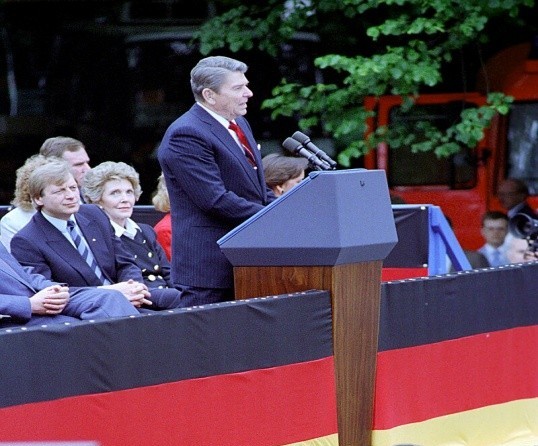
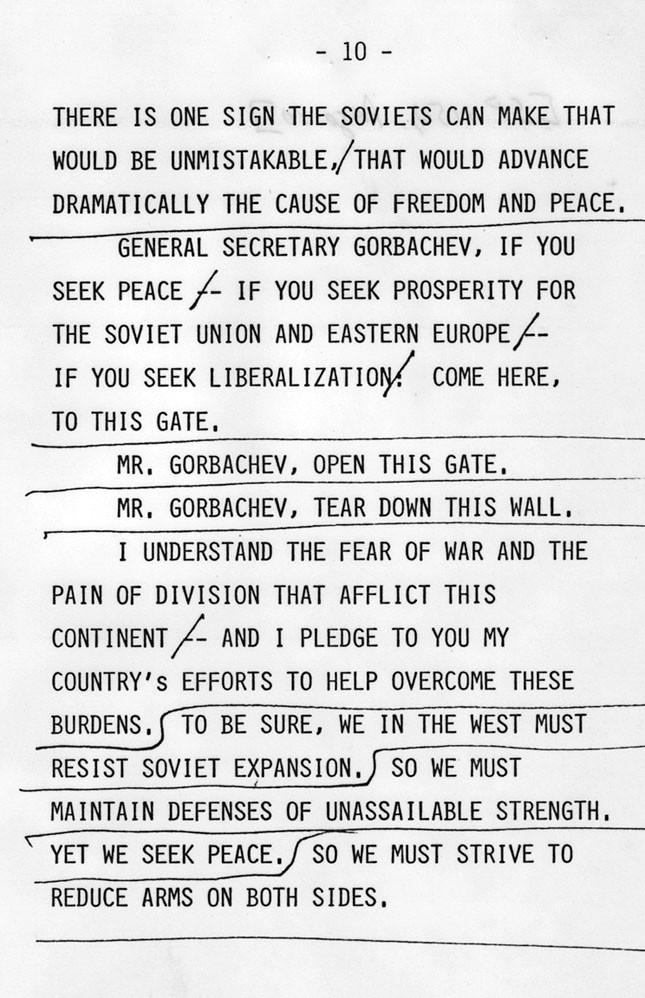
In the history of the twentieth century, there are few moments that defined the fate of a continent as powerfully as President Ronald Reagan’s famous words, spoken on June 12, 1987, in front of the Brandenburg Gate: “Mr. Gorbachev, tear down this wall!” At that time, it may have seemed an impossible demand, a provocative challenge to the leader of the Soviet Union, a defiance of an entire system built on division, fear, and control. Yet those words remained suspended in the air like a promise of history itself, until, just two years later, on November 9, 1989, the Berlin Wall fell, Germany was reunified, signaling not only the destruction of concrete, but the collapse of an entire Cold War epoch.
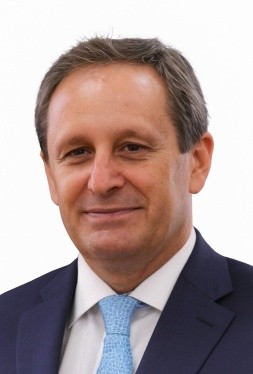
Prof.Dr. Arben Cici

For a German torn apart from his brother on the other side, the fall was rebirth. For a Westerner, it was the triumph of democracy and freedom over tyranny. But for a young Albanian in the 1980s, trapped within the harshest dictatorship in Europe, that moment carried a double meaning: it was hope, but also pain. For while the bricks of the Berlin Wall crumbled under the hands of a liberated people, the invisible wall around Albania seemed still immovable, a prison of iron erected not only at the country’s borders but within the very minds and souls of its citizens.

The Berlin Wall was never just an architectural structure. It was a scar that split the body of a nation, a painful line that turned Berlin into two cities: one of light, vitality and freedom, the other of shadow, silence and fear. It was the most visible symbol of the Cold War, a materialization of a world divided into irreconcilable ideologies. In the West, a city buzzing with democracy, free market and capitalist dynamism; in the East, a society muted by control, surveillance, and repression. Across that wall stood not just two systems, but two ways of living, two visions of humanity and freedom.

In Albania, though no physical wall cut through Tirana, our wall was larger, harsher, more impenetrable, and even more silent and frightening. It was the wall of total isolation, of a regime that severed ties not only with the West but also with the East, closing itself like a paranoid fortress within its madness. For a young man or woman in 1980s Albania, news of Reagan’s speech or Gorbachev’s reforms felt distant, almost like stories from another planet or a painful and unattainable hope. Yet hope never fully dies. In the eerie stillness of dictatorship, where books were censored, words could land you in prison, borders were mined, and neighbors could be informants, every crack in Europe’s wall echoed as a loud call in our souls: change was possible, even here.

The fall of the Berlin Wall was far more than a geopolitical event. It was a revolution of joy, a lightning storm, a powerful testimony to what happens when people shed fear and choose freedom. Thousands of Berliners, East and West, climbed atop the wall that night, celebrating not only the reunification of their city but the rebirth of an entire continent. Strangers embraced, tears flowed, hammers struck the concrete, and every fragment that fell sounded like a broken invisible chain of the history. It was a spectacle of liberty, a resurrection of humanity after decades of oppression.
Politically, the fall opened the road to German reunification, the end of the Warsaw Pact, and the dissolution of the Soviet Union and Yugoslavia. Central and Eastern Europe, long held under Soviet dominance, saw the possibility of choosing their own paths. Poland, Hungary, Czechoslovakia—all began opening their doors. Communist regimes collapsed one after another, like dominoes. Slovenia, Croatia, Macedonia, Bosnia and Herzegovina decided to secede from Yugoslavia. Kosovo and the Albanians there sought the freedom they had lacked for centuries. Freedom spread like wildfire through a dry forest.

In Albania, that fire came late, but it could not be stopped. In the end, the fall of the Berlin Wall marked the beginning of the end of Albania’s wall too. In a rapidly changing world, our isolation became unbearable. News seeped in, people saw that communism could fall without war, that dictatorships were not eternal, that the West was not the monstrous enemy of propaganda, but a space of hope and freedom. The Albanian students who marched in Tirana in December 1990 carried in their minds not only the misery of their daily lives, but also the images of Berliners atop their fallen wall.

For all of us, then a young people locked in a colorless city, the Wall’s fall was a distant dream, yet tangible in the heart. We lived behind a wall we could not touch with our hands, but we felt it with every breath. It was the wall of silence, of forced propaganda, of fear of the spying neighbor, of a deeply atheist-communist violence system, of censored books, of sealed borders. Watching images of Berliners hugging strangers, We wondered: “Will we ever see such a day?” And the answer came from within: no wall is eternal.

Today, on the anniversary of the Berlin Wall’s fall, we remember not only the end of an era, but the birth of a new world. That wall did not fall just for Germans. It fell for all those who had lived divided from freedom. It fell for the Poles of Solidarity, for the Czechs who still recalled Prague in 1968, for the Hungarians who dared open their border, for the Baltic peoples who sang for liberty, for the Romanians who toppled their dictator with blood. And it fell for Albanian students and for all Albanians too, who, though the last in Europe, eventually emerged from their absurd isolation and breathed freely again.

Reagan’s challenge to Gorbachev was more than political slap. It was a moral declaration: there can be no peace or security while nations live divided by walls. There can be no true freedom while people live in fear. And today, as new walls rise across the world, whether physical, ideological, social, or cultural and religious, we must remember that walls are always wounds, while bridges are always healing.

The Berlin Wall fell because people no longer accepted it. Because a new generation realized the future could not be built on division. Because leaders like Gorbachev dared not to use tanks, but to allow change. Because the West did not abandon the cause of freedom. And because history, in the end, always finds a way to break injustice.

For us Albanians, the fall of the Berlin Wall remains a reminder that even the strongest barriers collapse. When we walk freely today in Berlin and touch the preserved fragments of that wall, we feel both sorrow and joy, sorrow for those who lived and died in its shadow, and joy because it no longer exists. And when we see the graffiti-covered remnants, turned into art and color, we understand that history not only destroys, but also heals.
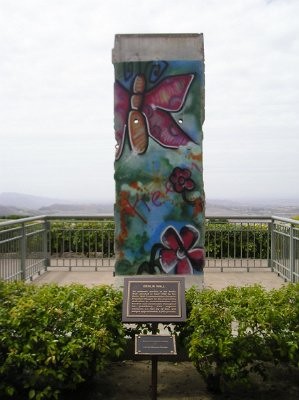
On this anniversary, my memory stretches further, to the walls that still exist, to the divisions that still wound our world. But the message of 1989 remains clear: freedom cannot be stopped by concrete. Hope cannot be extinguished by barbed wire. And truth cannot be confined within an iron border.

For a young Albanian of the 1980s, the fall of the Berlin Wall was like a light flashing on the horizon, a light that took time to reach us, but eventually it did. And today, looking back, we understand that those simple words, “Mr. Gorbachev, tear down this wall!”, were not just an appeal to demolish a structure of stone, but a promise to humanity: that no wall should ever hold freedom hostage.

/Argumentum.al

© 2025 Argumentum

Related Posts

ENGLISH

The Blueprint of a Diplomatic Debacle: Analyzing Germany’s Historic UNSC Loss

4 June, 2026
Current Events

Serbia – China 2026: Technological partnership, geopolitical positioning and a new phase of the Chinese presence in the Western Balkans

1 June, 2026
ENGLISH

IBAR? ”Sufficiently! Much ado about nothing! Shart contrasts in Beijing! Where is the exit?!

1 June, 2026

Follow US

Subscribe

Receive Argumentum Magazine by Email

Last Posts

The Blueprint of a Diplomatic Debacle: Analyzing Germany’s Historic UNSC Loss

4 June, 2026

Serbia – China 2026: Technological partnership, geopolitical positioning and a new phase of the Chinese presence in the Western Balkans

1 June, 2026

IBAR? ”Sufficiently! Much ado about nothing! Shart contrasts in Beijing! Where is the exit?!

1 June, 2026

How Alkida Lushaj is redefining democratic inclusion globally

31 May, 2026

Cyber Attribution, Corruption, and the False-Flag Question in Albania’s 2022 Alleged Iranian Cyberattack

30 May, 2026
Argumentum

“Argumentum”, një proces intelektual …

Contact Us

[email protected]
[email protected]
[email protected]

Follow Us

Media Partner

Register

Receive Argumentum Magazine by Email
  • Home
  • Privacy Policy
  • About Us
  • Contact

© 2022 Argumentum. All Rights Reserved. | NUIS: L91415033Q

Welcome Back!

Login to your account below

Forgotten Password? Sign Up

Create New Account!

Fill the forms bellow to register

*By registering into our website, you agree to the Terms & Conditions and Privacy Policy.
All fields are required. Log In

Retrieve your password

Please enter your username or email address to reset your password.

Log In

Add New Playlist

No Result
View All Result
  • Home
  • OP/ED
  • Interview
  • Realpolitik
  • Current Events
  • Top News
  • YOUR VOICE
  • Shqip

© 2022 Argumentum. All Rights Reserved. | NUIS: L91415033Q

This website uses cookies. By continuing to use this website you are giving consent to cookies being used. Visit our Privacy and Cookie Policy.