










'/%3E%3C/svg%3E)
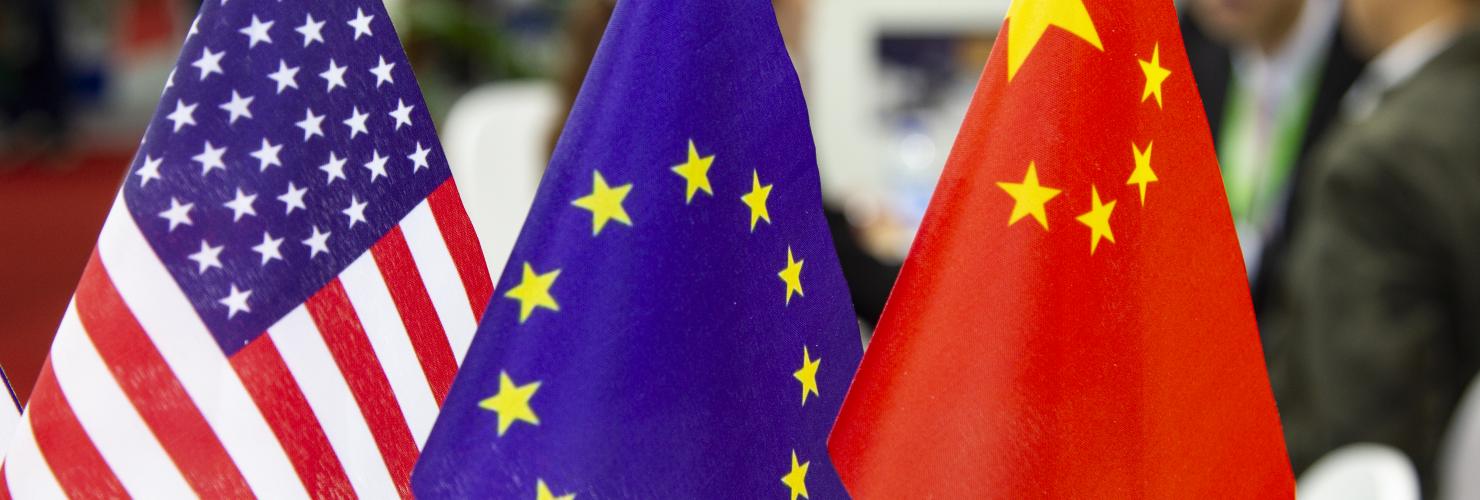
TIRANA – The EU would be abandoning its values if it opted for a deeper partnership with China’s “dictatorship”, just because it did not get along with US president Donald Trump, the American ambassador to the EU has said as quoted by EUobserver on Tuesday.
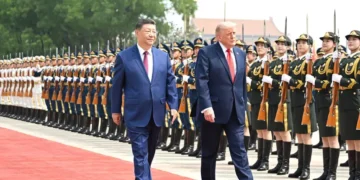
“The people of China are a wonderful people and I have nothing but respect for them, but general secretary Xi is a dictator,” Ronald Gidwitz, the US envoy, told press in Brussels on Monday (22 June), referring to Chinese president Xi Jinping.
This warning came as the EU and China held their 22nd bilateral Summit via videoconference on 22 June 2020 and talks were held between President of the European Council, Charles Michel, President of the European Commission, Ursula von der Leyen, High Representative Josep Borrell with Chinese Prime Minister Li Keqiang followed by exchanges with Chinese President Xi Jinping, reported EU news on Tuesday.
President of the European Council Charles said: “EU-China relations have evolved in recent years. Our economic interdependency is high, and we must work together on global challenges like climate action, meeting the Sustainable Development Goals or dealing with COVID-19. Engaging and cooperating with China is both an opportunity and necessity. But, at the same time, we have to recognise that we do not share the same values, political systems, or approach to multilateralism. We will engage in a clear-eyed and confident way, robustly defending EU interests and standing firm on our values.”
President von der Leyen said: “The COVID-pandemic and a number of major bilateral and multilateral challenges show clearly the EU – China partnership is crucial, be it in terms of trade, climate, technology, and the defence of multilateralism. But for our relations to develop further, they must become more rules-based and reciprocal, in order to achieve a real level playing-field.”
The EU-China summit had a comprehensive agenda addressing bilateral relations; regional and international issues, the COVID-19 pandemic and economic recovery.
The EU strongly emphasised the need to advance negotiations for an ambitious EU-China Comprehensive Investment Agreement that addresses the current asymmetries in market access and ensures a level playing field.
On economic and trade issues, the EU recalled the joint commitment to work constructively and expeditiously towards the resolution of a number of market access and regulatory issues. The EU welcomed confirmation by China that the recent China-US “phase 1” deal will be implemented in full compatibility with World Trade Organisation (WTO) obligations and without discrimination against EU operators. The EU recalled its expectation that European exporters immediately benefit from trade facilitating measures in the agri-food sector.
The EU is looking forward to the signature of the EU-China Agreement on Geographical Indications in coming weeks and entry into force in nearest future.
In response to the COVID-19 pandemic, the EU underlined the shared responsibility to participate in global efforts to stop the spread of the virus, boost research on treatments and vaccines, and support a green and inclusive global recovery. The EU stressed the need for solidarity in addressing the consequences in developing countries, notably as regard debt relief. The EU also called on China to fully participate in the independent review of lessons learned from the international health response to COVID-19, mandated by the resolution adopted at the last World Health Assembly. The EU also called on China to facilitate the return of EU residents in China.
On Hong Kong, the EU reiterated its grave concerns at steps taken by China to impose national security legislation from Beijing and considers those steps not in conformity with the Hong Kong Basic Law and China’s international commitments, and put pressure on the fundamental rights and freedoms of the population protected by the law and the independent justice system.
The EU raised its concerns on the deteriorating human rights situation, including the treatment of minorities in Xinjiang and Tibet, and of human rights defenders, as well as restrictions on fundamental freedoms.
The EU and China exchanged views on a number of regional and international issues, including Joint Comprehensive Plan of Action (the Iran nuclear deal), Afghanistan as well as situation on the Korean Peninsula. The EU expressed concerns about the escalation of other regional conflicts and the importance of upholding international law in the maritime domain. //argumentum.al