
























• SHQIPËRI
  • KOSOVË
  • MAQEDONIA E VERIUT
  • MALI I ZI
  • Revista në PDF
4 June, 2026
  • Home
  • OP/ED

    Cyber Attribution, Corruption, and the False-Flag Question in Albania’s 2022 Alleged Iranian Cyberattack

    Between Russia, Iran and Europe: Azerbaijan as a balancing power in the South Caucasus

    The Zero-Tariff Gate: Sovereignty as a Service in the Sino-African Corridor

    Albania vs. the Sea/ Marginal Notes on A. Leka’s Novel The Hidden Side of the Albanian Socialist Garden

    May 9 and the long shadow of a Letter: Is Europe still Schuman’s Project?

    The Arbnesh of Zadar: A living memory of Albanian identity on the Adriatic coast

    Science Diplomacy and Academic Freedom: A strategic nexus for contemporary diplomacy

    Serbia and Kosovo between new regional alliances and old geopolitical patterns

    Hungarian Writers and the European Spirit: Between Central Europe, Auschwitz, and Inner Exile

  • Interview

    Exclusive Interview with Oleksandr Tyshchenko: A 40-Year Legacy of Chernobyl, Nuclear Risks, and Global Responsibility

    INTERVIEW: ZLATKO KRAMARIĆ – THOUGHTS ON THE OLD CONTINENT

    EXCLUSIVE / Ukrainian Ambassador to Albania, Volodymyr Shkurov: “Ukraine wants peace, but not at the expense of its freedom and independence”

    EXCLUSIVE| Ambassador Tayyar Kagan Atay: Türkiye and Albania, a Strategic Partnership Rooted in Shared Heritage and a Common Vision for the Future

    “Diplomacy, Not War”: Palestinian Ambassador to Albania Calls for Justice, Peace, and Global Action for Gaza

    Exclusive: “Even After Tito – Tito”/ Ambassador Zlatko Kramarić on Authoritarian Legacies and Democracy’s Future in the Balkans

    The Conclusion of the Diplomatic Mission / Ambassador Dancho Markovski: Strengthening Albania-North Macedonia Relations for a Shared European Future

    A Century of Diplomatic Relations Between Albania and Russia: Exclusive Interview with the Russian Ambassador to Albania, H.E. Alexey Zaytsev

    Exclusive/ The chairman of the Freedom Party, Ilir Meta: “The will of the citizens will triumph in Albania, as it did in North Macedonia”

  • Realpolitik

    IBAR? ”Sufficiently! Much ado about nothing! Shart contrasts in Beijing! Where is the exit?!

    Neither peace nor war! Peace with bombs?! IBAR in autumn?! Not another Hormuz in Taivan! 

    IBAR – a springing board or an obstacle? Can we catch the EU Negotiation train 2027? When the dress makes the news!  EU electoral April  ends in a draw 1:1!  

    The European Parliament building in Strasbourg, France with flags waving calmly celebrating peace of the Europe. July 12, 2020.

    EU 2027 or 2037! Even half membership failed! No exit strategy!     

    What next?

    “With diplomatic velvet“! Major question marks! In Washington yes, but  in the White House NO! A strange dinner in Brussels!

    From a great ‘apple of disaccord’ to a  point of  cooperation! A bad start! The strange absence in Davos!

    5 lessons from the American 3 January! Don’t count the chicken before they are hatched! Will NATO freeze in Greenland? Wrong diplomatic messages!

    German Chancellor Friedrich Merz, European Commission President Ursula von der Leyen, Ukraine's President Volodymyr Zelenskiy, U.S. Special Envoy Steve Witkoff and Jared Kushner, son-in-law of U.S. President Donald Trump line up for a family photo opportunity at the Chancellery in Berlin, Germany, December 15, 2025.    REUTERS/Lisi Niesner/Pool

    A Strategy that could change the world! Europe in Berlin! Why an historic compromise? Only charm diplomacy in Athens!

  • Current Events

    Serbia – China 2026: Technological partnership, geopolitical positioning and a new phase of the Chinese presence in the Western Balkans

    The Digital Protectorate: How the EU AI Act Codified Silicon Valley’s Monopoly

    The 28th MFC Annual Conference in Durrës / Sulaj: Microfinance remains a key instrument for financial inclusion

    Serbia at the Crossroads of EU Integration and Geopolitical Balancing: IFIMES Analysis

    Tirana – €20 Million EU–Banking Agreement Boosts Albanian SMEs

    The Myth of Independence: How Chinese Efficiency is Rewriting the Constitution of Modern Geopolitics!

    Europe Yesterday and Today: Why 9 May Still Matters

    “EU4Municipalities II” Project, a Strategic Investment for Strengthening Municipalities and Accelerating Albania’s Path towards the EU

    Eight Years in the Service of Identity: The Journey of the Montenegrin Community in Albania

  • Top News

    No End in Sight: Trump, Netanyahu and the Expanding Middle East War

    Tirana – €20 Million EU–Banking Agreement Boosts Albanian SMEs

    “EU4Municipalities II” Project, a Strategic Investment for Strengthening Municipalities and Accelerating Albania’s Path towards the EU

    Albania, Italy deepen defence ties with naval shipbuilding deal

    U.S. Embassy: Iran-Linked Groups May Target Americans and Iranian Opposition in Albania

    The Council of Albanian Ambassadors disappointed with the voting of the draft law on the foreign service in the parliamentary committees.

    Prime Minister Edi Rama Addresses Israel’s Knesset in Historic Special Session

    Kazakhstan’s Strategic Reform Agenda: Stability, Modern Governance, and Responsible Diplomacy

    Trump Invites Rama to Peace Board, Prime Minister: Proud of Albania

  • YOUR VOICE
  • Shqip
No Result
View All Result
Argumentum
  • Home
  • OP/ED

    Cyber Attribution, Corruption, and the False-Flag Question in Albania’s 2022 Alleged Iranian Cyberattack

    Between Russia, Iran and Europe: Azerbaijan as a balancing power in the South Caucasus

    The Zero-Tariff Gate: Sovereignty as a Service in the Sino-African Corridor

    Albania vs. the Sea/ Marginal Notes on A. Leka’s Novel The Hidden Side of the Albanian Socialist Garden

    May 9 and the long shadow of a Letter: Is Europe still Schuman’s Project?

    The Arbnesh of Zadar: A living memory of Albanian identity on the Adriatic coast

    Science Diplomacy and Academic Freedom: A strategic nexus for contemporary diplomacy

    Serbia and Kosovo between new regional alliances and old geopolitical patterns

    Hungarian Writers and the European Spirit: Between Central Europe, Auschwitz, and Inner Exile

  • Interview

    Exclusive Interview with Oleksandr Tyshchenko: A 40-Year Legacy of Chernobyl, Nuclear Risks, and Global Responsibility

    INTERVIEW: ZLATKO KRAMARIĆ – THOUGHTS ON THE OLD CONTINENT

    EXCLUSIVE / Ukrainian Ambassador to Albania, Volodymyr Shkurov: “Ukraine wants peace, but not at the expense of its freedom and independence”

    EXCLUSIVE| Ambassador Tayyar Kagan Atay: Türkiye and Albania, a Strategic Partnership Rooted in Shared Heritage and a Common Vision for the Future

    “Diplomacy, Not War”: Palestinian Ambassador to Albania Calls for Justice, Peace, and Global Action for Gaza

    Exclusive: “Even After Tito – Tito”/ Ambassador Zlatko Kramarić on Authoritarian Legacies and Democracy’s Future in the Balkans

    The Conclusion of the Diplomatic Mission / Ambassador Dancho Markovski: Strengthening Albania-North Macedonia Relations for a Shared European Future

    A Century of Diplomatic Relations Between Albania and Russia: Exclusive Interview with the Russian Ambassador to Albania, H.E. Alexey Zaytsev

    Exclusive/ The chairman of the Freedom Party, Ilir Meta: “The will of the citizens will triumph in Albania, as it did in North Macedonia”

  • Realpolitik

    IBAR? ”Sufficiently! Much ado about nothing! Shart contrasts in Beijing! Where is the exit?!

    Neither peace nor war! Peace with bombs?! IBAR in autumn?! Not another Hormuz in Taivan! 

    IBAR – a springing board or an obstacle? Can we catch the EU Negotiation train 2027? When the dress makes the news!  EU electoral April  ends in a draw 1:1!  

    The European Parliament building in Strasbourg, France with flags waving calmly celebrating peace of the Europe. July 12, 2020.

    EU 2027 or 2037! Even half membership failed! No exit strategy!     

    What next?

    “With diplomatic velvet“! Major question marks! In Washington yes, but  in the White House NO! A strange dinner in Brussels!

    From a great ‘apple of disaccord’ to a  point of  cooperation! A bad start! The strange absence in Davos!

    5 lessons from the American 3 January! Don’t count the chicken before they are hatched! Will NATO freeze in Greenland? Wrong diplomatic messages!

    German Chancellor Friedrich Merz, European Commission President Ursula von der Leyen, Ukraine's President Volodymyr Zelenskiy, U.S. Special Envoy Steve Witkoff and Jared Kushner, son-in-law of U.S. President Donald Trump line up for a family photo opportunity at the Chancellery in Berlin, Germany, December 15, 2025.    REUTERS/Lisi Niesner/Pool

    A Strategy that could change the world! Europe in Berlin! Why an historic compromise? Only charm diplomacy in Athens!

  • Current Events

    Serbia – China 2026: Technological partnership, geopolitical positioning and a new phase of the Chinese presence in the Western Balkans

    The Digital Protectorate: How the EU AI Act Codified Silicon Valley’s Monopoly

    The 28th MFC Annual Conference in Durrës / Sulaj: Microfinance remains a key instrument for financial inclusion

    Serbia at the Crossroads of EU Integration and Geopolitical Balancing: IFIMES Analysis

    Tirana – €20 Million EU–Banking Agreement Boosts Albanian SMEs

    The Myth of Independence: How Chinese Efficiency is Rewriting the Constitution of Modern Geopolitics!

    Europe Yesterday and Today: Why 9 May Still Matters

    “EU4Municipalities II” Project, a Strategic Investment for Strengthening Municipalities and Accelerating Albania’s Path towards the EU

    Eight Years in the Service of Identity: The Journey of the Montenegrin Community in Albania

  • Top News

    No End in Sight: Trump, Netanyahu and the Expanding Middle East War

    Tirana – €20 Million EU–Banking Agreement Boosts Albanian SMEs

    “EU4Municipalities II” Project, a Strategic Investment for Strengthening Municipalities and Accelerating Albania’s Path towards the EU

    Albania, Italy deepen defence ties with naval shipbuilding deal

    U.S. Embassy: Iran-Linked Groups May Target Americans and Iranian Opposition in Albania

    The Council of Albanian Ambassadors disappointed with the voting of the draft law on the foreign service in the parliamentary committees.

    Prime Minister Edi Rama Addresses Israel’s Knesset in Historic Special Session

    Kazakhstan’s Strategic Reform Agenda: Stability, Modern Governance, and Responsible Diplomacy

    Trump Invites Rama to Peace Board, Prime Minister: Proud of Albania

  • YOUR VOICE
  • Shqip
No Result
View All Result
Argumentum
No Result
View All Result
Home ENGLISH

Greece and Southern Cyprus seek concessions, not solutions

5 March, 2021
in ENGLISH, English OP/ED
A A
Share on FacebookShare on Twitter

Prof. Dr. Huseyin Isiksal* 

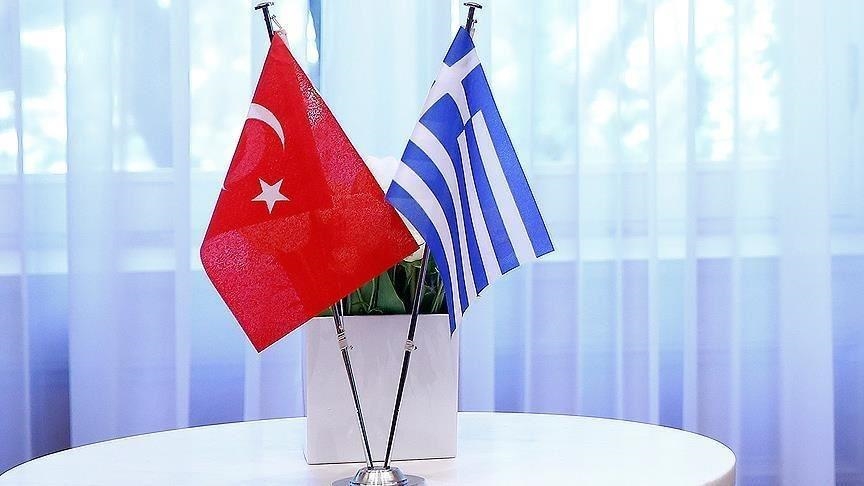
Important developments are taking place in the Aegean (Islands) Sea and Cyprus. The main factor of this new dynamic is undoubtedly the steps taken by the Turkish side and its desire for settlement.

This new process, which began with Turkey’s withdrawal of its seismic research vessel MTA Oruc Reis, has accelerated further with the latest of the exploratory meetings held in Istanbul on Jan. 25, which are normally held to make technical assessments of the problems arising from the Sea of Islands (the Aegean) and to settle on possible solutions.

No exploratory meeting could be held until 2020, that is, for four and a half years, because of the tension between the parties. Following these talks, the Turkish side, once again taking a constructive stance, declared to the world with its highest-ranking officials that “it is possible to solve all the problems, including those that pertain to the Aegean; we are fully determined to this end; regional peace and stability is in everyone’s interest.”

Likewise, the Turkish side, which took a very positive attitude towards the programming of the unofficial quintet conference on the Cyprus issue, has continued its positive approach with the message that if the desired destination is a permanent solution, it can only be accomplished through innovative and creative ideas.

Looking at the other side of the coin, the Greek side participated in the exploratory meetings declaring that only the limitation of maritime jurisdictions would be addressed, thereby setting a precondition that indicates that it does not want all the problems arising from the Aegean and the Eastern Mediterranean to be on the table. This, notwithstanding the fact that the problems between the two countries are not limited to the Aegean.

Conflicting maritime jurisdictions in a large area, Greek islands armed in violation of the Treaty of Lausanne, the reconsideration of the legal status of a total of 152 islands, islets and rocks in the Aegean occupied by Greece although they have no officially declared owners, Greek airspace, which has been declared to be 10 miles in contravention of international law, even though its territorial waters are 6 miles, the search and rescue activities which have gained importance with the increasing migrant flows, hydrocarbon resources and finally the Cyprus issue remain problems that continue to set the two sides at odds.

What is the Greek side aiming for?

Both countries have 6 miles of territorial waters in the Sea of Islands, where there is no maritime border agreement between the two countries due to the unique geographical conditions of the area. Nevertheless, Greece wants to expand its territorial waters to 12 miles citing the 1982 Convention on the Law of the Sea, to which Turkey is not a signatory. Turkey has unequivocally stated that such a move would be considered an “act of war” (casus belli). Greece has been adding to the tension not only in the Sea of Islands but also in the Eastern Mediterranean — which is considered a semi-closed sea according to international law — by claiming that the islands located there have continental shelf and exclusive economic zones (EEZ).

So, what exactly has the Greek side been aiming for with its limited population, land, military and economic power? Does Greece really seek to be part of a settlement in the Eastern Mediterranean and the Sea of Islands? The all-too-familiar answer to this question was reaffirmed once again by the Greek decision-makers in January. In a decision approved by the Greek parliament last month, Greece has expanded its domain by about 10% by extending its territorial waters to 12 miles in the Ionian Sea. While Foreign Minister Nikos Dendias underlined with great political pride that the country’s territories had been expanded for the first time since 1947, when the administration of the 12 Islands was transferred to Greece, Prime Minister Kiryakos Mitsotakis laid out Greece’s short and medium-term goals very clearly, stating their determination to do the same with Crete and the Aegean Islands.

The Greek party has pursued an expansionist policy in the Eastern Mediterranean by using the islands, the only trump card in their hands. They seek to turn the Sea of Islands into a “Greek lake” by expanding their domain in the Aegean and the Eastern Mediterranean as far as possible and to confine Turkey to the Gulf of Antalya by ignoring its rights of continental shelf in the Eastern Mediterranean. If Greece’s maximalist demands are to be accepted, their territorial waters in the Aegean will increase to 71% from 43%, and as a result, the ratio of the surrounding open sea will decrease to 19,7% from 49%. Similarly, Turkey’s EEZ in the Eastern Mediterranean will shrink by 80% by dropping to 41 thousand square kilometers from 189 thousand square kilometers. Overall, this is a scheme to restrict Turkey’s access to the open seas and all neighboring areas, thereby rendering it an ineffective actor in the region’s geopolitics. To make this strategy a reality, there are ongoing efforts to create regional alliances to isolate Turkey –the country with the longest coastline in the Eastern Mediterranean– and to establish an energy and security order that excludes both Turkey and Turkish Cyprus.

The Greek side’s persistent error with regard to Cyprus

When we look at the Cyprus leg of this strategy, it can be seen that, in all negotiations since 1968, the Greek Cypriot administration (GCA) has refused to share power and natural resources and wealth with, and recognize the political equality of, the Turkish Cypriots, claiming that the entire island is their “homeland” and that it shall be “united” once again, just as Greece sees the Sea of Islands as a Greek lake. The Greek administration also seeks to complete the southern leg of Greece’s containment policy towards Turkey by ensuring the unconditional termination of Turkey’s continued military presence in Cyprus, which they consider as “foreign troops”. With these actions, they hope that Turkey will make concessions on its political and maritime jurisdiction rights in Cyprus, whose geopolitical importance has further increased since the latest discovery of hydrocarbon reserves.

If the Turkish side were to make any compromises in this regard, this would further stimulate the appetite of Greece and Southern Cyprus, and as an extension of their demands, they would then seek to restrict the Turkish Navy’s moves and Turkey’s oil exploration activities only to be followed by an attempt to restrict Turkey’s strategic depth and decision-making capacity, primarily as pertaining to the developments in Libya and Syria.

In brief, the Greek-Greek Cypriot duo wrongly perceives Turkey’s recent calls for revitalizing its relations with the European Union (EU) and extending its hand of friendship to resolve the issues in the Aegean Sea and the Eastern Mediterranean as a weakness and also as an opportunity to exercise their expansionist policies, thereby demonstrating once again that they are not after any resolution in the Aegean or the Eastern Mediterranean, but are only seeking to see concessions made in their favor. Failing to wisely interpret the prevailing international and regional climate, these two countries remain deluded in thinking that the issue of Turkey’s EU membership, which mistakenly believe is a trump card at their disposal, will still get them the concessions they want.

Unresolved issues will lead to greater political crises

Even more troublesome days await the Greek and Greek Cypriot duo, which will eventually come to realize that even if they continue to ignore Turkey’s growing political, military and economic power, no EU country, even if they belong to the same organization, and merely “for the sake of” Greece, will confront Turkey head-on, as it is the most important strategic actor in the Eastern Mediterranean to be reckoned with. The continued efforts of these two countries — despite their limited political, economic and demographic resources — to manipulate the entire Eastern Mediterranean policy of the EU in line with their own interests will also face serious opposition within the Union sooner or later.

In conclusion, it is obvious that if the problem of maritime jurisdictions in the Eastern Mediterranean is not resolved, the region will face greater political crises. Neither party would benefit from such a massive political turmoil. In reality, it is possible to solve all the problems in the region. However, as recent regional developments have shown once again, the Greek and Greek Cypriot side needs more time to admit that peace and stability is in everyone’s interest and that achieving them without Turkey, the most powerful country in the Eastern Mediterranean, is simply not possible. The way things are developing, Turkey’s active persistence in defending its rights stemming from international law, and deepening its cooperation with the countries of the region aimed at creating rifts within the alliance that is being tried to be formed against it, while further strengthening its struggle on the ground, will help the Greek side a great deal in coming to grips with the reality regarding its “concession dreams”./AA

*The author is Special Advisor to the President of the Turkish Republic of Northern Cyprus (TRNC) for International Relations and Diplomacy and a Member of the Negotiation Committee.
Tags: cyprusgreeceturkey

Related Posts

Current Events

Serbia – China 2026: Technological partnership, geopolitical positioning and a new phase of the Chinese presence in the Western Balkans

1 June, 2026
ENGLISH

IBAR? ”Sufficiently! Much ado about nothing! Shart contrasts in Beijing! Where is the exit?!

1 June, 2026
ENGLISH

How Alkida Lushaj is redefining democratic inclusion globally

31 May, 2026
Argumentum

“Argumentum”, një proces intelektual …

Contact Us

[email protected]
[email protected]
[email protected]

Follow Us

Media Partner

Register

Receive Argumentum Magazine by Email
  • Home
  • Privacy Policy
  • About Us
  • Contact

© 2022 Argumentum. All Rights Reserved. | NUIS: L91415033Q

Welcome Back!

Login to your account below

Forgotten Password? Sign Up

Create New Account!

Fill the forms bellow to register

*By registering into our website, you agree to the Terms & Conditions and Privacy Policy.
All fields are required. Log In

Retrieve your password

Please enter your username or email address to reset your password.

Log In

Add New Playlist

No Result
View All Result
  • Home
  • OP/ED
  • Interview
  • Realpolitik
  • Current Events
  • Top News
  • YOUR VOICE
  • Shqip

© 2022 Argumentum. All Rights Reserved. | NUIS: L91415033Q

This website uses cookies. By continuing to use this website you are giving consent to cookies being used. Visit our Privacy and Cookie Policy.