












• SHQIPËRI
  • KOSOVË
  • MAQEDONIA E VERIUT
  • MALI I ZI
  • Revista në PDF
10 June, 2026
  • Home
  • OP/ED

    The visit that changed Albania’s strategic future

    Pierre Nora and the institution of memory we lack in Eastern Europe

    The Blueprint of a Diplomatic Debacle: Analyzing Germany’s Historic UNSC Loss

    Between Russia, Iran and Europe: Azerbaijan as a balancing power in the South Caucasus

    The Zero-Tariff Gate: Sovereignty as a Service in the Sino-African Corridor

    Albania vs. the Sea/ Marginal Notes on A. Leka’s Novel The Hidden Side of the Albanian Socialist Garden

    May 9 and the long shadow of a Letter: Is Europe still Schuman’s Project?

    The Arbnesh of Zadar: A living memory of Albanian identity on the Adriatic coast

    Science Diplomacy and Academic Freedom: A strategic nexus for contemporary diplomacy

  • Interview

    Exclusive Interview with Oleksandr Tyshchenko: A 40-Year Legacy of Chernobyl, Nuclear Risks, and Global Responsibility

    INTERVIEW: ZLATKO KRAMARIĆ – THOUGHTS ON THE OLD CONTINENT

    EXCLUSIVE / Ukrainian Ambassador to Albania, Volodymyr Shkurov: “Ukraine wants peace, but not at the expense of its freedom and independence”

    EXCLUSIVE| Ambassador Tayyar Kagan Atay: Türkiye and Albania, a Strategic Partnership Rooted in Shared Heritage and a Common Vision for the Future

    “Diplomacy, Not War”: Palestinian Ambassador to Albania Calls for Justice, Peace, and Global Action for Gaza

    Exclusive: “Even After Tito – Tito”/ Ambassador Zlatko Kramarić on Authoritarian Legacies and Democracy’s Future in the Balkans

    The Conclusion of the Diplomatic Mission / Ambassador Dancho Markovski: Strengthening Albania-North Macedonia Relations for a Shared European Future

    A Century of Diplomatic Relations Between Albania and Russia: Exclusive Interview with the Russian Ambassador to Albania, H.E. Alexey Zaytsev

    Exclusive/ The chairman of the Freedom Party, Ilir Meta: “The will of the citizens will triumph in Albania, as it did in North Macedonia”

  • Realpolitik

    IBAR? ”Sufficiently! Much ado about nothing! Shart contrasts in Beijing! Where is the exit?!

    Neither peace nor war! Peace with bombs?! IBAR in autumn?! Not another Hormuz in Taivan! 

    IBAR – a springing board or an obstacle? Can we catch the EU Negotiation train 2027? When the dress makes the news!  EU electoral April  ends in a draw 1:1!  

    The European Parliament building in Strasbourg, France with flags waving calmly celebrating peace of the Europe. July 12, 2020.

    EU 2027 or 2037! Even half membership failed! No exit strategy!     

    What next?

    “With diplomatic velvet“! Major question marks! In Washington yes, but  in the White House NO! A strange dinner in Brussels!

    From a great ‘apple of disaccord’ to a  point of  cooperation! A bad start! The strange absence in Davos!

    5 lessons from the American 3 January! Don’t count the chicken before they are hatched! Will NATO freeze in Greenland? Wrong diplomatic messages!

    German Chancellor Friedrich Merz, European Commission President Ursula von der Leyen, Ukraine's President Volodymyr Zelenskiy, U.S. Special Envoy Steve Witkoff and Jared Kushner, son-in-law of U.S. President Donald Trump line up for a family photo opportunity at the Chancellery in Berlin, Germany, December 15, 2025.    REUTERS/Lisi Niesner/Pool

    A Strategy that could change the world! Europe in Berlin! Why an historic compromise? Only charm diplomacy in Athens!

  • Current Events

    “The Flamingo Revolution”: Day 10 of Protests in Albania Draws International Attention

    Rama alleges ‘hybrid war’ behind protests against Kushner-linked coastal development

    BELGRADE, SERBIA - JUNE 18. 2020: Russian and Serbian flags on display during Russian Foreign Minister Sergei Lavrov's visit to the Liberators of Belgrade Memorial. Valery Sharifulin/TASS,Image: 533095429, License: Rights-managed, Restrictions: UWAGA! Zdjęcia zawierają oryginalny opis dostawcy (ITAR-TASS). Szczególnie w związku z agresją Rosji na Ukrainę mogą zawierać przekaz niezgodny z faktami. Zweryfikuj go przed publikacją, Model Release: no, Credit line: Valery Sharifulin / TASS / Forum

    Balkan Maskirovka: Why Moscow’s “Distancing” Is Only an Operation for the Survival of Vučić’s Regime

    Serbia – China 2026: Technological partnership, geopolitical positioning and a new phase of the Chinese presence in the Western Balkans

    The Digital Protectorate: How the EU AI Act Codified Silicon Valley’s Monopoly

    The 28th MFC Annual Conference in Durrës / Sulaj: Microfinance remains a key instrument for financial inclusion

    Serbia at the Crossroads of EU Integration and Geopolitical Balancing: IFIMES Analysis

    Tirana – €20 Million EU–Banking Agreement Boosts Albanian SMEs

    The Myth of Independence: How Chinese Efficiency is Rewriting the Constitution of Modern Geopolitics!

  • Top News

    “The Flamingo Revolution”: Day 10 of Protests in Albania Draws International Attention

    Rama alleges ‘hybrid war’ behind protests against Kushner-linked coastal development

    No End in Sight: Trump, Netanyahu and the Expanding Middle East War

    Tirana – €20 Million EU–Banking Agreement Boosts Albanian SMEs

    “EU4Municipalities II” Project, a Strategic Investment for Strengthening Municipalities and Accelerating Albania’s Path towards the EU

    Albania, Italy deepen defence ties with naval shipbuilding deal

    U.S. Embassy: Iran-Linked Groups May Target Americans and Iranian Opposition in Albania

    The Council of Albanian Ambassadors disappointed with the voting of the draft law on the foreign service in the parliamentary committees.

    Prime Minister Edi Rama Addresses Israel’s Knesset in Historic Special Session

  • YOUR VOICE
  • Shqip
No Result
View All Result
Argumentum
  • Home
  • OP/ED

    The visit that changed Albania’s strategic future

    Pierre Nora and the institution of memory we lack in Eastern Europe

    The Blueprint of a Diplomatic Debacle: Analyzing Germany’s Historic UNSC Loss

    Between Russia, Iran and Europe: Azerbaijan as a balancing power in the South Caucasus

    The Zero-Tariff Gate: Sovereignty as a Service in the Sino-African Corridor

    Albania vs. the Sea/ Marginal Notes on A. Leka’s Novel The Hidden Side of the Albanian Socialist Garden

    May 9 and the long shadow of a Letter: Is Europe still Schuman’s Project?

    The Arbnesh of Zadar: A living memory of Albanian identity on the Adriatic coast

    Science Diplomacy and Academic Freedom: A strategic nexus for contemporary diplomacy

  • Interview

    Exclusive Interview with Oleksandr Tyshchenko: A 40-Year Legacy of Chernobyl, Nuclear Risks, and Global Responsibility

    INTERVIEW: ZLATKO KRAMARIĆ – THOUGHTS ON THE OLD CONTINENT

    EXCLUSIVE / Ukrainian Ambassador to Albania, Volodymyr Shkurov: “Ukraine wants peace, but not at the expense of its freedom and independence”

    EXCLUSIVE| Ambassador Tayyar Kagan Atay: Türkiye and Albania, a Strategic Partnership Rooted in Shared Heritage and a Common Vision for the Future

    “Diplomacy, Not War”: Palestinian Ambassador to Albania Calls for Justice, Peace, and Global Action for Gaza

    Exclusive: “Even After Tito – Tito”/ Ambassador Zlatko Kramarić on Authoritarian Legacies and Democracy’s Future in the Balkans

    The Conclusion of the Diplomatic Mission / Ambassador Dancho Markovski: Strengthening Albania-North Macedonia Relations for a Shared European Future

    A Century of Diplomatic Relations Between Albania and Russia: Exclusive Interview with the Russian Ambassador to Albania, H.E. Alexey Zaytsev

    Exclusive/ The chairman of the Freedom Party, Ilir Meta: “The will of the citizens will triumph in Albania, as it did in North Macedonia”

  • Realpolitik

    IBAR? ”Sufficiently! Much ado about nothing! Shart contrasts in Beijing! Where is the exit?!

    Neither peace nor war! Peace with bombs?! IBAR in autumn?! Not another Hormuz in Taivan! 

    IBAR – a springing board or an obstacle? Can we catch the EU Negotiation train 2027? When the dress makes the news!  EU electoral April  ends in a draw 1:1!  

    The European Parliament building in Strasbourg, France with flags waving calmly celebrating peace of the Europe. July 12, 2020.

    EU 2027 or 2037! Even half membership failed! No exit strategy!     

    What next?

    “With diplomatic velvet“! Major question marks! In Washington yes, but  in the White House NO! A strange dinner in Brussels!

    From a great ‘apple of disaccord’ to a  point of  cooperation! A bad start! The strange absence in Davos!

    5 lessons from the American 3 January! Don’t count the chicken before they are hatched! Will NATO freeze in Greenland? Wrong diplomatic messages!

    German Chancellor Friedrich Merz, European Commission President Ursula von der Leyen, Ukraine's President Volodymyr Zelenskiy, U.S. Special Envoy Steve Witkoff and Jared Kushner, son-in-law of U.S. President Donald Trump line up for a family photo opportunity at the Chancellery in Berlin, Germany, December 15, 2025.    REUTERS/Lisi Niesner/Pool

    A Strategy that could change the world! Europe in Berlin! Why an historic compromise? Only charm diplomacy in Athens!

  • Current Events

    “The Flamingo Revolution”: Day 10 of Protests in Albania Draws International Attention

    Rama alleges ‘hybrid war’ behind protests against Kushner-linked coastal development

    BELGRADE, SERBIA - JUNE 18. 2020: Russian and Serbian flags on display during Russian Foreign Minister Sergei Lavrov's visit to the Liberators of Belgrade Memorial. Valery Sharifulin/TASS,Image: 533095429, License: Rights-managed, Restrictions: UWAGA! Zdjęcia zawierają oryginalny opis dostawcy (ITAR-TASS). Szczególnie w związku z agresją Rosji na Ukrainę mogą zawierać przekaz niezgodny z faktami. Zweryfikuj go przed publikacją, Model Release: no, Credit line: Valery Sharifulin / TASS / Forum

    Balkan Maskirovka: Why Moscow’s “Distancing” Is Only an Operation for the Survival of Vučić’s Regime

    Serbia – China 2026: Technological partnership, geopolitical positioning and a new phase of the Chinese presence in the Western Balkans

    The Digital Protectorate: How the EU AI Act Codified Silicon Valley’s Monopoly

    The 28th MFC Annual Conference in Durrës / Sulaj: Microfinance remains a key instrument for financial inclusion

    Serbia at the Crossroads of EU Integration and Geopolitical Balancing: IFIMES Analysis

    Tirana – €20 Million EU–Banking Agreement Boosts Albanian SMEs

    The Myth of Independence: How Chinese Efficiency is Rewriting the Constitution of Modern Geopolitics!

  • Top News

    “The Flamingo Revolution”: Day 10 of Protests in Albania Draws International Attention

    Rama alleges ‘hybrid war’ behind protests against Kushner-linked coastal development

    No End in Sight: Trump, Netanyahu and the Expanding Middle East War

    Tirana – €20 Million EU–Banking Agreement Boosts Albanian SMEs

    “EU4Municipalities II” Project, a Strategic Investment for Strengthening Municipalities and Accelerating Albania’s Path towards the EU

    Albania, Italy deepen defence ties with naval shipbuilding deal

    U.S. Embassy: Iran-Linked Groups May Target Americans and Iranian Opposition in Albania

    The Council of Albanian Ambassadors disappointed with the voting of the draft law on the foreign service in the parliamentary committees.

    Prime Minister Edi Rama Addresses Israel’s Knesset in Historic Special Session

  • YOUR VOICE
  • Shqip
No Result
View All Result
Argumentum
No Result
View All Result
Home Balkan Overview

Serbia’s Lost Legal Battle and the Exploitation of Resolution 1244 for Lawfare and Terrorism

10 June, 2026
in Balkan Overview, ENGLISH, In Focus
A A
Share on FacebookShare on Twitter

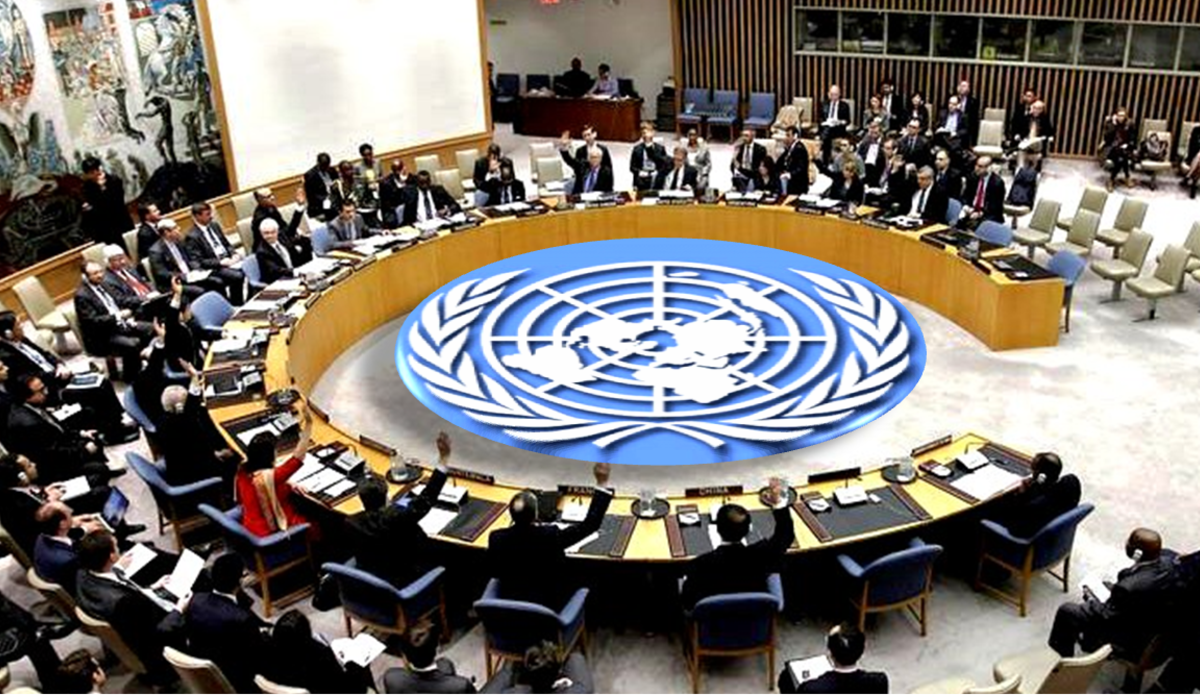
International diplomacy has a grim history with “legal zombies”. Just as Russia invokes the “Spirit of Yalta” to dictate the fate of Eastern Europe, Serbia is also using Resolution 1244 as a “shield” for the hegemonic objectives of its “Serbian World”. In both cases, the document is not a basis for peace, but a pretext for undermining it. If the international community lacked the courage to declare such documents “dead” once they began producing violence, it simply paved the way for prolonged conflicts. Resolution 1244 is precisely such a case: it has entered the phase of “political necrophilia”, where keeping it alive produces terrorist attacks, not stability, and poses a threat to security. Today, on the 27th anniversary of a document that should have “died” 18 years ago, it continues to be used as a strategic instrument for the “capture” of the UN, with the assistance of Russia and China.

Written by: Dr Gurakuç Kuçi – Professor at Universum College and External Associate at ISLH “OCTOPUS”

Resolution 1244 as an Instrument of Serbian Legal Warfare and the Truth of the ICJ

Such an approach towards “zombie documents”, such as Resolution 1244, is the consequence of disinformative misinterpretations and their use as legal warfare, or lawfare, namely the use of legal documents to inflict strategic damage on another legal entity. While law seeks the resolution of conflicts, legal warfare seeks to exploit legal norms in order to keep conflicts open.

Legal warfare is also an “informational weapon”, since it is not satisfied with the legal interpretation of courts alone, but also requires the blurring of the real situation through a post- truth reality that serves its objectives.

Resolution 1244 was created as a document to halt Serbian/Yugoslav violence and repression in Kosovo, as reflected from its very preamble and in paragraph 3, which requires the withdrawal of Serbian/Yugoslav military, police and paramilitary forces. It also provided for the prevention of the return of Serbian forces to Kosovo (paragraph 9, a), the deployment of an international security presence (paragraphs 5, 7, 8 and 9), the establishment of an international civil administration (paragraph 10), the development of Kosovo’s democratic self-governing

institutions (paragraph 11, c), the gradual transfer of administrative responsibilities from international institutions to local ones, a political process to determine Kosovo’s future status (paragraph 11, e), as well as the return of refugees and displaced persons, an issue repeated several times in the text of the resolution. Likewise, the initial mandate of the international presence was for 12 months, with the possibility of continuation (paragraph 19), which demonstrates the transitional nature of Resolution 1244.

This resolution fulfilled and exhausted its mission (funzione esaurita) on 17 February 2008, when Kosovo declared independence, while it lost its legal force as a document due to the fulfilment of its objectives (desuetude) with the adoption of the Constitution of the Republic of Kosovo on 9 April 2008 and its entry into force on 15 June 2008.

Kosovo incorporated one point from this resolution into its Constitution, in Article 153, thereby codifying the mandate of the international military presence.

That Resolution 1244 is a legal zombie is also demonstrated by the opinion of the International Court of Justice. On 15 August 2008, Serbia formally submitted a request to the UN General Assembly seeking an advisory opinion from the ICJ, while on 8 October the UN General Assembly, through Resolution 63/3, approved Serbia’s request.

The question submitted to the Court was: “Is the unilateral declaration of independence by the Provisional Institutions of Self-Government of Kosovo in accordance with international law?” In other words, Serbia sought the delegitimisation of Kosovo’s independence through an opinion, not through a judgment. Likewise, it did not ask about the right of Kosovo and its people to existence, but about compatibility with international law. In both cases, Serbia was unsure about the question it had posed, while the second case would logically have exposed Serbia itself as a state with a genocidal past.

The ICJ delivered its opinion on Serbia’s question on 22 July 2010, arguing that Kosovo’s declaration of independence did not violate international law and, likewise, did not breach Resolution 1244, since the resolution contained no clause prohibiting such a process. On the contrary, its mission was to lead Kosovo towards its final status. Furthermore, the declaration of independence was made by the representatives of the will of the people, and not by the institutions created under Resolution 1244. Thus, the ICJ confirmed the right of peoples to self- determination as a superior norm (jus cogens), beyond static arguments that run contrary to human rights.

This ICJ opinion, requested by Serbia itself, was not enough to bring Serbia back onto the path of law and distance it from its genocidal past. Serbia therefore immediately refused to accept the ICJ opinion and, six days later, on 28 July, sought to initiate a resolution in the UN General Assembly aimed at distorting the ICJ opinion. Indeed, in that confrontational resolution, Serbia sought to impose Resolution 1244 as the only legal framework within which Kosovo’s status could be discussed, thereby itself admitting that this resolution had already completed its mission.

Then, as now, the Serbian political class was prepared to kill Serbia’s future merely to protect its own political power through Kosovo, because all Serbian leaders lost the battle over Kosovo, just as Milošević, Tadić and Jeremić did.

However, the political class of that time understood that it did not have the votes in the UN General Assembly and accepted the EU proposal for the Resolution of 9 September 2010 (A/RES/64/298), which acknowledged and took note of the ICJ opinion, thereby legitimising it, and gave the EU a mandate to facilitate a dialogue process between Kosovo and Serbia.

Resolution 1244 as a Pretext for Terrorist Attacks

In December 2022, the President of Serbia, Aleksandar Vucic, submitted an official request to the KFOR mission in Kosovo for the return of a contingent of up to 1,000 Serbian military and police personnel, invoking specific clauses of Resolution 1244. Through this act, official Belgrade was implementing the first point of the hybrid warfare manual: legal conditioning and establishing the record. Although Vucic himself publicly stated that he was almost entirely certain that this request would be rejected, the manoeuvre had another strategic purpose. It served as an instrument of information warfare to construct the pre-calculated narrative that Belgrade had exhausted all international legal avenues for the protection of the Serbian population, but that the UN security mechanisms had failed to act.

KFOR’s categorical rejection in January 2023 marked the end of this artificial legal phase and served as a pretext, or “moral licence”, for Belgrade to move into the second phase: the kinetic operation. This transition was operationalised through the activation of the paramilitary wing and criminal structures in the north of Kosovo, culminating in the terrorist attack in Banjska on 24 September 2023, under the leadership of Milan Radoičić. This hybrid aggression was an operation designed to provoke a large-scale armed confrontation between terrorist groups and the security institutions of the Republic of Kosovo.

The strategic calculation behind this operation sought to place the international community before a fait accompli. Belgrade’s plan envisaged that the outbreak of violence and claims of “interethnic clashes” would force KFOR to intervene urgently in order to prevent escalation, by establishing a cordon sanitaire, that is, a separating buffer zone between the north and the rest of Kosovo, similar to the 1999 scenario.

Such an intervention would have produced a new de facto and, subsequently, de jure partition of the territory. Under the conditions of such a vacuum of authority, in which Kosovo’s institutions would be blocked from extending their sovereignty, control on the ground would be taken over entirely by the illegal structures directed by Belgrade. This new reality would enable Serbia, in the diplomatic arena, to return Resolution 1244 from a “legal zombie” into an active international framework for legitimising the new status on the ground. As a result, the contingent of 1,000 military personnel, initially requested in December 2022, would then enter the north of Kosovo in an uncontested form, reappearing not as an aggressor force, but as a guarantor of security under the umbrella of a UN document revived through violence.

The Aim of Returning the Kosovo-Serbia Dialogue to the UN Through Resolution 1244

Serbia is making continuous efforts to return the talks between Kosovo and Serbia to the UN framework through Resolution 1244, thereby bypassing the 2010 resolution, which entrusted the European Union with facilitating the negotiations. To achieve this diplomatic regression, Belgrade exploits its strategic alliance with Russia and China, while also working to create an international propaganda climate through influencers, politicians and various extremist groups with direct links to Moscow and Belgrade. The fierce geopolitical rivalry within the Security Council has paralysed the UN, turning the circus of UNMIK and the periodic meetings on Kosovo into an international platform for Serbian-Russian propaganda. This situation continues despite repeated calls from Western partners, led by the United States, for this mission and this format of meetings to be brought to a definitive end.

There is also a synchronised effort to reinforce the Kosovo issue as a problem of global strategic importance, rather than as a bilateral relationship between two neighbouring countries. Serbia sees this artificial internationalisation as an opportunity for geopolitical gain and, at the very least, as an instrument for imposing the partition of Kosovo. Consequently, Serbia and its allies attempt to realise their strategic objectives against regional stability by always starting from

Kosovo. Kosovo remains the main point at which Russian-Serbian plans for domination over the Western Balkans are broken and halted.

Burying the “Legal Zombie” as a Prerequisite for Peace

An analysis of official Belgrade’s diplomatic, legal and kinetic actions confirms that Resolution 1244 has ceased to function and is now merely an instrument being abused within the framework of hybrid legal warfare, or lawfare. By now, official Belgrade’s use of this resolution shows that the aim is to create a post-truth environment, block Kosovo’s statehood, manufacture pretexts for paramilitary and terrorist operations, and keep alive Russian and Chinese influence linked to major global issues such as Taiwan and Ukraine.

While the ICJ confirmed the full legitimacy of Kosovo’s independence, the efforts of Serbia and its allies to return the issue to the UN constitute revisionist objectives aimed at threatening the Western security architecture. Keeping such an issue alive, when it is now only part of history, is creating a form of “political necrophilia”, feeding revanchist aspirations aimed, at the very least, at the partition of Kosovo.

It is urgent that the international community, particularly the United States, the European Union, the United Kingdom and Turkey, categorically reject any debate in international institutions and diplomatic meetings in which this resolution is invoked. Rejecting it is a defence of the Western security architecture, as well as a defence of international law. Any further debate around this resolution merely fuels Serbia’s hybrid warfare, whose objective is not only Kosovo, but extends more broadly.

/Argumentum.al

© 2026 Argumentum

Related Posts

ENGLISH

The visit that changed Albania’s strategic future

10 June, 2026
Current Events

“The Flamingo Revolution”: Day 10 of Protests in Albania Draws International Attention

9 June, 2026
ENGLISH

The View from Tirana: Navigating the Intra-European Split for Digital Sovereignty

8 June, 2026

Follow US

Subscribe

Receive Argumentum Magazine by Email

Last Posts

The visit that changed Albania’s strategic future

10 June, 2026

Serbia’s Lost Legal Battle and the Exploitation of Resolution 1244 for Lawfare and Terrorism

10 June, 2026

“The Flamingo Revolution”: Day 10 of Protests in Albania Draws International Attention

9 June, 2026

The View from Tirana: Navigating the Intra-European Split for Digital Sovereignty

8 June, 2026

Rama alleges ‘hybrid war’ behind protests against Kushner-linked coastal development

5 June, 2026
Argumentum

“Argumentum”, një proces intelektual …

Contact Us

[email protected]
[email protected]
[email protected]

Follow Us

Media Partner

Register

Receive Argumentum Magazine by Email
  • Home
  • Privacy Policy
  • About Us
  • Contact

© 2022 Argumentum. All Rights Reserved. | NUIS: L91415033Q

Welcome Back!

Login to your account below

Forgotten Password? Sign Up

Create New Account!

Fill the forms bellow to register

*By registering into our website, you agree to the Terms & Conditions and Privacy Policy.
All fields are required. Log In

Retrieve your password

Please enter your username or email address to reset your password.

Log In

Add New Playlist

No Result
View All Result
  • Home
  • OP/ED
  • Interview
  • Realpolitik
  • Current Events
  • Top News
  • YOUR VOICE
  • Shqip

© 2022 Argumentum. All Rights Reserved. | NUIS: L91415033Q

This website uses cookies. By continuing to use this website you are giving consent to cookies being used. Visit our Privacy and Cookie Policy.