







• SHQIPËRI
  • KOSOVË
  • MAQEDONIA E VERIUT
  • MALI I ZI
  • Revista në PDF
4 June, 2026
  • Home
  • OP/ED

    Cyber Attribution, Corruption, and the False-Flag Question in Albania’s 2022 Alleged Iranian Cyberattack

    Between Russia, Iran and Europe: Azerbaijan as a balancing power in the South Caucasus

    The Zero-Tariff Gate: Sovereignty as a Service in the Sino-African Corridor

    Albania vs. the Sea/ Marginal Notes on A. Leka’s Novel The Hidden Side of the Albanian Socialist Garden

    May 9 and the long shadow of a Letter: Is Europe still Schuman’s Project?

    The Arbnesh of Zadar: A living memory of Albanian identity on the Adriatic coast

    Science Diplomacy and Academic Freedom: A strategic nexus for contemporary diplomacy

    Serbia and Kosovo between new regional alliances and old geopolitical patterns

    Hungarian Writers and the European Spirit: Between Central Europe, Auschwitz, and Inner Exile

  • Interview

    Exclusive Interview with Oleksandr Tyshchenko: A 40-Year Legacy of Chernobyl, Nuclear Risks, and Global Responsibility

    INTERVIEW: ZLATKO KRAMARIĆ – THOUGHTS ON THE OLD CONTINENT

    EXCLUSIVE / Ukrainian Ambassador to Albania, Volodymyr Shkurov: “Ukraine wants peace, but not at the expense of its freedom and independence”

    EXCLUSIVE| Ambassador Tayyar Kagan Atay: Türkiye and Albania, a Strategic Partnership Rooted in Shared Heritage and a Common Vision for the Future

    “Diplomacy, Not War”: Palestinian Ambassador to Albania Calls for Justice, Peace, and Global Action for Gaza

    Exclusive: “Even After Tito – Tito”/ Ambassador Zlatko Kramarić on Authoritarian Legacies and Democracy’s Future in the Balkans

    The Conclusion of the Diplomatic Mission / Ambassador Dancho Markovski: Strengthening Albania-North Macedonia Relations for a Shared European Future

    A Century of Diplomatic Relations Between Albania and Russia: Exclusive Interview with the Russian Ambassador to Albania, H.E. Alexey Zaytsev

    Exclusive/ The chairman of the Freedom Party, Ilir Meta: “The will of the citizens will triumph in Albania, as it did in North Macedonia”

  • Realpolitik

    IBAR? ”Sufficiently! Much ado about nothing! Shart contrasts in Beijing! Where is the exit?!

    Neither peace nor war! Peace with bombs?! IBAR in autumn?! Not another Hormuz in Taivan! 

    IBAR – a springing board or an obstacle? Can we catch the EU Negotiation train 2027? When the dress makes the news!  EU electoral April  ends in a draw 1:1!  

    The European Parliament building in Strasbourg, France with flags waving calmly celebrating peace of the Europe. July 12, 2020.

    EU 2027 or 2037! Even half membership failed! No exit strategy!     

    What next?

    “With diplomatic velvet“! Major question marks! In Washington yes, but  in the White House NO! A strange dinner in Brussels!

    From a great ‘apple of disaccord’ to a  point of  cooperation! A bad start! The strange absence in Davos!

    5 lessons from the American 3 January! Don’t count the chicken before they are hatched! Will NATO freeze in Greenland? Wrong diplomatic messages!

    German Chancellor Friedrich Merz, European Commission President Ursula von der Leyen, Ukraine's President Volodymyr Zelenskiy, U.S. Special Envoy Steve Witkoff and Jared Kushner, son-in-law of U.S. President Donald Trump line up for a family photo opportunity at the Chancellery in Berlin, Germany, December 15, 2025.    REUTERS/Lisi Niesner/Pool

    A Strategy that could change the world! Europe in Berlin! Why an historic compromise? Only charm diplomacy in Athens!

  • Current Events

    Serbia – China 2026: Technological partnership, geopolitical positioning and a new phase of the Chinese presence in the Western Balkans

    The Digital Protectorate: How the EU AI Act Codified Silicon Valley’s Monopoly

    The 28th MFC Annual Conference in Durrës / Sulaj: Microfinance remains a key instrument for financial inclusion

    Serbia at the Crossroads of EU Integration and Geopolitical Balancing: IFIMES Analysis

    Tirana – €20 Million EU–Banking Agreement Boosts Albanian SMEs

    The Myth of Independence: How Chinese Efficiency is Rewriting the Constitution of Modern Geopolitics!

    Europe Yesterday and Today: Why 9 May Still Matters

    “EU4Municipalities II” Project, a Strategic Investment for Strengthening Municipalities and Accelerating Albania’s Path towards the EU

    Eight Years in the Service of Identity: The Journey of the Montenegrin Community in Albania

  • Top News

    No End in Sight: Trump, Netanyahu and the Expanding Middle East War

    Tirana – €20 Million EU–Banking Agreement Boosts Albanian SMEs

    “EU4Municipalities II” Project, a Strategic Investment for Strengthening Municipalities and Accelerating Albania’s Path towards the EU

    Albania, Italy deepen defence ties with naval shipbuilding deal

    U.S. Embassy: Iran-Linked Groups May Target Americans and Iranian Opposition in Albania

    The Council of Albanian Ambassadors disappointed with the voting of the draft law on the foreign service in the parliamentary committees.

    Prime Minister Edi Rama Addresses Israel’s Knesset in Historic Special Session

    Kazakhstan’s Strategic Reform Agenda: Stability, Modern Governance, and Responsible Diplomacy

    Trump Invites Rama to Peace Board, Prime Minister: Proud of Albania

  • YOUR VOICE
  • Shqip
No Result
View All Result
Argumentum
  • Home
  • OP/ED

    Cyber Attribution, Corruption, and the False-Flag Question in Albania’s 2022 Alleged Iranian Cyberattack

    Between Russia, Iran and Europe: Azerbaijan as a balancing power in the South Caucasus

    The Zero-Tariff Gate: Sovereignty as a Service in the Sino-African Corridor

    Albania vs. the Sea/ Marginal Notes on A. Leka’s Novel The Hidden Side of the Albanian Socialist Garden

    May 9 and the long shadow of a Letter: Is Europe still Schuman’s Project?

    The Arbnesh of Zadar: A living memory of Albanian identity on the Adriatic coast

    Science Diplomacy and Academic Freedom: A strategic nexus for contemporary diplomacy

    Serbia and Kosovo between new regional alliances and old geopolitical patterns

    Hungarian Writers and the European Spirit: Between Central Europe, Auschwitz, and Inner Exile

  • Interview

    Exclusive Interview with Oleksandr Tyshchenko: A 40-Year Legacy of Chernobyl, Nuclear Risks, and Global Responsibility

    INTERVIEW: ZLATKO KRAMARIĆ – THOUGHTS ON THE OLD CONTINENT

    EXCLUSIVE / Ukrainian Ambassador to Albania, Volodymyr Shkurov: “Ukraine wants peace, but not at the expense of its freedom and independence”

    EXCLUSIVE| Ambassador Tayyar Kagan Atay: Türkiye and Albania, a Strategic Partnership Rooted in Shared Heritage and a Common Vision for the Future

    “Diplomacy, Not War”: Palestinian Ambassador to Albania Calls for Justice, Peace, and Global Action for Gaza

    Exclusive: “Even After Tito – Tito”/ Ambassador Zlatko Kramarić on Authoritarian Legacies and Democracy’s Future in the Balkans

    The Conclusion of the Diplomatic Mission / Ambassador Dancho Markovski: Strengthening Albania-North Macedonia Relations for a Shared European Future

    A Century of Diplomatic Relations Between Albania and Russia: Exclusive Interview with the Russian Ambassador to Albania, H.E. Alexey Zaytsev

    Exclusive/ The chairman of the Freedom Party, Ilir Meta: “The will of the citizens will triumph in Albania, as it did in North Macedonia”

  • Realpolitik

    IBAR? ”Sufficiently! Much ado about nothing! Shart contrasts in Beijing! Where is the exit?!

    Neither peace nor war! Peace with bombs?! IBAR in autumn?! Not another Hormuz in Taivan! 

    IBAR – a springing board or an obstacle? Can we catch the EU Negotiation train 2027? When the dress makes the news!  EU electoral April  ends in a draw 1:1!  

    The European Parliament building in Strasbourg, France with flags waving calmly celebrating peace of the Europe. July 12, 2020.

    EU 2027 or 2037! Even half membership failed! No exit strategy!     

    What next?

    “With diplomatic velvet“! Major question marks! In Washington yes, but  in the White House NO! A strange dinner in Brussels!

    From a great ‘apple of disaccord’ to a  point of  cooperation! A bad start! The strange absence in Davos!

    5 lessons from the American 3 January! Don’t count the chicken before they are hatched! Will NATO freeze in Greenland? Wrong diplomatic messages!

    German Chancellor Friedrich Merz, European Commission President Ursula von der Leyen, Ukraine's President Volodymyr Zelenskiy, U.S. Special Envoy Steve Witkoff and Jared Kushner, son-in-law of U.S. President Donald Trump line up for a family photo opportunity at the Chancellery in Berlin, Germany, December 15, 2025.    REUTERS/Lisi Niesner/Pool

    A Strategy that could change the world! Europe in Berlin! Why an historic compromise? Only charm diplomacy in Athens!

  • Current Events

    Serbia – China 2026: Technological partnership, geopolitical positioning and a new phase of the Chinese presence in the Western Balkans

    The Digital Protectorate: How the EU AI Act Codified Silicon Valley’s Monopoly

    The 28th MFC Annual Conference in Durrës / Sulaj: Microfinance remains a key instrument for financial inclusion

    Serbia at the Crossroads of EU Integration and Geopolitical Balancing: IFIMES Analysis

    Tirana – €20 Million EU–Banking Agreement Boosts Albanian SMEs

    The Myth of Independence: How Chinese Efficiency is Rewriting the Constitution of Modern Geopolitics!

    Europe Yesterday and Today: Why 9 May Still Matters

    “EU4Municipalities II” Project, a Strategic Investment for Strengthening Municipalities and Accelerating Albania’s Path towards the EU

    Eight Years in the Service of Identity: The Journey of the Montenegrin Community in Albania

  • Top News

    No End in Sight: Trump, Netanyahu and the Expanding Middle East War

    Tirana – €20 Million EU–Banking Agreement Boosts Albanian SMEs

    “EU4Municipalities II” Project, a Strategic Investment for Strengthening Municipalities and Accelerating Albania’s Path towards the EU

    Albania, Italy deepen defence ties with naval shipbuilding deal

    U.S. Embassy: Iran-Linked Groups May Target Americans and Iranian Opposition in Albania

    The Council of Albanian Ambassadors disappointed with the voting of the draft law on the foreign service in the parliamentary committees.

    Prime Minister Edi Rama Addresses Israel’s Knesset in Historic Special Session

    Kazakhstan’s Strategic Reform Agenda: Stability, Modern Governance, and Responsible Diplomacy

    Trump Invites Rama to Peace Board, Prime Minister: Proud of Albania

  • YOUR VOICE
  • Shqip
No Result
View All Result
Argumentum
No Result
View All Result
Home Balkan Overview

Serbia’s Protests Are a Call Against Kleptocracy – The EU Must Seize the Opportunity

19 March, 2025
in Balkan Overview, ENGLISH, In Focus
A A
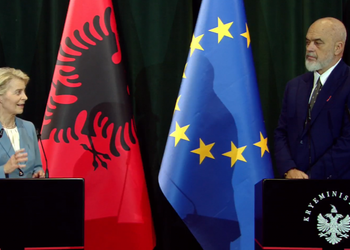
Students and anti-government demonstrators gather in front of the parliament building during a protest, which has become a national movement for change following the deadly November 2024 Novi Sad railway station roof collapse, in Belgrade, Serbia, March 15, 2025. REUTERS/Djordje Kojadinovic     TPX IMAGES OF THE DAY

Students and anti-government demonstrators gather in front of the parliament building during a protest, which has become a national movement for change following the deadly November 2024 Novi Sad railway station roof collapse, in Belgrade, Serbia, March 15, 2025. REUTERS/Djordje Kojadinovic TPX IMAGES OF THE DAY

Share on FacebookShare on Twitter

By Tena Prelec , Sonja Stojanović Gajić*

More than a tragic infrastructure failure, the collapse of the canopy at Novi Sad railway station in November 2024 was a glaring symptom of the kleptocratic governance that has defined Serbia’s political and economic system for over a decade.


The renovation of the station, part of a government-backed infrastructure push financed by China, was carried out under secrecy, fueling suspicions of corruption, cost inflation, and political favoritism. When the structure collapsed, killing 15 people, it became clear to many citizens of Serbia that corruption kills, triggering the biggest protests in the country has seen in decades. The students marching in the streets, and the large swathes of the population who support them, see the Novi Sad disaster as the consequence of a system in which public institutions serve as a facade for the enrichment of the few, diverting public scrutiny from it.

Serbia’s kleptocracy is not just a domestic problem; it is a transnational phenomenon sustained by three interlinked dynamics: the local agency of state capture, geopolitical competition, and international enablers. The local agents, in this case, are the Serbian Progressive Party (SNS). SNS came to power through a string of elections, in itself affected by deep-seated problems. It then re-purposed key policy processes and institutions to serve their private interests. By taking over the control of state resources, the media sector, decision-making, and enforcement capacities, they privatised the state to ensure a privileged position in political competition, as evident in the resolution by the European Parliament after the 2023 elections in Serbia. SNS would not have been able to do this if they had not secured backing from some international partners – western states included – and ensured that others look away or tolerate what is going on.

China was a desired partner due to its readiness to invest quickly in connectivity projects, both physical and digital, as part of a broader Chinese plan to build a corridor from the Port of Piraeus to Central Europe. China provided significant funds ‘with no strings attached,’ except dependency created through loans, something that does not seem to be a concern for this government. These deals, such as the construction of the high-speed railway from Novi Sad to Subotica, bring opportunity for additional enrichment, as money is spent not only on Chinese companies but also on local sub-contractors linked to the ruling party.

Protesting students demand the publication of all project-related documents, accountability for those responsible, and a transparent investigation, but so far, more information was provided about the Chinese part of the work than about the work done by local subcontractors. This is an example of what the GEO-POWER-EU project categorises as corrosive capital – projects that do not merely bring in foreign money but actively exploit governance weaknesses and entrench control by the elites, irrespective of their country of origin.

These investments are not imposed on Serbia; they are created or welcomed by local elites who benefit from the lack of oversight and use them to strengthen their own economic and political dominance. The Belgrade Waterfront project, a flagship initiative of the Serbian government in partnership with Emirati investors, is another prime example of how corrosive capital operates. The project was pushed through tailor-made laws disregarding urban planning, it expropriated land from residents, and created an unaccountable financial arrangement benefiting a small elite.

The problem, however, is not just about Russian or Chinese influence; it is about a broader pattern in which foreign capital, regardless of origin, is funneled into non-transparent, politically manipulated projects that sideline democratic governance and make significant damage to the population and environment. Much of it is tolerated by Western partners, especially since the so-called geopolitical turn in the EU, provided that the local agents behave in line with Franklin Roosevelt’s motto: “He may be a bastard, but he’s our bastard.” Resembling such reasoning, in the first few years of governing, President Vučić faked compliance in a EU-mediated dialogue for the normalization of the relations with Kosovo, although occasionally also stirring incidents that he would then intervene to pacify.

This practice of stabilitocracy was later upgraded with economic deals with Trump’s family and major EU states such as France and Germany, especially after domestic opposition to corrupt deals and uncompetitive elections increased. The Serbian government bought 12 Rafale fighter jets from France, without access to all technical applications and no sufficient funds for their maintenance. To the German auto industry, Vučić promised privileged access to the potentially largest lithium mine in Europe implemented by Rio Tinto, a western multinational. This project might decrease the EU’s dependency on China for critical minerals, but it would also create significant environmental damage in the region, and the Serbian population has opposed it strenuously through large-scale protests.


The EU has remained largely silent to the repression against environmental activists and civil society through smear campaigns, bogus investigations, and surveillance documented by Amnesty International. Due to the disillusionment with the EU, Serbian protestors are not carrying EU flags as their peers in Georgia. Towards its western partners, SNS tried to use a geopolitical argument by labeling both the environmental protests against Rio Tinto’s project and the students’ protests after the tragedy in Novi Sad as sponsored by Russia. But domestically, they were feeding pro-Russian and anti-Western attitudes in the media under their control, justifying corrosive deals due to ‘EU-imposed’ green transition, and blaming the protests as Western-sponsored colored revolutions.

Such entrenched grand corruption, or kleptocracy, thrives through international intermediaries – law firms, financial institutions, and political consultants that secure power and launder wealth across borders. As detailed in Indulging Kleptocracy, this web of illicit finance extends deep into western economies, where secrecy laws and regulatory loopholes offer shelter for kleptocrats. PR firms (think Israeli disinformation) and political consultants (think Tony Blair) have polished Vučić’s democratic veneer while reinforcing his grip on power. Serbian elites channel wealth through financial hubs like Cyprus, Switzerland, and the UAE, exploiting the same Western legal and banking structures that sustain kleptocracy worldwide.
The student-led protests directly challenge Serbia’s entrenched corruption and impunity. They expose a system where elites extract wealth through crony deals, where foreign capital fuels corruption rather than development, and institutions fail to address public grievances.

Protesters may not seek the EU’s help, but Brussels must not aid Vučić’s regime through inaction and empty calls for dialogue. He is no reliable partner – willing to turn Serbia into another Turkey or Belarus to evade accountability while playing EU competitors against each other. His influence extends beyond Serbia, destabilising the region through proxy parties and media control. If Serbia breaks free from state capture, it could set a precedent for the whole region – but that would require the EU to act, not enable.
/*BiEPAG

Tags: novi sadstudents

Related Posts

Current Events

Serbia – China 2026: Technological partnership, geopolitical positioning and a new phase of the Chinese presence in the Western Balkans

1 June, 2026
ENGLISH

IBAR? ”Sufficiently! Much ado about nothing! Shart contrasts in Beijing! Where is the exit?!

1 June, 2026
ENGLISH

How Alkida Lushaj is redefining democratic inclusion globally

31 May, 2026

Follow US

Subscribe

Receive Argumentum Magazine by Email

Last Posts

Serbia – China 2026: Technological partnership, geopolitical positioning and a new phase of the Chinese presence in the Western Balkans

1 June, 2026

IBAR? ”Sufficiently! Much ado about nothing! Shart contrasts in Beijing! Where is the exit?!

1 June, 2026

How Alkida Lushaj is redefining democratic inclusion globally

31 May, 2026

Cyber Attribution, Corruption, and the False-Flag Question in Albania’s 2022 Alleged Iranian Cyberattack

30 May, 2026

The Digital Protectorate: How the EU AI Act Codified Silicon Valley’s Monopoly

30 May, 2026
Argumentum

“Argumentum”, një proces intelektual …

Contact Us

[email protected]
[email protected]
[email protected]

Follow Us

Media Partner

Register

Receive Argumentum Magazine by Email
  • Home
  • Privacy Policy
  • About Us
  • Contact

© 2022 Argumentum. All Rights Reserved. | NUIS: L91415033Q

Welcome Back!

Login to your account below

Forgotten Password? Sign Up

Create New Account!

Fill the forms bellow to register

*By registering into our website, you agree to the Terms & Conditions and Privacy Policy.
All fields are required. Log In

Retrieve your password

Please enter your username or email address to reset your password.

Log In

Add New Playlist

No Result
View All Result
  • Home
  • OP/ED
  • Interview
  • Realpolitik
  • Current Events
  • Top News
  • YOUR VOICE
  • Shqip

© 2022 Argumentum. All Rights Reserved. | NUIS: L91415033Q

This website uses cookies. By continuing to use this website you are giving consent to cookies being used. Visit our Privacy and Cookie Policy.