



• SHQIPËRI
  • KOSOVË
  • MAQEDONIA E VERIUT
  • MALI I ZI
  • Revista në PDF
8 June, 2026
  • Home
  • OP/ED

    Pierre Nora and the institution of memory we lack in Eastern Europe

    The Blueprint of a Diplomatic Debacle: Analyzing Germany’s Historic UNSC Loss

    Cyber Attribution, Corruption, and the False-Flag Question in Albania’s 2022 Alleged Iranian Cyberattack

    Between Russia, Iran and Europe: Azerbaijan as a balancing power in the South Caucasus

    The Zero-Tariff Gate: Sovereignty as a Service in the Sino-African Corridor

    Albania vs. the Sea/ Marginal Notes on A. Leka’s Novel The Hidden Side of the Albanian Socialist Garden

    May 9 and the long shadow of a Letter: Is Europe still Schuman’s Project?

    The Arbnesh of Zadar: A living memory of Albanian identity on the Adriatic coast

    Science Diplomacy and Academic Freedom: A strategic nexus for contemporary diplomacy

  • Interview

    Exclusive Interview with Oleksandr Tyshchenko: A 40-Year Legacy of Chernobyl, Nuclear Risks, and Global Responsibility

    INTERVIEW: ZLATKO KRAMARIĆ – THOUGHTS ON THE OLD CONTINENT

    EXCLUSIVE / Ukrainian Ambassador to Albania, Volodymyr Shkurov: “Ukraine wants peace, but not at the expense of its freedom and independence”

    EXCLUSIVE| Ambassador Tayyar Kagan Atay: Türkiye and Albania, a Strategic Partnership Rooted in Shared Heritage and a Common Vision for the Future

    “Diplomacy, Not War”: Palestinian Ambassador to Albania Calls for Justice, Peace, and Global Action for Gaza

    Exclusive: “Even After Tito – Tito”/ Ambassador Zlatko Kramarić on Authoritarian Legacies and Democracy’s Future in the Balkans

    The Conclusion of the Diplomatic Mission / Ambassador Dancho Markovski: Strengthening Albania-North Macedonia Relations for a Shared European Future

    A Century of Diplomatic Relations Between Albania and Russia: Exclusive Interview with the Russian Ambassador to Albania, H.E. Alexey Zaytsev

    Exclusive/ The chairman of the Freedom Party, Ilir Meta: “The will of the citizens will triumph in Albania, as it did in North Macedonia”

  • Realpolitik

    IBAR? ”Sufficiently! Much ado about nothing! Shart contrasts in Beijing! Where is the exit?!

    Neither peace nor war! Peace with bombs?! IBAR in autumn?! Not another Hormuz in Taivan! 

    IBAR – a springing board or an obstacle? Can we catch the EU Negotiation train 2027? When the dress makes the news!  EU electoral April  ends in a draw 1:1!  

    The European Parliament building in Strasbourg, France with flags waving calmly celebrating peace of the Europe. July 12, 2020.

    EU 2027 or 2037! Even half membership failed! No exit strategy!     

    What next?

    “With diplomatic velvet“! Major question marks! In Washington yes, but  in the White House NO! A strange dinner in Brussels!

    From a great ‘apple of disaccord’ to a  point of  cooperation! A bad start! The strange absence in Davos!

    5 lessons from the American 3 January! Don’t count the chicken before they are hatched! Will NATO freeze in Greenland? Wrong diplomatic messages!

    German Chancellor Friedrich Merz, European Commission President Ursula von der Leyen, Ukraine's President Volodymyr Zelenskiy, U.S. Special Envoy Steve Witkoff and Jared Kushner, son-in-law of U.S. President Donald Trump line up for a family photo opportunity at the Chancellery in Berlin, Germany, December 15, 2025.    REUTERS/Lisi Niesner/Pool

    A Strategy that could change the world! Europe in Berlin! Why an historic compromise? Only charm diplomacy in Athens!

  • Current Events

    Rama alleges ‘hybrid war’ behind protests against Kushner-linked coastal development

    BELGRADE, SERBIA - JUNE 18. 2020: Russian and Serbian flags on display during Russian Foreign Minister Sergei Lavrov's visit to the Liberators of Belgrade Memorial. Valery Sharifulin/TASS,Image: 533095429, License: Rights-managed, Restrictions: UWAGA! Zdjęcia zawierają oryginalny opis dostawcy (ITAR-TASS). Szczególnie w związku z agresją Rosji na Ukrainę mogą zawierać przekaz niezgodny z faktami. Zweryfikuj go przed publikacją, Model Release: no, Credit line: Valery Sharifulin / TASS / Forum

    Balkan Maskirovka: Why Moscow’s “Distancing” Is Only an Operation for the Survival of Vučić’s Regime

    Serbia – China 2026: Technological partnership, geopolitical positioning and a new phase of the Chinese presence in the Western Balkans

    The Digital Protectorate: How the EU AI Act Codified Silicon Valley’s Monopoly

    The 28th MFC Annual Conference in Durrës / Sulaj: Microfinance remains a key instrument for financial inclusion

    Serbia at the Crossroads of EU Integration and Geopolitical Balancing: IFIMES Analysis

    Tirana – €20 Million EU–Banking Agreement Boosts Albanian SMEs

    The Myth of Independence: How Chinese Efficiency is Rewriting the Constitution of Modern Geopolitics!

    Europe Yesterday and Today: Why 9 May Still Matters

  • Top News

    Rama alleges ‘hybrid war’ behind protests against Kushner-linked coastal development

    No End in Sight: Trump, Netanyahu and the Expanding Middle East War

    Tirana – €20 Million EU–Banking Agreement Boosts Albanian SMEs

    “EU4Municipalities II” Project, a Strategic Investment for Strengthening Municipalities and Accelerating Albania’s Path towards the EU

    Albania, Italy deepen defence ties with naval shipbuilding deal

    U.S. Embassy: Iran-Linked Groups May Target Americans and Iranian Opposition in Albania

    The Council of Albanian Ambassadors disappointed with the voting of the draft law on the foreign service in the parliamentary committees.

    Prime Minister Edi Rama Addresses Israel’s Knesset in Historic Special Session

    Kazakhstan’s Strategic Reform Agenda: Stability, Modern Governance, and Responsible Diplomacy

  • YOUR VOICE
  • Shqip
No Result
View All Result
Argumentum
  • Home
  • OP/ED

    Pierre Nora and the institution of memory we lack in Eastern Europe

    The Blueprint of a Diplomatic Debacle: Analyzing Germany’s Historic UNSC Loss

    Cyber Attribution, Corruption, and the False-Flag Question in Albania’s 2022 Alleged Iranian Cyberattack

    Between Russia, Iran and Europe: Azerbaijan as a balancing power in the South Caucasus

    The Zero-Tariff Gate: Sovereignty as a Service in the Sino-African Corridor

    Albania vs. the Sea/ Marginal Notes on A. Leka’s Novel The Hidden Side of the Albanian Socialist Garden

    May 9 and the long shadow of a Letter: Is Europe still Schuman’s Project?

    The Arbnesh of Zadar: A living memory of Albanian identity on the Adriatic coast

    Science Diplomacy and Academic Freedom: A strategic nexus for contemporary diplomacy

  • Interview

    Exclusive Interview with Oleksandr Tyshchenko: A 40-Year Legacy of Chernobyl, Nuclear Risks, and Global Responsibility

    INTERVIEW: ZLATKO KRAMARIĆ – THOUGHTS ON THE OLD CONTINENT

    EXCLUSIVE / Ukrainian Ambassador to Albania, Volodymyr Shkurov: “Ukraine wants peace, but not at the expense of its freedom and independence”

    EXCLUSIVE| Ambassador Tayyar Kagan Atay: Türkiye and Albania, a Strategic Partnership Rooted in Shared Heritage and a Common Vision for the Future

    “Diplomacy, Not War”: Palestinian Ambassador to Albania Calls for Justice, Peace, and Global Action for Gaza

    Exclusive: “Even After Tito – Tito”/ Ambassador Zlatko Kramarić on Authoritarian Legacies and Democracy’s Future in the Balkans

    The Conclusion of the Diplomatic Mission / Ambassador Dancho Markovski: Strengthening Albania-North Macedonia Relations for a Shared European Future

    A Century of Diplomatic Relations Between Albania and Russia: Exclusive Interview with the Russian Ambassador to Albania, H.E. Alexey Zaytsev

    Exclusive/ The chairman of the Freedom Party, Ilir Meta: “The will of the citizens will triumph in Albania, as it did in North Macedonia”

  • Realpolitik

    IBAR? ”Sufficiently! Much ado about nothing! Shart contrasts in Beijing! Where is the exit?!

    Neither peace nor war! Peace with bombs?! IBAR in autumn?! Not another Hormuz in Taivan! 

    IBAR – a springing board or an obstacle? Can we catch the EU Negotiation train 2027? When the dress makes the news!  EU electoral April  ends in a draw 1:1!  

    The European Parliament building in Strasbourg, France with flags waving calmly celebrating peace of the Europe. July 12, 2020.

    EU 2027 or 2037! Even half membership failed! No exit strategy!     

    What next?

    “With diplomatic velvet“! Major question marks! In Washington yes, but  in the White House NO! A strange dinner in Brussels!

    From a great ‘apple of disaccord’ to a  point of  cooperation! A bad start! The strange absence in Davos!

    5 lessons from the American 3 January! Don’t count the chicken before they are hatched! Will NATO freeze in Greenland? Wrong diplomatic messages!

    German Chancellor Friedrich Merz, European Commission President Ursula von der Leyen, Ukraine's President Volodymyr Zelenskiy, U.S. Special Envoy Steve Witkoff and Jared Kushner, son-in-law of U.S. President Donald Trump line up for a family photo opportunity at the Chancellery in Berlin, Germany, December 15, 2025.    REUTERS/Lisi Niesner/Pool

    A Strategy that could change the world! Europe in Berlin! Why an historic compromise? Only charm diplomacy in Athens!

  • Current Events

    Rama alleges ‘hybrid war’ behind protests against Kushner-linked coastal development

    BELGRADE, SERBIA - JUNE 18. 2020: Russian and Serbian flags on display during Russian Foreign Minister Sergei Lavrov's visit to the Liberators of Belgrade Memorial. Valery Sharifulin/TASS,Image: 533095429, License: Rights-managed, Restrictions: UWAGA! Zdjęcia zawierają oryginalny opis dostawcy (ITAR-TASS). Szczególnie w związku z agresją Rosji na Ukrainę mogą zawierać przekaz niezgodny z faktami. Zweryfikuj go przed publikacją, Model Release: no, Credit line: Valery Sharifulin / TASS / Forum

    Balkan Maskirovka: Why Moscow’s “Distancing” Is Only an Operation for the Survival of Vučić’s Regime

    Serbia – China 2026: Technological partnership, geopolitical positioning and a new phase of the Chinese presence in the Western Balkans

    The Digital Protectorate: How the EU AI Act Codified Silicon Valley’s Monopoly

    The 28th MFC Annual Conference in Durrës / Sulaj: Microfinance remains a key instrument for financial inclusion

    Serbia at the Crossroads of EU Integration and Geopolitical Balancing: IFIMES Analysis

    Tirana – €20 Million EU–Banking Agreement Boosts Albanian SMEs

    The Myth of Independence: How Chinese Efficiency is Rewriting the Constitution of Modern Geopolitics!

    Europe Yesterday and Today: Why 9 May Still Matters

  • Top News

    Rama alleges ‘hybrid war’ behind protests against Kushner-linked coastal development

    No End in Sight: Trump, Netanyahu and the Expanding Middle East War

    Tirana – €20 Million EU–Banking Agreement Boosts Albanian SMEs

    “EU4Municipalities II” Project, a Strategic Investment for Strengthening Municipalities and Accelerating Albania’s Path towards the EU

    Albania, Italy deepen defence ties with naval shipbuilding deal

    U.S. Embassy: Iran-Linked Groups May Target Americans and Iranian Opposition in Albania

    The Council of Albanian Ambassadors disappointed with the voting of the draft law on the foreign service in the parliamentary committees.

    Prime Minister Edi Rama Addresses Israel’s Knesset in Historic Special Session

    Kazakhstan’s Strategic Reform Agenda: Stability, Modern Governance, and Responsible Diplomacy

  • YOUR VOICE
  • Shqip
No Result
View All Result
Argumentum
No Result
View All Result
Home ENGLISH

The Time of Buying Time May Be over for Serbia

5 April, 2021
in ENGLISH, English OP/ED
A A
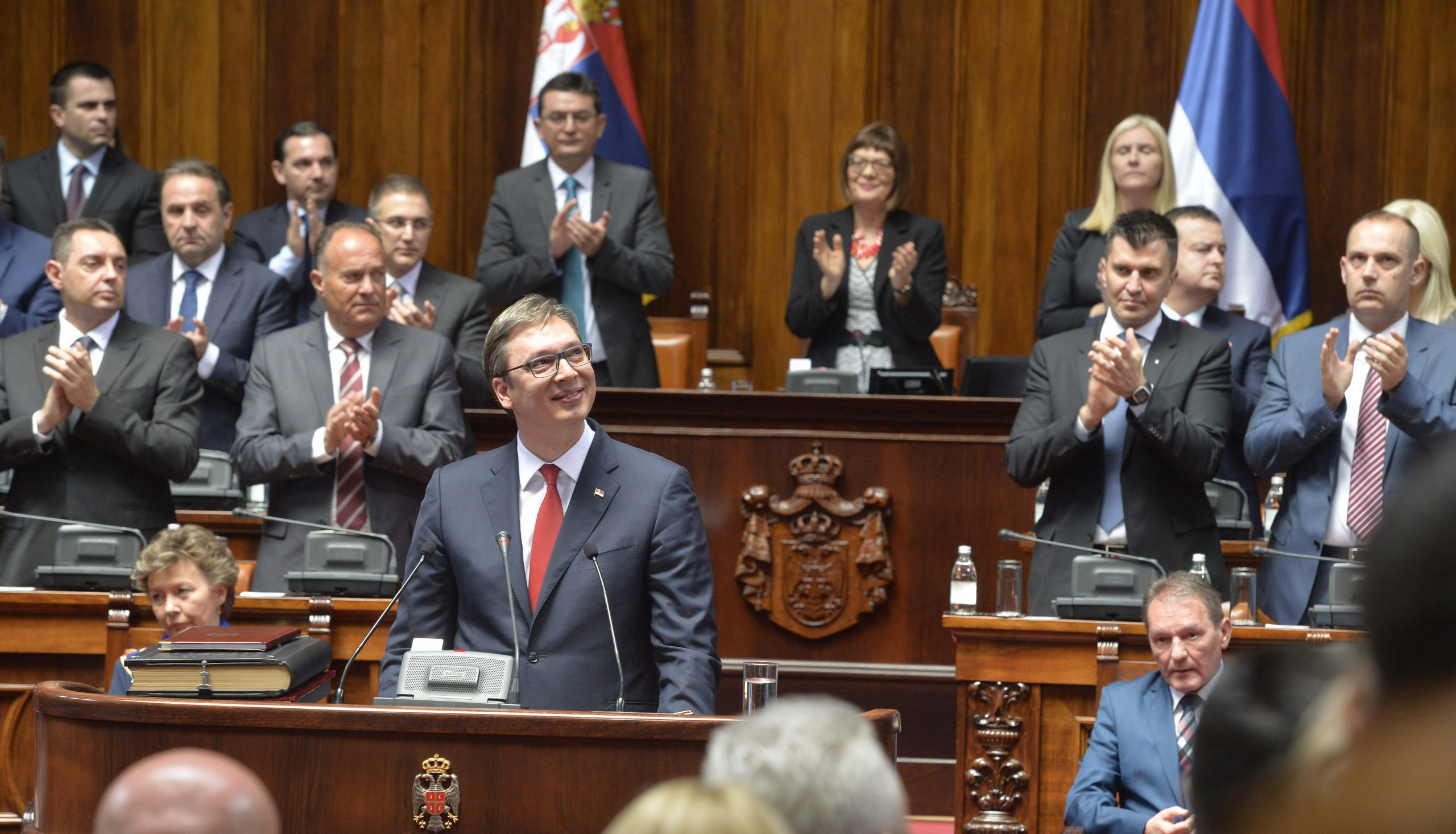
Beograd, 31. maja 2017.-  Aleksandar Vucic (S) polozio je danas zakletvu u Skupstini Srbije i preuzeo duznost predsednika Srbije. Zakletvu je polozio na Ustavu Srbije i Miroslavljevom jevandjelju. FOTO TANJUG/ RADE PRELIC/ nr

Beograd, 31. maja 2017.- Aleksandar Vucic (S) polozio je danas zakletvu u Skupstini Srbije i preuzeo duznost predsednika Srbije. Zakletvu je polozio na Ustavu Srbije i Miroslavljevom jevandjelju. FOTO TANJUG/ RADE PRELIC/ nr

Share on FacebookShare on Twitter
By Marko Savković
 European Parliament’s criticism is not induced by (the issue of) Kosovo, rather that MEPs do not want to see another Orban in the EU. The European Parliament on Serbia report is therefore comprehensive and highly critical.
To comprehend the nature of power, of governance in Serbia, the democratic backsliding (yes, any progress can become reversible), changes in and to our political culture, European institutions needed time. After all, even Freedom House didn’t categorize our country as a “transitional or hybrid regime” prior to 2019. True to the point, EP “regrets… that there has even been backsliding on issues that are fundamental for EU accession”.
And it is really not about Kosovo. We might be very wrong, but for the EP at least, the time of “buying time” by promising concessions that never materialize may well be over. The 100+ paragraphs raised in the European Parliament’s (EP) report on Serbia present a detailed look into the country’s political reality.
It is also important to note, as criticism ramps up from the ruling coalition, that with this report, the EP has not stepped out of its mandate. For several years now, EP’s presence and contribution to the enlargement policy has been evolving. After the 2019 elections, there is a different EP, with a more prominent role for green and liberal political groupings balancing what has, for years, been European People’s Party (EPP) dominance.
A more critical, or perhaps more sober assessment of Serbia’s overall effort and achievements on the proverbial “European path” has been with us since at least the 2019 Progress Report. What is new is para 24, and mentioning by name four of the “cases with a high level of public interest” – Krušik, Jovanjica, Telekom Srbija and Savamala (affairs). If Croatia’s experience serves as any example, no country can join the EU without previously resolving cases of such magnitude.
Their mentioning presents public embarrassment for Belgrade, and it is no wonder some effort has been invested in keeping them out of the final version of the document. However, they are not going anywhere; the EP will continue to insist on their timely and complete resolution, as will civil society. And they are all equally important – “unlawful demolition of private property in the Savamala neighborhood”, to which the EP has referred back in 2018 is still part of the reports.
Another (highly critical) paragraph concerns “unacceptable verbal attacks and cases of hate speech” (para 20) against MEPs who have been representing the EP in relations with Serbia, most notably, Ms. Tanja Fajon.
Now leader of Slovenia’s social democrats, she has been the subject of a smear campaign for months –perhaps because she represents an opposing political group; or because she knows the Western Balkans’ context well. With the European Commission (EC) and the EP now poised to monitor decision makers’ narrative as well, future verbal attacks at any of MEPs will be taken most seriously.
A lot has been written, or ascribed to EU’s poor communication; and anti-EU rhetoric employed by decision makers in Serbia. In paras 8 to 10, the report seems to contain a comprehensive realization of this fact and allocates blame accordingly: “public discussion must be based on facts”; “encourages Serbian authorities… to communicate more actively their commitment”; and, most importantly in our view, “expresses concern that publicly financed media outlets, often quoting office-holders, contribute to the dissemination of anti-EU rhetoric in Serbia”.
Writers of the report stopped one step short of mentioning them by name, but this may present an opening into a wider inquiry, one that would produce unpleasant conclusions for public broadcasters, whose airwaves are being dominated by Euro-sceptics and Euro-scepticism.
We also note that in the context of the pandemic, this Eurosceptic content is often intertwined with dangerous, anti-science messaging; it is not uncommon to see anti-vaxxers and conspiracy theorists of all colors in prime-time, confusing and misleading citizens. Even if this is not the fault of public broadcasters, it is aired by media that hold a national frequency.
Particularly revealing are remarks on the “Inter-Party Dialogue” (“on improving the conditions for holding parliamentary elections, facilitated by the EP”). The “IPD” is of utmost importance, being the only maneuver left to put a temporary halt to polarization and political fragmentation. What makes it so revealing is that the EP provides us with a sketch for democratic elections: “IPD should be concluded well in advance of the forthcoming elections (…) “leave sufficient time to implement necessary… changes” (in order to) “create a level playing field”.
This ties in to para 13, where the EP shows it fully understands the reality of 2020 elections in Serbia (“the dominance of the ruling party, including in the media, was of concern; regrets the long-term trends of pressure on voters, media bias and the blurring of lines between the activities of all state officials and partisan campaigning; points out, in this regard, the role of state-sponsored disinformation campaigns aiming to shift opinions vis-à-vis elections”).
And while the EP “regrets the decision by parts of the opposition to boycott the elections”, it also notes that “the newly constituted Serbian Parliament is marked by the overwhelming majority of the ruling coalition and the absence of a viable opposition – a situation which is not conducive to achieving political pluralism in the country” (para 16).
Recent attacks on civil society – KRIK, CRTA, and others – understandably take up a significant part of EP’s comments on Serbia’s parliament. However, in para 38, it is also noted that National Assembly “met only 44 days after the declaration of the state of emergency in March 2020, which undermined its position as the key institution of parliamentary democracy” and that it “did not begin its work in full for a long period after the declaration of final election result on 5 July 2020, despite a clear parliamentary majority”.
Since the Belgrade-Pristina dialogue has produced no new results – apart in the much-discussed and criticized parallel process led by the US – one remark warns Serbia against moving its embassy to Jerusalem. Given there has been little mention of it in state-run media, moving the embassy now with new administration in D.C. would present a surprise. As expected, full support is extended to Lajcak and his team.
The EP is also at the forefront of criticizing China’s “increasing presence and influence”, first with regard to the “lack of transparency and environmental and social impact assessment of Chinese investments and loans”; then, in the context of Serbia’s foreign policy alignment and its failure to agree to the condemnation of the new security law (para 89; the “Hong Kong national security law”); and lastly Serbia’s “growing dependence” (para 99) on “equipment and technology” for defense and security purposes, “including a mass surveillance system in Belgrade and mass personal data collection without appropriate safeguards”.
There are, however, several other remarks that may not spell China, but are all about it – when referring to “disproportionate visibility given by Serbia to third countries” (para 11) or “high levels of air pollution… in large cities and industrial areas such as Smederevo, Bor and Kolubara” (para 85). (Concern over Russia remains, but is less prominent and nothing new was said.)
The report of the European Parliament is the clearest warning to Belgrade so far, that Brussels is very aware of the reality of the political situation in Serbia and the nature of the ruling regime. It is not clear, however, when and how its key messages will be taken up by decision-makers in the Member States (MS). In this regard, speeches of the ambassadors-representatives of the MS in the EU; envoys for the Western Balkans; and lastly, the Quint should be closely followed.
Further progress in the enlargement has long been conditioned by Chapters 23 and 24; we will see whether the lack of progress in the IPD, one that could be clearly attributed to the authorities, would eventually lead to the suspension of any of the assistance programs, or to negotiations altogether.

There is however still room for Belgrade to avoid such a scenario, but not by giving away further concessions on Kosovo (hard to imagine happening before 2022) but by meeting opposition’s conditions for participating in future elections. /EWB, April 5, 2021
Tags: EUseriaVucic

Related Posts

ENGLISH

The View from Tirana: Navigating the Intra-European Split for Digital Sovereignty

8 June, 2026
Current Events

Rama alleges ‘hybrid war’ behind protests against Kushner-linked coastal development

5 June, 2026
ENGLISH

Pierre Nora and the institution of memory we lack in Eastern Europe

5 June, 2026

Follow US

Subscribe

Receive Argumentum Magazine by Email

Last Posts

The View from Tirana: Navigating the Intra-European Split for Digital Sovereignty

8 June, 2026

Rama alleges ‘hybrid war’ behind protests against Kushner-linked coastal development

5 June, 2026

Pierre Nora and the institution of memory we lack in Eastern Europe

5 June, 2026
BELGRADE, SERBIA - JUNE 18. 2020: Russian and Serbian flags on display during Russian Foreign Minister Sergei Lavrov's visit to the Liberators of Belgrade Memorial. Valery Sharifulin/TASS,Image: 533095429, License: Rights-managed, Restrictions: UWAGA! Zdjęcia zawierają oryginalny opis dostawcy (ITAR-TASS). Szczególnie w związku z agresją Rosji na Ukrainę mogą zawierać przekaz niezgodny z faktami. Zweryfikuj go przed publikacją, Model Release: no, Credit line: Valery Sharifulin / TASS / Forum

Balkan Maskirovka: Why Moscow’s “Distancing” Is Only an Operation for the Survival of Vučić’s Regime

5 June, 2026

The Blueprint of a Diplomatic Debacle: Analyzing Germany’s Historic UNSC Loss

4 June, 2026
Argumentum

“Argumentum”, një proces intelektual …

Contact Us

[email protected]
[email protected]
[email protected]

Follow Us

Media Partner

Register

Receive Argumentum Magazine by Email
  • Home
  • Privacy Policy
  • About Us
  • Contact

© 2022 Argumentum. All Rights Reserved. | NUIS: L91415033Q

Welcome Back!

Login to your account below

Forgotten Password? Sign Up

Create New Account!

Fill the forms bellow to register

*By registering into our website, you agree to the Terms & Conditions and Privacy Policy.
All fields are required. Log In

Retrieve your password

Please enter your username or email address to reset your password.

Log In

Add New Playlist

No Result
View All Result
  • Home
  • OP/ED
  • Interview
  • Realpolitik
  • Current Events
  • Top News
  • YOUR VOICE
  • Shqip

© 2022 Argumentum. All Rights Reserved. | NUIS: L91415033Q

This website uses cookies. By continuing to use this website you are giving consent to cookies being used. Visit our Privacy and Cookie Policy.