










• SHQIPËRI
  • KOSOVË
  • MAQEDONIA E VERIUT
  • MALI I ZI
  • Revista në PDF
4 June, 2026
  • Home
  • OP/ED

    Cyber Attribution, Corruption, and the False-Flag Question in Albania’s 2022 Alleged Iranian Cyberattack

    Between Russia, Iran and Europe: Azerbaijan as a balancing power in the South Caucasus

    The Zero-Tariff Gate: Sovereignty as a Service in the Sino-African Corridor

    Albania vs. the Sea/ Marginal Notes on A. Leka’s Novel The Hidden Side of the Albanian Socialist Garden

    May 9 and the long shadow of a Letter: Is Europe still Schuman’s Project?

    The Arbnesh of Zadar: A living memory of Albanian identity on the Adriatic coast

    Science Diplomacy and Academic Freedom: A strategic nexus for contemporary diplomacy

    Serbia and Kosovo between new regional alliances and old geopolitical patterns

    Hungarian Writers and the European Spirit: Between Central Europe, Auschwitz, and Inner Exile

  • Interview

    Exclusive Interview with Oleksandr Tyshchenko: A 40-Year Legacy of Chernobyl, Nuclear Risks, and Global Responsibility

    INTERVIEW: ZLATKO KRAMARIĆ – THOUGHTS ON THE OLD CONTINENT

    EXCLUSIVE / Ukrainian Ambassador to Albania, Volodymyr Shkurov: “Ukraine wants peace, but not at the expense of its freedom and independence”

    EXCLUSIVE| Ambassador Tayyar Kagan Atay: Türkiye and Albania, a Strategic Partnership Rooted in Shared Heritage and a Common Vision for the Future

    “Diplomacy, Not War”: Palestinian Ambassador to Albania Calls for Justice, Peace, and Global Action for Gaza

    Exclusive: “Even After Tito – Tito”/ Ambassador Zlatko Kramarić on Authoritarian Legacies and Democracy’s Future in the Balkans

    The Conclusion of the Diplomatic Mission / Ambassador Dancho Markovski: Strengthening Albania-North Macedonia Relations for a Shared European Future

    A Century of Diplomatic Relations Between Albania and Russia: Exclusive Interview with the Russian Ambassador to Albania, H.E. Alexey Zaytsev

    Exclusive/ The chairman of the Freedom Party, Ilir Meta: “The will of the citizens will triumph in Albania, as it did in North Macedonia”

  • Realpolitik

    IBAR? ”Sufficiently! Much ado about nothing! Shart contrasts in Beijing! Where is the exit?!

    Neither peace nor war! Peace with bombs?! IBAR in autumn?! Not another Hormuz in Taivan! 

    IBAR – a springing board or an obstacle? Can we catch the EU Negotiation train 2027? When the dress makes the news!  EU electoral April  ends in a draw 1:1!  

    The European Parliament building in Strasbourg, France with flags waving calmly celebrating peace of the Europe. July 12, 2020.

    EU 2027 or 2037! Even half membership failed! No exit strategy!     

    What next?

    “With diplomatic velvet“! Major question marks! In Washington yes, but  in the White House NO! A strange dinner in Brussels!

    From a great ‘apple of disaccord’ to a  point of  cooperation! A bad start! The strange absence in Davos!

    5 lessons from the American 3 January! Don’t count the chicken before they are hatched! Will NATO freeze in Greenland? Wrong diplomatic messages!

    German Chancellor Friedrich Merz, European Commission President Ursula von der Leyen, Ukraine's President Volodymyr Zelenskiy, U.S. Special Envoy Steve Witkoff and Jared Kushner, son-in-law of U.S. President Donald Trump line up for a family photo opportunity at the Chancellery in Berlin, Germany, December 15, 2025.    REUTERS/Lisi Niesner/Pool

    A Strategy that could change the world! Europe in Berlin! Why an historic compromise? Only charm diplomacy in Athens!

  • Current Events

    Serbia – China 2026: Technological partnership, geopolitical positioning and a new phase of the Chinese presence in the Western Balkans

    The Digital Protectorate: How the EU AI Act Codified Silicon Valley’s Monopoly

    The 28th MFC Annual Conference in Durrës / Sulaj: Microfinance remains a key instrument for financial inclusion

    Serbia at the Crossroads of EU Integration and Geopolitical Balancing: IFIMES Analysis

    Tirana – €20 Million EU–Banking Agreement Boosts Albanian SMEs

    The Myth of Independence: How Chinese Efficiency is Rewriting the Constitution of Modern Geopolitics!

    Europe Yesterday and Today: Why 9 May Still Matters

    “EU4Municipalities II” Project, a Strategic Investment for Strengthening Municipalities and Accelerating Albania’s Path towards the EU

    Eight Years in the Service of Identity: The Journey of the Montenegrin Community in Albania

  • Top News

    No End in Sight: Trump, Netanyahu and the Expanding Middle East War

    Tirana – €20 Million EU–Banking Agreement Boosts Albanian SMEs

    “EU4Municipalities II” Project, a Strategic Investment for Strengthening Municipalities and Accelerating Albania’s Path towards the EU

    Albania, Italy deepen defence ties with naval shipbuilding deal

    U.S. Embassy: Iran-Linked Groups May Target Americans and Iranian Opposition in Albania

    The Council of Albanian Ambassadors disappointed with the voting of the draft law on the foreign service in the parliamentary committees.

    Prime Minister Edi Rama Addresses Israel’s Knesset in Historic Special Session

    Kazakhstan’s Strategic Reform Agenda: Stability, Modern Governance, and Responsible Diplomacy

    Trump Invites Rama to Peace Board, Prime Minister: Proud of Albania

  • YOUR VOICE
  • Shqip
No Result
View All Result
Argumentum
  • Home
  • OP/ED

    Cyber Attribution, Corruption, and the False-Flag Question in Albania’s 2022 Alleged Iranian Cyberattack

    Between Russia, Iran and Europe: Azerbaijan as a balancing power in the South Caucasus

    The Zero-Tariff Gate: Sovereignty as a Service in the Sino-African Corridor

    Albania vs. the Sea/ Marginal Notes on A. Leka’s Novel The Hidden Side of the Albanian Socialist Garden

    May 9 and the long shadow of a Letter: Is Europe still Schuman’s Project?

    The Arbnesh of Zadar: A living memory of Albanian identity on the Adriatic coast

    Science Diplomacy and Academic Freedom: A strategic nexus for contemporary diplomacy

    Serbia and Kosovo between new regional alliances and old geopolitical patterns

    Hungarian Writers and the European Spirit: Between Central Europe, Auschwitz, and Inner Exile

  • Interview

    Exclusive Interview with Oleksandr Tyshchenko: A 40-Year Legacy of Chernobyl, Nuclear Risks, and Global Responsibility

    INTERVIEW: ZLATKO KRAMARIĆ – THOUGHTS ON THE OLD CONTINENT

    EXCLUSIVE / Ukrainian Ambassador to Albania, Volodymyr Shkurov: “Ukraine wants peace, but not at the expense of its freedom and independence”

    EXCLUSIVE| Ambassador Tayyar Kagan Atay: Türkiye and Albania, a Strategic Partnership Rooted in Shared Heritage and a Common Vision for the Future

    “Diplomacy, Not War”: Palestinian Ambassador to Albania Calls for Justice, Peace, and Global Action for Gaza

    Exclusive: “Even After Tito – Tito”/ Ambassador Zlatko Kramarić on Authoritarian Legacies and Democracy’s Future in the Balkans

    The Conclusion of the Diplomatic Mission / Ambassador Dancho Markovski: Strengthening Albania-North Macedonia Relations for a Shared European Future

    A Century of Diplomatic Relations Between Albania and Russia: Exclusive Interview with the Russian Ambassador to Albania, H.E. Alexey Zaytsev

    Exclusive/ The chairman of the Freedom Party, Ilir Meta: “The will of the citizens will triumph in Albania, as it did in North Macedonia”

  • Realpolitik

    IBAR? ”Sufficiently! Much ado about nothing! Shart contrasts in Beijing! Where is the exit?!

    Neither peace nor war! Peace with bombs?! IBAR in autumn?! Not another Hormuz in Taivan! 

    IBAR – a springing board or an obstacle? Can we catch the EU Negotiation train 2027? When the dress makes the news!  EU electoral April  ends in a draw 1:1!  

    The European Parliament building in Strasbourg, France with flags waving calmly celebrating peace of the Europe. July 12, 2020.

    EU 2027 or 2037! Even half membership failed! No exit strategy!     

    What next?

    “With diplomatic velvet“! Major question marks! In Washington yes, but  in the White House NO! A strange dinner in Brussels!

    From a great ‘apple of disaccord’ to a  point of  cooperation! A bad start! The strange absence in Davos!

    5 lessons from the American 3 January! Don’t count the chicken before they are hatched! Will NATO freeze in Greenland? Wrong diplomatic messages!

    German Chancellor Friedrich Merz, European Commission President Ursula von der Leyen, Ukraine's President Volodymyr Zelenskiy, U.S. Special Envoy Steve Witkoff and Jared Kushner, son-in-law of U.S. President Donald Trump line up for a family photo opportunity at the Chancellery in Berlin, Germany, December 15, 2025.    REUTERS/Lisi Niesner/Pool

    A Strategy that could change the world! Europe in Berlin! Why an historic compromise? Only charm diplomacy in Athens!

  • Current Events

    Serbia – China 2026: Technological partnership, geopolitical positioning and a new phase of the Chinese presence in the Western Balkans

    The Digital Protectorate: How the EU AI Act Codified Silicon Valley’s Monopoly

    The 28th MFC Annual Conference in Durrës / Sulaj: Microfinance remains a key instrument for financial inclusion

    Serbia at the Crossroads of EU Integration and Geopolitical Balancing: IFIMES Analysis

    Tirana – €20 Million EU–Banking Agreement Boosts Albanian SMEs

    The Myth of Independence: How Chinese Efficiency is Rewriting the Constitution of Modern Geopolitics!

    Europe Yesterday and Today: Why 9 May Still Matters

    “EU4Municipalities II” Project, a Strategic Investment for Strengthening Municipalities and Accelerating Albania’s Path towards the EU

    Eight Years in the Service of Identity: The Journey of the Montenegrin Community in Albania

  • Top News

    No End in Sight: Trump, Netanyahu and the Expanding Middle East War

    Tirana – €20 Million EU–Banking Agreement Boosts Albanian SMEs

    “EU4Municipalities II” Project, a Strategic Investment for Strengthening Municipalities and Accelerating Albania’s Path towards the EU

    Albania, Italy deepen defence ties with naval shipbuilding deal

    U.S. Embassy: Iran-Linked Groups May Target Americans and Iranian Opposition in Albania

    The Council of Albanian Ambassadors disappointed with the voting of the draft law on the foreign service in the parliamentary committees.

    Prime Minister Edi Rama Addresses Israel’s Knesset in Historic Special Session

    Kazakhstan’s Strategic Reform Agenda: Stability, Modern Governance, and Responsible Diplomacy

    Trump Invites Rama to Peace Board, Prime Minister: Proud of Albania

  • YOUR VOICE
  • Shqip
No Result
View All Result
Argumentum
No Result
View All Result
Home ENGLISH

Western Balkans in trouble: Why the EU should make a new offer to the region

15 November, 2021
in ENGLISH, English OP/ED
A A
Share on FacebookShare on Twitter

Vessela Tcherneva

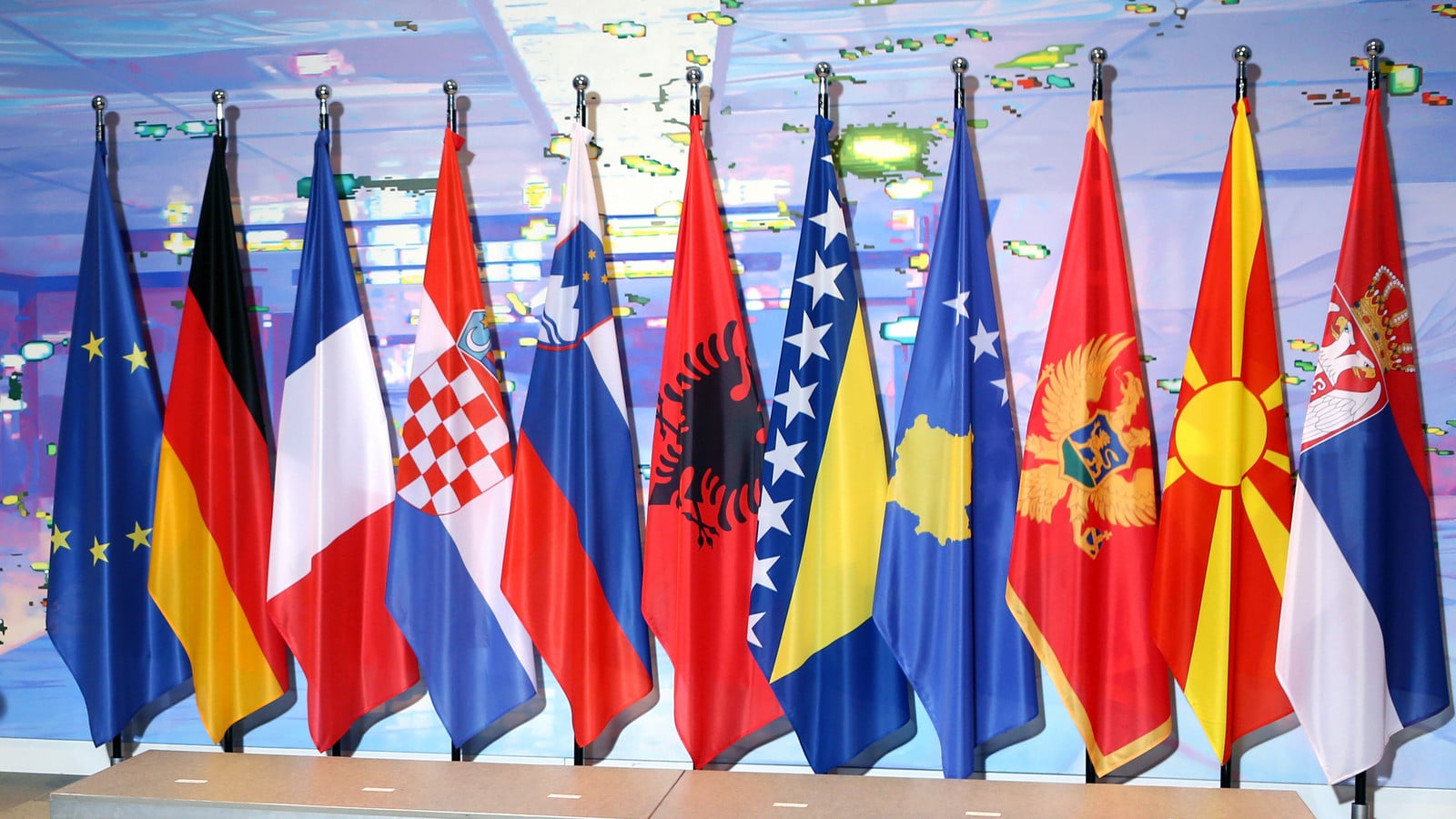
Tensions have grown in recent months in the Western Balkans, and the coming weeks look difficult across the region. In Bosnia and Herzegovina, the leader of Bosnian Serbs, Milorad Dodik, is threatening to lead his party out of the country’s delicately constructed state institutions. In North Macedonia, the prime minister, Zoran Zaev, has resigned. In Montenegro, members of the governing coalition are at loggerheads. In Kosovo, the Serb Srpska Lista party is talking about quitting state institutions. And in Serbia itself, all manner of ills abound, most currently protests around a Belgrade mural of Ratko Mladic.

With the exception of the Macedonian case, the common thread running through all these issues is that of the Serbian government’s meddling in its neighbours’ affairs through Serb minorities’ political representation. This has become a pattern of behaviour by Belgrade, one with reflections of the 1990s. “The task of this generation of politicians is to create the Serbian world, that is, to unite Serbs wherever they live”, announced Serbian interior minister Aleksandar Vulin in July. The recurring theme among Serb politicians across the region is the call for emancipation from the post-Yugoslav wars settlement. Together with high public support in the region for authoritarian regimes, and for Russia and China, a poisonous mixture is brewing.

Serbia is effectively a captured state – “our hard-won freedom from Milosevic is lost”, one local observer told me recently. It has an “unreplaceable government” despite free (but not fair) elections; it is mired by high-level corruption; and its media environment has deteriorated further. According to media analysts, between July 2020 and the end of June 2021, representatives of the ruling majority received as much as 93 per cent of the television airtime on programming covering political actors, while the opposition was present in the remaining 7 per cent of time. In September alone the president, Aleksandar Vucic, appeared – at length – on television on no fewer than 37 occasions, some broadcasts lasting two or three hours a time. And this extends beyond the obvious realm of politics and hard news: one recent study investigated Serbian Telecom’s purchase of the rights to show English Premier League football games in countries across the region – a move made, in the author’s view, to “lock Balkan audiences into their channels with its anti-Western narratives, which correspond with the country’s growing ties to the likes of China, Russia and Hungary”.

Russia and China are employing corruption as way of influencing state institutions in the region. As US president Joe Biden has stated repeatedly, authoritarian states use “strategic corruption” as a means of coercion, by undermining the social contract and public trust in institutions – and making bad governance in the region even worse. For ordinary Balkans citizens, corruption remains the third most important problem in their country, after unemployment and the economic situation. Fighting corruption and organised crime has become the raison d’être for opposition parties across the region, regardless of their ideology, as captured states encroach on media, justice, the economy, and public services such as healthcare. As a result, emigration from the Western Balkans only continues to grow.

It is evident that the EU enlargement process is stuck and will remain so for some time. Joining the European Union was once meant to resolve, among other things, the issues of poor governance that plague the Western Balkans, as well as to confirm the uneasy peace settled a quarter of a century ago. But significant numbers of EU member states are now visibly unwilling to even make reference to enlargement in official EU Council papers. Recent member state vetoes on accession talks demonstrate the EU’s unwillingness and inability to integrate the Western Balkans – and it seems that both citizens and politicians in the region have got the message. The 2021 Balkan Barometer showed that one-third of Serbians, Bosnians, and Macedonians do not expect accession to happen at all. In that vacuum, nationalist ideas and other powers easily sweep in. And surveys conducted by ECFR this summer confirm that people in Serbia have a strongly negative view of the EU. They largely see the EU’s political system as broken and its response to the pandemic as incompetent. And they hold their own country’s leadership in higher esteem, while viewing Russia and China as key allies, with 94 per cent and 91 per cent support, respectively.

In this context, what can the EU do differently? And what should it be trying to achieve?

In a highly contested geopolitical environment, technical processes alone will no longer suffice. The EU cannot simply augment the accession negotiations (by, for example, extending single market access) and hope that the dynamics will change. It will need to become much more political. To pull the region more tightly into a European orbit, it could use an existing regional cooperation format, such as the Berlin Process. Access to the single market could be part of its agenda. But so too should be a path towards Western Balkans states finally concluding political agreements to resolve longstanding points of contention – such as those that continue to stymie the Kosovo-Serbia relationship, or Bosnia’s relations with Serbia and Croatia. States that make such progress should receive access to European funds in exchange.

The EU should move to incorporate Western Balkans countries into its Green New Deal, opening up opportunities for them to modernise their infrastructure and make stronger progress on decarbonising their economies. Diversification of energy sources will also help them become less dependent on third parties such as Russia for their energy supply, and would diminish, if not eliminate, corruption from the energy sector.

The lack of sharp instruments for the EU to draw from its toolbox means Europe is being left out of key strategic conversations in the Balkans. The US readiness to brandish a stick in the form of the Magnitsky Act and sanctions rather than offer only a carrot seems to make the American stance much more compelling and their voice more forceful. The EU has a wide range of potential tools that it could use, and that it could strengthen with a few adjustments. For example, it should add kleptocracy to its European Magnitsky Act and extend the act’s provisions to the Western Balkans. Being able to issue personal corruption sanctions against individuals would increase the EU’s leverage and change the perception of hypocrisy that exists – that it is happy enough to work with autocrats when the situation suits it. The European Public Prosecution Office could ensure greater focus on cross-border investigations that involve Balkan authorities. It can also deploy the European Anti-Fraud Office in cases related to EU funds, which make up a substantial part of the GDP of the Western Balkans.

Borders will not lose their meaning in the Balkans any time soon. Therefore, the EU needs to give more attention to the region’s security and defence architecture, which is neglected currently. A truer geopolitical response by the EU will require expanding the European Defence Union. If Western Balkans states join the EDU they will be able to take part in PESCO projects, and EDU membership should focus minds on increased compliance with the Common Security and Defence Policy. Serbia, for instance, wants to modernise the production capacities of its large state-owned arms manufacturers. Instead of effectively forcing it to cooperate with countries such as Belarus, Russia, and the United Arab Emirates, the EU should invite Serbia to take part in its own projects. The EU’s battlegroups should also not only include Western Balkans participation on a regular basis, but should also go into operational service in the region, should the situation worsen.

If there is a positive to take out of the Western Balkans’ current interconnected crises, it is the renewed attention that European and US policymakers are giving to the region. But the EU urgently needs to change its approach – its choice of ‘constructive ambiguity’ is no longer working and creates only irritation across the region. Helping citizens loosen the grip of corrupt elites, and re-establishing good governance within institutions, would go a long way to more fully supporting reforms and boosting the EU’s leverage in a region key to enhancing its international credibility and ensuring its neighbourhood’s stability.

/European Council on Foreign Relations.
Tags: balkanEUtroubles

Related Posts

Current Events

Serbia – China 2026: Technological partnership, geopolitical positioning and a new phase of the Chinese presence in the Western Balkans

1 June, 2026
ENGLISH

IBAR? ”Sufficiently! Much ado about nothing! Shart contrasts in Beijing! Where is the exit?!

1 June, 2026
ENGLISH

How Alkida Lushaj is redefining democratic inclusion globally

31 May, 2026

Follow US

Subscribe

Receive Argumentum Magazine by Email

Last Posts

Serbia – China 2026: Technological partnership, geopolitical positioning and a new phase of the Chinese presence in the Western Balkans

1 June, 2026

IBAR? ”Sufficiently! Much ado about nothing! Shart contrasts in Beijing! Where is the exit?!

1 June, 2026

How Alkida Lushaj is redefining democratic inclusion globally

31 May, 2026

Cyber Attribution, Corruption, and the False-Flag Question in Albania’s 2022 Alleged Iranian Cyberattack

30 May, 2026

The Digital Protectorate: How the EU AI Act Codified Silicon Valley’s Monopoly

30 May, 2026
Argumentum

“Argumentum”, një proces intelektual …

Contact Us

[email protected]
[email protected]
[email protected]

Follow Us

Media Partner

Register

Receive Argumentum Magazine by Email
  • Home
  • Privacy Policy
  • About Us
  • Contact

© 2022 Argumentum. All Rights Reserved. | NUIS: L91415033Q

Welcome Back!

Login to your account below

Forgotten Password? Sign Up

Create New Account!

Fill the forms bellow to register

*By registering into our website, you agree to the Terms & Conditions and Privacy Policy.
All fields are required. Log In

Retrieve your password

Please enter your username or email address to reset your password.

Log In

Add New Playlist

No Result
View All Result
  • Home
  • OP/ED
  • Interview
  • Realpolitik
  • Current Events
  • Top News
  • YOUR VOICE
  • Shqip

© 2022 Argumentum. All Rights Reserved. | NUIS: L91415033Q

This website uses cookies. By continuing to use this website you are giving consent to cookies being used. Visit our Privacy and Cookie Policy.