




















• SHQIPËRI
  • KOSOVË
  • MAQEDONIA E VERIUT
  • MALI I ZI
  • Revista në PDF
3 June, 2026
  • Home
  • OP/ED

    Cyber Attribution, Corruption, and the False-Flag Question in Albania’s 2022 Alleged Iranian Cyberattack

    Between Russia, Iran and Europe: Azerbaijan as a balancing power in the South Caucasus

    The Zero-Tariff Gate: Sovereignty as a Service in the Sino-African Corridor

    Albania vs. the Sea/ Marginal Notes on A. Leka’s Novel The Hidden Side of the Albanian Socialist Garden

    May 9 and the long shadow of a Letter: Is Europe still Schuman’s Project?

    The Arbnesh of Zadar: A living memory of Albanian identity on the Adriatic coast

    Science Diplomacy and Academic Freedom: A strategic nexus for contemporary diplomacy

    Serbia and Kosovo between new regional alliances and old geopolitical patterns

    Hungarian Writers and the European Spirit: Between Central Europe, Auschwitz, and Inner Exile

  • Interview

    Exclusive Interview with Oleksandr Tyshchenko: A 40-Year Legacy of Chernobyl, Nuclear Risks, and Global Responsibility

    INTERVIEW: ZLATKO KRAMARIĆ – THOUGHTS ON THE OLD CONTINENT

    EXCLUSIVE / Ukrainian Ambassador to Albania, Volodymyr Shkurov: “Ukraine wants peace, but not at the expense of its freedom and independence”

    EXCLUSIVE| Ambassador Tayyar Kagan Atay: Türkiye and Albania, a Strategic Partnership Rooted in Shared Heritage and a Common Vision for the Future

    “Diplomacy, Not War”: Palestinian Ambassador to Albania Calls for Justice, Peace, and Global Action for Gaza

    Exclusive: “Even After Tito – Tito”/ Ambassador Zlatko Kramarić on Authoritarian Legacies and Democracy’s Future in the Balkans

    The Conclusion of the Diplomatic Mission / Ambassador Dancho Markovski: Strengthening Albania-North Macedonia Relations for a Shared European Future

    A Century of Diplomatic Relations Between Albania and Russia: Exclusive Interview with the Russian Ambassador to Albania, H.E. Alexey Zaytsev

    Exclusive/ The chairman of the Freedom Party, Ilir Meta: “The will of the citizens will triumph in Albania, as it did in North Macedonia”

  • Realpolitik

    IBAR? ”Sufficiently! Much ado about nothing! Shart contrasts in Beijing! Where is the exit?!

    Neither peace nor war! Peace with bombs?! IBAR in autumn?! Not another Hormuz in Taivan! 

    IBAR – a springing board or an obstacle? Can we catch the EU Negotiation train 2027? When the dress makes the news!  EU electoral April  ends in a draw 1:1!  

    The European Parliament building in Strasbourg, France with flags waving calmly celebrating peace of the Europe. July 12, 2020.

    EU 2027 or 2037! Even half membership failed! No exit strategy!     

    What next?

    “With diplomatic velvet“! Major question marks! In Washington yes, but  in the White House NO! A strange dinner in Brussels!

    From a great ‘apple of disaccord’ to a  point of  cooperation! A bad start! The strange absence in Davos!

    5 lessons from the American 3 January! Don’t count the chicken before they are hatched! Will NATO freeze in Greenland? Wrong diplomatic messages!

    German Chancellor Friedrich Merz, European Commission President Ursula von der Leyen, Ukraine's President Volodymyr Zelenskiy, U.S. Special Envoy Steve Witkoff and Jared Kushner, son-in-law of U.S. President Donald Trump line up for a family photo opportunity at the Chancellery in Berlin, Germany, December 15, 2025.    REUTERS/Lisi Niesner/Pool

    A Strategy that could change the world! Europe in Berlin! Why an historic compromise? Only charm diplomacy in Athens!

  • Current Events

    Serbia – China 2026: Technological partnership, geopolitical positioning and a new phase of the Chinese presence in the Western Balkans

    The Digital Protectorate: How the EU AI Act Codified Silicon Valley’s Monopoly

    The 28th MFC Annual Conference in Durrës / Sulaj: Microfinance remains a key instrument for financial inclusion

    Serbia at the Crossroads of EU Integration and Geopolitical Balancing: IFIMES Analysis

    Tirana – €20 Million EU–Banking Agreement Boosts Albanian SMEs

    The Myth of Independence: How Chinese Efficiency is Rewriting the Constitution of Modern Geopolitics!

    Europe Yesterday and Today: Why 9 May Still Matters

    “EU4Municipalities II” Project, a Strategic Investment for Strengthening Municipalities and Accelerating Albania’s Path towards the EU

    Eight Years in the Service of Identity: The Journey of the Montenegrin Community in Albania

  • Top News

    No End in Sight: Trump, Netanyahu and the Expanding Middle East War

    Tirana – €20 Million EU–Banking Agreement Boosts Albanian SMEs

    “EU4Municipalities II” Project, a Strategic Investment for Strengthening Municipalities and Accelerating Albania’s Path towards the EU

    Albania, Italy deepen defence ties with naval shipbuilding deal

    U.S. Embassy: Iran-Linked Groups May Target Americans and Iranian Opposition in Albania

    The Council of Albanian Ambassadors disappointed with the voting of the draft law on the foreign service in the parliamentary committees.

    Prime Minister Edi Rama Addresses Israel’s Knesset in Historic Special Session

    Kazakhstan’s Strategic Reform Agenda: Stability, Modern Governance, and Responsible Diplomacy

    Trump Invites Rama to Peace Board, Prime Minister: Proud of Albania

  • YOUR VOICE
  • Shqip
No Result
View All Result
Argumentum
  • Home
  • OP/ED

    Cyber Attribution, Corruption, and the False-Flag Question in Albania’s 2022 Alleged Iranian Cyberattack

    Between Russia, Iran and Europe: Azerbaijan as a balancing power in the South Caucasus

    The Zero-Tariff Gate: Sovereignty as a Service in the Sino-African Corridor

    Albania vs. the Sea/ Marginal Notes on A. Leka’s Novel The Hidden Side of the Albanian Socialist Garden

    May 9 and the long shadow of a Letter: Is Europe still Schuman’s Project?

    The Arbnesh of Zadar: A living memory of Albanian identity on the Adriatic coast

    Science Diplomacy and Academic Freedom: A strategic nexus for contemporary diplomacy

    Serbia and Kosovo between new regional alliances and old geopolitical patterns

    Hungarian Writers and the European Spirit: Between Central Europe, Auschwitz, and Inner Exile

  • Interview

    Exclusive Interview with Oleksandr Tyshchenko: A 40-Year Legacy of Chernobyl, Nuclear Risks, and Global Responsibility

    INTERVIEW: ZLATKO KRAMARIĆ – THOUGHTS ON THE OLD CONTINENT

    EXCLUSIVE / Ukrainian Ambassador to Albania, Volodymyr Shkurov: “Ukraine wants peace, but not at the expense of its freedom and independence”

    EXCLUSIVE| Ambassador Tayyar Kagan Atay: Türkiye and Albania, a Strategic Partnership Rooted in Shared Heritage and a Common Vision for the Future

    “Diplomacy, Not War”: Palestinian Ambassador to Albania Calls for Justice, Peace, and Global Action for Gaza

    Exclusive: “Even After Tito – Tito”/ Ambassador Zlatko Kramarić on Authoritarian Legacies and Democracy’s Future in the Balkans

    The Conclusion of the Diplomatic Mission / Ambassador Dancho Markovski: Strengthening Albania-North Macedonia Relations for a Shared European Future

    A Century of Diplomatic Relations Between Albania and Russia: Exclusive Interview with the Russian Ambassador to Albania, H.E. Alexey Zaytsev

    Exclusive/ The chairman of the Freedom Party, Ilir Meta: “The will of the citizens will triumph in Albania, as it did in North Macedonia”

  • Realpolitik

    IBAR? ”Sufficiently! Much ado about nothing! Shart contrasts in Beijing! Where is the exit?!

    Neither peace nor war! Peace with bombs?! IBAR in autumn?! Not another Hormuz in Taivan! 

    IBAR – a springing board or an obstacle? Can we catch the EU Negotiation train 2027? When the dress makes the news!  EU electoral April  ends in a draw 1:1!  

    The European Parliament building in Strasbourg, France with flags waving calmly celebrating peace of the Europe. July 12, 2020.

    EU 2027 or 2037! Even half membership failed! No exit strategy!     

    What next?

    “With diplomatic velvet“! Major question marks! In Washington yes, but  in the White House NO! A strange dinner in Brussels!

    From a great ‘apple of disaccord’ to a  point of  cooperation! A bad start! The strange absence in Davos!

    5 lessons from the American 3 January! Don’t count the chicken before they are hatched! Will NATO freeze in Greenland? Wrong diplomatic messages!

    German Chancellor Friedrich Merz, European Commission President Ursula von der Leyen, Ukraine's President Volodymyr Zelenskiy, U.S. Special Envoy Steve Witkoff and Jared Kushner, son-in-law of U.S. President Donald Trump line up for a family photo opportunity at the Chancellery in Berlin, Germany, December 15, 2025.    REUTERS/Lisi Niesner/Pool

    A Strategy that could change the world! Europe in Berlin! Why an historic compromise? Only charm diplomacy in Athens!

  • Current Events

    Serbia – China 2026: Technological partnership, geopolitical positioning and a new phase of the Chinese presence in the Western Balkans

    The Digital Protectorate: How the EU AI Act Codified Silicon Valley’s Monopoly

    The 28th MFC Annual Conference in Durrës / Sulaj: Microfinance remains a key instrument for financial inclusion

    Serbia at the Crossroads of EU Integration and Geopolitical Balancing: IFIMES Analysis

    Tirana – €20 Million EU–Banking Agreement Boosts Albanian SMEs

    The Myth of Independence: How Chinese Efficiency is Rewriting the Constitution of Modern Geopolitics!

    Europe Yesterday and Today: Why 9 May Still Matters

    “EU4Municipalities II” Project, a Strategic Investment for Strengthening Municipalities and Accelerating Albania’s Path towards the EU

    Eight Years in the Service of Identity: The Journey of the Montenegrin Community in Albania

  • Top News

    No End in Sight: Trump, Netanyahu and the Expanding Middle East War

    Tirana – €20 Million EU–Banking Agreement Boosts Albanian SMEs

    “EU4Municipalities II” Project, a Strategic Investment for Strengthening Municipalities and Accelerating Albania’s Path towards the EU

    Albania, Italy deepen defence ties with naval shipbuilding deal

    U.S. Embassy: Iran-Linked Groups May Target Americans and Iranian Opposition in Albania

    The Council of Albanian Ambassadors disappointed with the voting of the draft law on the foreign service in the parliamentary committees.

    Prime Minister Edi Rama Addresses Israel’s Knesset in Historic Special Session

    Kazakhstan’s Strategic Reform Agenda: Stability, Modern Governance, and Responsible Diplomacy

    Trump Invites Rama to Peace Board, Prime Minister: Proud of Albania

  • YOUR VOICE
  • Shqip
No Result
View All Result
Argumentum
No Result
View All Result
Home Current Events

Iranian strikes on Israel: what happened and why did Iran attack?

3 October, 2024
in Current Events, ENGLISH, Global
A A
Share on FacebookShare on Twitter

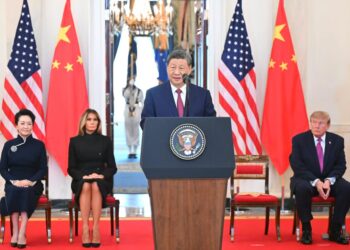
Iran launched almost 200 ballistic missiles towards Israel on Tuesday night.

The Israeli military said most of the missiles were intercepted, but that a small number struck central and southern Israel. The only person reported to have been killed was a Palestinian man in the occupied West Bank.

It was Iran’s second such attack on Israel this year, after it launched about 300 missiles and drones in April.

Here’s what we know so far.

What was the scale of Iran’s attack?

The Israel Defense Forces (IDF) said the attack involved more than 180 missiles, which tallied with Iranian state media reports saying that about 200 missiles were launched.

The US said the attack was “nearly twice the scope” of what happened in April.

Sirens sounded as Israel’s entire 10 million population was told to head into bomb shelters at about 19:30 local time (16:30 GMT) on Tuesday.

Social media videos verified by the BBC showed missiles flying over the densely populated cities of Tel Aviv and Jerusalem less than 15 minutes later. Explosions could be heard overhead as air defences intercepted the incoming missiles.

The footage also showed several missiles hitting areas around the Nevatim airbase in the Negev desert and the headquarters of the Mossad spy agency near Tel Aviv.

“There were a small number of hits in the centre of Israel, and other hits in southern Israel,” said IDF spokesman Rear Adm Daniel Hagari. “The majority of the incoming missiles were intercepted by Israel and a defensive coalition led by the United States.”

The Israeli military confirmed on Wednesday some of its air bases had been hit during the attack, but said no weapons, aircraft or critical infrastructure was damaged and the air force’s operational abilities were not affected.

Iranian state media cited the Islamic Revolution Guard Corps (IRGC) as saying the missiles hit Nevatim, Hatzerim and Tel Nof airbases, as well as Israeli tanks in Netzarim – a reference to an Israeli military corridor in central Gaza – and gas installations in the southern city of Ashkelon.

The semi-official Tasnim news agency said Iran had for the first time used Fattah hypersonic missiles that it claimed “cannot be intercepted”, as well as Emad and Qadr ballistic missiles. However, the IDF said the barrage did not include any hypersonic missiles, according to Israeli media.

What damage and casualties have been reported?

On Wednesday, the IDF said several air force bases were damaged in the missile attack, but that no aircraft were damaged, according to Israeli media reports.

“Only administrative buildings and peripheral components were hit,” the IDF was quoted as saying, while adding that “upcoming missions remain unaffected”.

The IDF also reportedly said that damage to infrastructure and property in civilian areas was “only minor” and was likely to have been caused by shrapnel from intercepted missiles.

Just north of Tel Aviv on Wednesday, close to the Mossad’s headquarters, a BBC correspondent found several badly damaged cars and a pile of earth next to a road where a missile impact was said to have caused a crater between 8m and 10m deep.

The nearby municipality of Hod HaSharon also said about 100 houses were damaged by a missile explosion and shrapnel. “This was a very powerful impact with a huge risk of claiming human lives,” the municipality said.

And a video released by the IDF showed the head of its Home Front Command visiting a school that was hit by a missile in the Gedera area, just to the east of Ashkelon, causing extensive damage to a classroom.

Israel’s Magen David Adom ambulance service paramedics treated two people with light injuries from shrapnel in the Tel Aviv area, as well as some people with minor injuries caused by falling as they moved to shelters.

However, the Palestinian Civil Defence authority said a Palestinian man was killed when he was hit by a falling missile fragment in the West Bank city of Jericho.

CCTV footage showed the rear half of a large, black missile plummeting directly on to a man as he walks along a road at night. It was not clear if the missile had been intercepted.

The New York Times identified him as Sameh al-Asali, a 37-year-old Palestinian construction worker from Gaza who had been sheltering in Jericho since the start of the war between Israel and Hamas last October.

Were the missiles stopped by Iron Dome?
The IDF has not provided details about how the missiles were shot down, besides saying that Israeli and US-led forces were involved and that Israeli air defences “operated impressively, with high rates of interception”.

It also did not say exactly how many were intercepted, explaining that it wanted to avoid “giving Iran and Hezbollah information that will help them learn lessons”. The IDF claimed that 99% of the Iranian projectiles launched in April’s attack were intercepted.

Israel has a sophisticated system of air defences, the best-known of which is the Iron Dome. It is designed to intercept short-range rockets of the sort fired by Hamas and Hezbollah.

While it was used to defend against some elements of Iran’s last attack in April, other elements of the country’s “layered” defence systems probably did the bulk of the work on Tuesday.

David’s Sling – a joint US-Israeli manufactured system – is used to intercept medium to long-range rockets, as well as ballistic and cruise missiles. And when it comes to long-range ballistic missiles, which fly outside the Earth’s atmosphere, Israel has the Arrow 2 and Arrow 3 interceptors.

The Pentagon said two US Navy destroyers deployed in the Eastern Mediterranean fired a dozen interceptors as part of the efforts to defend Israel, but that it was not known whether they took down any of the missiles.

UK Defence Secretary John Healey said British forces had “played their part in attempts to prevent further escalation”. But the BBC understands that British military jets did not shoot down any Iranian missiles.

Verified footage also showed missile interceptions over the Jordanian capital, Amman. The Arab kingdom’s forces also shot down a number of missiles during Iran’s last attack in April.

Why did Iran attack Israel?

The IRGC said in a statement that the missile barrage was retaliation for what it called the “violation of Iran’s sovereignty and the martyrdom” of Hamas political leader Ismail Haniyeh, who was killed by an explosion in Tehran in July that Iranian officials blamed on Israel, but Israeli officials did not claim.

The statement described the barrage as having been “in line with the legitimate right of the nation to defend itself”.

It also said the attack was in response to the Israeli air strike in the southern suburbs of Beirut last Friday that killed Hezbollah leader Hassan Nasrallah and Brig-Gen Abbas Nilforoushan, the operations commander of the IRGC’s overseas arm, the Quds Force.

A senior Iranian official told Reuters news agency the country’s Supreme Leader, Ayatollah Ali Khamenei, had personally given the order for Tuesday’s missile attack.

The escalation also came hours after Israeli troops began an invasion of southern Lebanon to remove what the military said were “Hezbollah terror targets” in border villages that posed a threat to residents of northern Israel.

Israel has gone on the offensive against the Shia Islamist political and military organisation after almost a year of cross-border hostilities sparked by the war with Hamas in Gaza. Both Hezbollah and Hamas are backed by Iran and designated as terrorist organisations by Israel, the US, UK and others.

Iran does not recognise Israel’s right to exist and seeks its eradication. It has spent years building a network of armed groups across the Middle East, known as the “Axis of Resistance”, which are opposed to Israel and the US.

Israel believes that Iran poses an existential threat and has spent years engaged in a shadow war with Iran that has is now increasingly out in the open.

How has Israel reacted?

Israel’s Prime Minister, Benjamin Netanyahu, told a cabinet meeting on Tuesday night that Iran’s missile attack “failed”, having been “thwarted thanks to Israel’s air defence array”.

“Iran made a big mistake tonight and it will pay for it,” he added. “The regime in Iran does not understand our determination to defend ourselves and our determination to retaliate against our enemies.”

Defence Minister Yoav Gallant also vowed vengeance.

“Iran has not learned a simple lesson – those who attack the state of Israel pay a heavy price,” he said in a statement.

What has been the international reaction?

US President Joe Biden reaffirmed US support for Israel after the missile attack, describing it as “defeated and ineffective”.

Defence Secretary Lloyd Austin also condemned what he called “this outrageous act of aggression by Iran”.

UK Prime Minister Sir Keir Starmer said the UK stood with Israel and recognised her “right to self-defence”.

France and Japan also condemned Iran’s attack, but also called on all parties to avoid further escalation.

Did Iran warn the US that it was going to attack?

The US told Israel before the attack that it had intelligence indicating that Iran was preparing to launch ballistic missiles imminently, which allowed the IDF to warn Israeli civilians to be prepared to seek shelter.

However, US officials said after the attack that they had received no warning from the Iranian government.

Iran’s mission to the UN also said in a statement: “No notice was given to the United States prior to our response.”

The Wall Street Journal citing Arab officials in the region as saying that Iran “telegraphed” to Arab countries on Monday night that it was going to launch an attack similar in scale to April’s.

The officials also said Israel had sent clear messages back to Iran that it would respond to any attack on Israeli territory with a strikes that targeted Iranian nuclear or oil facilities.

What happens next?

The IDF’s Chief of Staff, Lt Gen Herzi Halevi, said: “We will choose when to exact the price and demonstrate our precise and surprising offensive capabilities, in accordance with the directive of the political echelon.”

Axos cited Israeli officials as saying that Israel’s response would be “significant” and that it could target oil production facilities inside Iran and other strategic sites.

Some analysts suggested that Iran’s nuclear facilities could also be targeted.

President Biden said the US was “fully supportive of Israel” and that he would discuss a response with Israel’s prime minister.

But Biden made clear that he saw any Israeli strike on Iran’s nuclear sites as off limits. Asked by reporters whether he would support such an attack, he said: “The answer is no.”

The IRGC warned that Iran’s response would be “crushing” if Israel dared to retaliate.

Israel responded to April’s attack by launching a missile that hit an air defence battery at an Iranian airbase, following Western calls for restraint.

/BBC
Related Posts

Current Events

Serbia – China 2026: Technological partnership, geopolitical positioning and a new phase of the Chinese presence in the Western Balkans

1 June, 2026
ENGLISH

IBAR? ”Sufficiently! Much ado about nothing! Shart contrasts in Beijing! Where is the exit?!

1 June, 2026
ENGLISH

How Alkida Lushaj is redefining democratic inclusion globally

31 May, 2026

Follow US

Subscribe

Receive Argumentum Magazine by Email

Last Posts

Serbia – China 2026: Technological partnership, geopolitical positioning and a new phase of the Chinese presence in the Western Balkans

1 June, 2026

IBAR? ”Sufficiently! Much ado about nothing! Shart contrasts in Beijing! Where is the exit?!

1 June, 2026

How Alkida Lushaj is redefining democratic inclusion globally

31 May, 2026

Cyber Attribution, Corruption, and the False-Flag Question in Albania’s 2022 Alleged Iranian Cyberattack

30 May, 2026

The Digital Protectorate: How the EU AI Act Codified Silicon Valley’s Monopoly

30 May, 2026
Argumentum

“Argumentum”, një proces intelektual …

Contact Us

[email protected]
[email protected]
[email protected]

Follow Us

Media Partner

Register

Receive Argumentum Magazine by Email
  • Home
  • Privacy Policy
  • About Us
  • Contact

© 2022 Argumentum. All Rights Reserved. | NUIS: L91415033Q

Welcome Back!

Login to your account below

Forgotten Password? Sign Up

Create New Account!

Fill the forms bellow to register

*By registering into our website, you agree to the Terms & Conditions and Privacy Policy.
All fields are required. Log In

Retrieve your password

Please enter your username or email address to reset your password.

Log In

Add New Playlist

No Result
View All Result
  • Home
  • OP/ED
  • Interview
  • Realpolitik
  • Current Events
  • Top News
  • YOUR VOICE
  • Shqip

© 2022 Argumentum. All Rights Reserved. | NUIS: L91415033Q

This website uses cookies. By continuing to use this website you are giving consent to cookies being used. Visit our Privacy and Cookie Policy.